Welcome to the
The BOSS Business of Surgery Series Podcast
With Amy Vertrees, MD
Available on:
Don't forget to leave a review!
Subscribe for weekly
BOSS MD tips
and get it delivered right into your inbox!
Learn the lessons not taught in residency
Podcast Topics
Becoming an Effective Leader
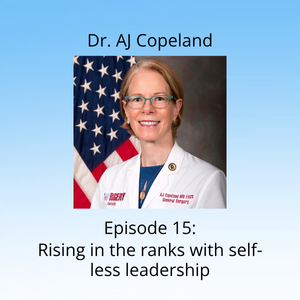
Episode 15: Rising the ranks with self-less leadership with Dr. AJ Copeland
The latest podcast episode is with Dr. AJ Copeland- a general surgeon, retired Colonel in the Army, former President of the Association of Women Surgeons and current Regent for the American College of Surgeons, and a personal hero of mine.
She describes her rise in leadership in major national surgery organizations. She is a self-described "joiner" and if there was a position that seemed right for her, she would always raise her hand to do it. Once involved in a position, she notes the importance of doing the work. She found meaningful work in AWS as a contributor on numerous projects including the AWS Pocket Mentor found here and creating the guide for patients on "What is a surgical resident" (found here) as an ACS governor.
On this episode, she shared some tips on leadership:
- if you find a need- either something that needs to get done, or you think you can do it better- then raise your hand and get involved
- When in the position, do the work
- Bring others along. You may see their potential before they do. Tell others about opportunities, and encourage them to apply.
She stressed the importance of getting involved in national societies, especially the American College of Surgeons. The ACS is the umbrella organization for all surgical subspecialties. Unlike smaller societies, the ACS has the numbers to help lobby for change, advocate for what surgeons need, and provide other services like education (SESAP, ATLS, the Clinical Congress), quality (NSQIP), and other benefits.
She is one of 24 Regents of the ACS, a part of the organization that is responsible for the big picture and directives for all surgeons. She was a Governor prior to this, a body of around 300 surgeons who act as representatives of the Fellows. Governors represent the Fellows of the American College of Surgeons, and are the official communications link between Fellows and the Board of Regents.

Episode 14: Living life and practicing medicine on your terms with Dr. Una
The latest podcast episode is with Dr. Una- a pediatrician, serial entrepreneur and the founder of EntreMD. She has educated thousands of physicians on business skills so they can build profitable businesses so they can live life and practice medicine on their own terms. Her podcast, EntreMD, is inspiring with actionable, easy steps to implement change.
On this episode, she shared some shocking statistics:
- 4/5 physicians reported burnout- that is around 800,000 doctors
- Up to 78% of physicians have thought about quitting- so even if you aren't thinking about it- you may be affected by others leaving
- We have been waiting for someone else to save medicine... but they are not coming...
The cavalry is not coming
The cavalry is already here
The calvary is US
So what can we do?
- You may be one skill away from having the job you want
- Serving and earning- we have to do BOTH
- Pick up her book- released TODAY!
- Engage in communities like BOSS and EntreMD
- Put your likes, reviews, and money to support the missions that support the changes you want to see in medicine
Dr. Una is the host of the EntreMD podcast and founder of EntreMD Business School. She is also a speaker, author and regular contributor to Forbes. She has helped hundreds of physicians get their time back, dramatically increase their bottom line and build businesses of impact.
She started a private practice when she wondered, "is this all there is?" She realized she knew NOTHING about business. She is now a serial entrepreneur with the freedom to see patients when and how she wants and pursue other interests and spend time with her family. Her mission is to help you create a business or career that will empower you to take back control.
She can be found at https://entremd.com.

Episode 24: Perspectives from a surgery program director with Dr. Jonathan Dort
The latest podcast episode features Dr. Jonathan Dort, the Director of Surgical Education for the Inova Health System and Program Director of the Surgical Residency for the Department of Surgery at the Inova Fairfax Medical Campus.
“I never understood how surgeons had egos, because it is the most continuously humbling business I can imagine being in…”
Dr. Dort left private practice to join an academic program. As program director, he has seen residency education change significantly over the years with increasing regulations and requirements.
Residents are changing, too, and learning in different ways. Gone are the days of “go read a textbook.” Residents are learning from online sources, SCORE, podcast for example.
He had great advice for those interested in applying for residency:
- There is no magic formula for getting into residency
- Do the activities you are passionate about
- Be yourself on the application. He is looking for the real you. You will be appreciated by the program you are the best fit for, and that is a path that is sustainable
-When the blood is welling in the OR, the name on your certificate is not going to bail you out
Tips for succeeding as a resident:
- “Your attitude more than your aptitude will determine your altitude”
- Wake up and decide what kind of day you are going to have
- Reminding yourself, “This is hard, I will learn from my mistakes, I am going to make mistakes, I am going to use the support from the people around me, and I am going to support the people around me, and those are the people succeed. It is a team approach”
-Burnout is not caused by hard work, it is caused by futility
If you are interested in becoming a program director:
- You have to love to teach and mentor
- The relationships you form with the mentorship last a lifetime
- You have to see three steps ahead- considering new technology (like robotics), conscious of the needed rotations
- There is gratification from taking a resident from “unconsciously incompetent to consciously incompetent, to consciously competent, then unconsciously competent.”

Episode 37: Are you working with a bad leader? Interview with Dr. Kenneth Cho
The latest BOSS podcast features Dr. Kenneth Cho. He is an interventional radiologist and Army Veteran with significant leadership experience. Once he left the military, he noted the striking difference in the leadership ranges of physicians in the civilian world. If you are struggling at work, you may wonder if it's you, or if there is something bigger going on. He and I discussed some signs that may help you decide if you are working with a bad leader.
Here are some highlights:
- Physicians learn a great deal about medicine, but not as much about leading other people.
- You should be able to trust your leaders- if they want us to follow them, we have to trust they have our best interest at hearts, they have the skills and ability to accomplish what they promise us, be honest with us, feel that they understand our position
- Articulate frequently, honestly, and authentically that they appreciate their people, do everything they can to make them feel respected, value their opinion, take suggestions whenever possible.
- MBA can help you with leadership skills, knowledge about finance, and how hospitals function which will be beneficial to the longterm success of the organization
- "Burnout" is not helpful. What is the root cause and what can be addressed?
- Leadership is service-oriented
- A bad leader is limiting what the team can do
- What do you do when you have reached a tipping point? What can you do to protect yourself?

Boss Business of Surgery Series – Episode 70
You Don’t Have to Do It Alone: Collaboration, Community, and Sustainable Practice
with Sarah Lee-Davisson, MD and Beth Avena, MD
In this episode of the Boss Business of Surgery Series, Dr. Amy Vertrees speaks with Dr. Sarah Lee-Davisson and Dr. Beth Avena about the power of collaboration in a profession that often rewards isolation, self-reliance, and silent struggle.
Together, they explore how many surgeons are trained to believe they must figure everything out on their own — from clinical challenges to career decisions — and how that belief quietly fuels burnout, overwhelm, and unnecessary suffering. This conversation reframes collaboration, community, and shared problem-solving not as weakness, but as essential tools for sustainability, clarity, and growth.
This episode is a candid discussion about building support without sacrificing competence or credibility.
In this episode, you’ll learn:
-
Why medicine conditions physicians to default to isolation
-
How self-reliance becomes a barrier to sustainability
-
Why asking for help feels risky — even for experienced surgeons
-
How collaboration improves judgment and decision-making
-
Why community protects against burnout and moral injury
-
How shared problem-solving reduces emotional load
-
Why competence does not require doing everything alone
-
How mentorship and peer support differ — and why both matter
-
Why isolation distorts perspective over time
-
How collaboration increases efficiency and creativity
-
Why vulnerability strengthens leadership rather than weakening it
-
How surgeons can build meaningful professional support networks
-
Why “figuring it out alone” is not a badge of honor
-
How community normalizes challenges that feel personal
-
Why sustainable practice requires connection
-
How trust develops through shared experience
-
Why collaboration allows physicians to stay human
-
How choosing support changes the trajectory of a career
Key themes:
-
Isolation is learned — not inevitable
-
Collaboration strengthens competence
-
Community protects sustainability
-
Asking for help is a leadership skill
-
Perspective improves in relationship
-
You don’t have to struggle in silence
-
Support reduces burnout risk
-
Medicine works better together
Resources & mentions:
-
Boss Business of Surgery Series: https://bosssurgery.com
-
Become the Boss MD
-
Physician leadership and community-building resources
This episode is essential listening for surgeons who feel alone in their challenges, unsure where to turn for support, or exhausted by the belief that they must handle everything themselves. Drs. Lee-Davisson and Avena offer a powerful reminder: you don’t lose credibility by seeking support — you gain resilience, clarity, and longevity.

Boss Business of Surgery Series – Episode 87
Perfectionism, CEO Mindset, and Stepping Into Leadership with Shawna Samuel
In this episode of the Boss Business of Surgery Series, Dr. Amy Vertrees sits down with Shawna Samuel, MBA, founder and CEO of The Mental Offload, to unpack how perfectionism shows up in high-achieving surgeons—and how it can quietly limit leadership, growth, and sustainability.
Surgeons are trained to take complete ownership, master every detail, and hold impossibly high standards. While those traits are essential early in a medical career, they can become constraints later on—especially when transitioning from working as a surgeon to leading a business as a CEO.
Shawna brings a corporate leadership perspective to this conversation, helping surgeons recognize when perfectionism is a strength, when it becomes self-sabotage, and how to develop a CEO mindset that prioritizes delegation, decision-making, and highest-value work.
In this episode, you’ll learn:
-
Why perfectionism is not a flaw—but a paradox that must be integrated, not eradicated
-
How perfectionism fuels burnout when it’s used as a weapon against yourself
-
The difference between being “perfect as you are” and still striving to improve systems and outcomes
-
Why surgeons struggle with delegation—and how ownership training contributes to that challenge
-
How opportunity cost applies to clinical work, notes, and leadership decisions
-
What it really means to shift from surgeon in the business to surgeon on the business
-
How a CEO mindset changes success from “doing everything well” to “building through others”
-
The role of asking better questions—and releasing shame about what you don’t know
-
When it’s time to bring in help and how to audit your time strategically
-
How mid-career transitions often masquerade as burnout or dissatisfaction
Key concepts discussed:
-
Perfectionism as a continuum rather than a personality defect
-
“Highest and best use” as a leadership filter
-
The gap between ideal and reality—and how it drives unnecessary suffering
-
Delegation as a leadership skill, not a personal failure
-
Letting go of hustle-based identity in favor of sustainable leadership
Resources mentioned:
-
The Perfectionist’s Guide to Losing Control by Katherine Schafler
-
The Gap and the Gain by Dan Sullivan
-
The Mental Offload Podcast
-
Shawna Samuel on Instagram: @mental_offload
-
Boss Business of Surgery Series: https://bossurgery.com
Running a Better Clinic
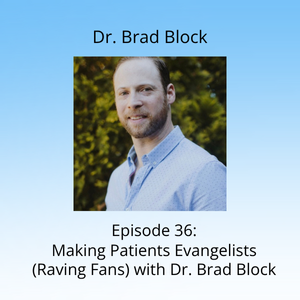
Episode 36: Making patients evangelists (raving fans) with Dr. Brad Block
The latest BOSS podcast features Dr. Brad Block. He is an otolaryngologist and began podcasting nearly 4 years ago to help doctors learn better ways to take care of patients. He realized that as residents, our focus is on the OR, but as attending surgeons we spend most of our time in office hours. He focused on social engineering ideas and found inspiration everywhere including dating podcasts and invited guests onto his podcast that could offer new ideas like nonverbal communication.
When he realized that hanging out in the doctors lounge and bringing gifts to practices didn’t help fill the clinic, he realized that making patients evangelists for him was the way to increase his referrals. Here are some highlights:
- The key is showing interest in the patient (nonverbal cues and dialing up our persona) and maintaining authority (facial expressions, vocal tonality and not hem/hawing)
- Dialing up our persona to ensure they know we are engaged and interested in them. We may not be showing we are as engaged and interested as we actually are
- Sitting down makes the visit seem longer
- We lead the patients with our cues to help set boundaries for the visit
- He documents in the room with Dragon so they can hear and get a visit summary at the end of the visit. They know what is said and walk out with a plan. It is also a cue that it is time to leave.
- They will often come with a question behind the question- they come in with a concern, but they don’t verbalize their concern. You must predict it and verbalize it. What is it that bothers you about this? Don’t minimize that problem. Leave room for doubt in case there is an issue you are missing. Explain your thoughts and offer them follow up. Add a personal anecdote to humanize their concern. Follow ups offer relief for anxiety and provide boundaries.
He reminds us that clinic can be a grind if you don’t learn how to enjoy it. And that notes are a gas that will fill the space that is given. We can apply artificial urgency to help get the notes done. He encouraged us to practice office hour skills just like we would practice operative skills.
The goal is for the patient to tell their friends, family and referring doctor, “You HAVE to see him (or her!)!”
You can find him at PhysiciansGuidetoDoctoring.com and on Twitter and rarely on Instagram @physiciansguide. You can’t find him on TikTok, Snapchat, Etsy or on Pinterest and you probably never will.

Episode 35: Improving clinic efficiency with Dr. Sarah Beth Snell
The latest podcast features Dr. Sarah Beth Snell, a breast surgical oncologist who has been recognized for her efficiency in clinic. She talks to us about how we can all do better for our patients by improving their experience in clinic. This is especially important for new graduates and those moving to new jobs.
Some of the highlights from the episode:
-It takes a while to get the team in line with your vision, but when they see how good it is for the patient and the improved efficiency, they will buy in
- Showing data doesn’t help for buy in, you must create a team that believes in your vision and continue to give them feedback that it is working
- You may have to work in the system you have, but if you stay true to your vision of what the system could be, all you must do is wait for the feedback to help change
- they will see there are less phone calls and the patients are happier
- The more you can coordinate for the patient, the happier they will be because they already have so much to worry about. Recognizing that the patient has a hard time navigating the system
- When suggesting a change, realize it takes time, effort and sometimes turnover
- Use your staff. Delegation is necessary to empower the team and paying them what they are worth will help. They likely have ideas that could help.
- Bad staff is worse than no staff
- Treat people like they are the only one for the job but have system in place where their job can go on even if they leave.

Episode 34: Getting patients into clinic by supporting PCPs with Dr. Sarah Lee-Davisson
The latest BOSS podcast features Dr. Sarah Lee-Davisson, a minimally invasive surgeon with excellent advice on getting patients into clinic by supporting our primary care physicians (and APPs in the current environment). We had a great time recording this, and there is pure gold advice for every surgeon in practice.
The top tips:
- Take good care of the patients and make the PCP look good by sending patients to you
- Send your notes right away and follow up with a call if something is important
- Tell the PCP what you have done, summarize important information like studies, stage of cancer, etc into your note so they don't have to dig for the information
- Get to know your PCP with visits, mixers and local societies
- Take thoughtful gifts, business and bio cards, your cell number to PCP offices and inquire how you can help serve them better
- Ask patients if they have a PCP, and if not refer to your PCPs that support you
- Ensure the patients have a great first impression with your office staff and empower your office staff to support you by checking tasks, faxes, voicemails daily. Help you and them by having templates of everyday activities
This is the last couple of days to sign up for "Everything is a Negotiation" coaching. Now is the time to learn how you can advocate for yourself and negotiation more effectively with yourself, your time, your family and at your job. Find more information at https://www.bosssurgery.com/

Boss Business of Surgery Series – Episode 49
Stop Hating Clinic (Webinar Replay)
In this episode of the Boss Business of Surgery Series, Dr. Amy Vertrees replays her popular Stop Hating Clinic webinar, where she tackles one of the most common frustrations in surgical practice: clinic burnout.
Clinic doesn’t have to feel draining, chaotic, or endless. Drawing on her experience in military medicine, employed practice, private practice, and surgeon coaching, Dr. Vertrees breaks down why clinic feels so hard—and how surgeons can regain control, confidence, and efficiency.
Rather than offering surface-level productivity hacks, this episode dives into the thoughts, emotions, and systems that drive clinic overwhelm. You’ll learn how mindset, leadership, boundaries, and delegation all play a critical role in making clinic sustainable.
In this episode, Dr. Vertrees discusses:
-
Why surgeons often dread clinic—and how that dread starts before the clinic day even begins
-
The importance of identifying where your biggest clinic pain points occur (before, during, or after clinic)
-
How underestimating time leads to overwhelm, resentment, and unfinished work
-
Why doing everything yourself undermines leadership and team effectiveness
-
Practical delegation strategies, including the “tell, show, do” method
-
How to set and enforce boundaries with patients who dominate visit time
-
Communication techniques for navigating difficult patient interactions
-
Strategies for finishing notes in a reasonable amount of time
-
The hidden cost of unpaid after-hours work and chronic undercoding
-
How understanding—and questioning—the “rules” of your system can open the door to change
This episode is especially valuable for surgeons who feel trapped by clinic schedules, EMR burden, endless notes, or staffing challenges—and want a more empowered, intentional way to practice medicine.
Resources mentioned:
-
Boss Business of Surgery Series: https://bossurgery.com
-
Article: Physicians Need Growth Days
-
Book: Never Split the Difference by Chris Voss
-
Boss Business of Surgery Series Facebook Group
If you’re ready to stop hating clinic and start leading your time, your team, and your practice more effectively, this episode is a must-listen.

Boss Business of Surgery Series – Episode 55
Why Nurse Practitioners and Physician Assistants Matter (and How to Work With Them Well)
In this Thanksgiving-week episode of the Boss Business of Surgery Series, Dr. Amy Vertrees continues her conversation with Dr. Seaworth to explore the real value of nurse practitioners (NPs) and physician assistants (PAs) in surgical practice.
This discussion goes far beyond staffing logistics. Together, they unpack how midlevel providers can transform clinic flow, expand access, reduce burnout, improve patient experience, and create both financial and non-financial returns for surgeons—when they are integrated thoughtfully and led well.
The episode also addresses common concerns, misconceptions, and mistakes surgeons make when working with extenders, offering a realistic look at training timelines, boundaries, leadership, and relationship-building.
In this episode, you’ll learn:
-
The two primary roles of midlevel providers: widening the funnel and improving lifestyle
-
How NPs and PAs increase patient access without overwhelming surgeons
-
Why training extenders is a long-term investment, not a short-term fix
-
How midlevels help surgeons work at the top of their license
-
Common pitfalls when introducing PAs/NPs—and how to avoid them
-
Why setting expectations with patients is critical to success
-
The financial realities of hiring a PA or NP, including early losses and long-term gains
-
How extenders reduce unpaid after-hours work and documentation burden
-
The often-overlooked non-monetary benefits: energy, connection, and sustainability
-
Why your relationship with your PA or NP matters as much as clinical skill
-
How sharing a PA, training students, or using urgent care models can ease transitions
-
What surgeons need to understand about leadership, boundaries, and burnout prevention
-
How private practice flexibility allows surgeons to remain nimble in a changing healthcare landscape
Key concepts discussed:
-
Working as a team rather than as isolated individuals
-
Delegation as a leadership skill—not a loss of control
-
Respecting lifestyle expectations to prevent extender burnout
-
Viewing PAs/NPs as long-term partners, not short-term labor
-
Balancing financial decisions with autonomy and choice
-
Adapting surgical practices to consumer-driven healthcare
This episode is especially valuable for surgeons considering hiring a nurse practitioner or physician assistant—or those who already have one and want to build a healthier, more sustainable working relationship that benefits patients, providers, and the practice as a whole.

Episode 69: Mid-career slump and a better use of clinic time with Dr. David Canes
The latest BOSS podcast features Dr. David Canes, a urologist located in Boston who found a way out of his mid-career slump by creating an innovative product that will help save time in the clinic.
After coaching hundreds of surgeons, I can tell you a common theme. There is a mid-career slump where everything gets a little less… interesting. The little admin and other picky things that didn’t bother us before start really bothering us. And it starts to feel like burnout, and we think something has gone wrong.
Dr. David Canes and I talked about this very situation: when you get to a point in your career, and you feel like something needs to change. We don’t hear about it in residency, and likely our mentors either didn’t talk about it or they thought something was wrong (like we think something is wrong) and shame keeps us from sharing.
My theory is that you have reached the mid-career slump, and it means it is time for a change for the better, not that there is something wrong with you. You have reached stasis, and you are ready for something new.
This is where innovation happens. A new practice (like I did) and what David Canes did as well.
He took what was bothering him (repeating yourself time and time again with counseling patients on common topics) and he created a business to help off-load some of the tasks that don’t really need us to spend our precious time on anymore.
He talks about taking large amounts of time off your plate and helping patients MORE by letting them get the information before your visit. His talks about his product and his method for patient counseling and how it can also help you get more patient reviews. (I am not an affiliate, just a fan).
When the Job is Hard
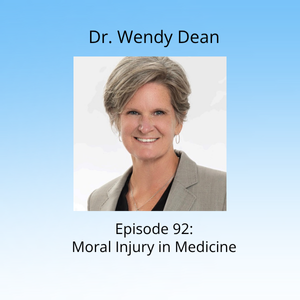
Episode 92: Moral injury in medicine with Dr. Wendy Dean
Dr. Wendy Dean is the author of "If I Betray These Words: Moral Injury in Medicine and Why It's So Hard for Clinicians to Put Patients First." Her book profiles clinicians across the country who are tough, resourceful, and resilient, but feel trapped between the patient-first values of their Hippocratic oath and the business imperatives of a broken healthcare system.
She wrote this book because she believes that there is nothing more powerful than sharing complex ideas in a clear, empathetic language. We can see ourselves in these powerful stories she shares.
You can find her on her website here and her podcast, "Moral Matters" here
Find "Moral injury in Medicine" here on amazon (affiliate link):

Ep 118 Rethinking Residency with Dr. Frances Mei Hardin
Dr. Frances Mei Hardin is on a mission to improve residency training and support the mental health of medical students and residents, but she faces the daunting challenge of changing a deeply ingrained culture.
Tired of hearing these myths about mental health in residency?
- Myth 1: You have to be mentally tough to handle the demands of residency.
- Myth 2: Seeking help for mental health issues will hurt your career.
- Myth 3: Mental health struggles are a sign of weakness.
“Public humiliation was levied against us as residents.” - Dr. Frances Mei Hardin
Key Takeaways
- Discover innovative approaches to rethinking residency programs.
- Uncover the impact of toxic dynamics in medical education.
- Learn effective strategies for breaking the cycle of abuse.
- Explore practical ways to support mental health in residency.
- Build resilience and develop essential coping skills.
About Dr. Hardin
Frances Mei Hardin earned a B.S. in Biochemistry at the University of Notre Dame, graduating at 20 years of age. She went on to earn an MD degree at the Case Western Reserve University School of Medicine and was inducted as a member of the Alpha Omega Alpha society.
After completing her ENT residency training in the Midwest, she began her practice as a general ENT in Tennessee. She has extensive academic writing experience with her work featured in astrophysics publications from the age of 16 years old.
She is the founder of Rethinking Residency, which provides supportive resources for resident physicians and promotes skills to increase effectiveness at work.
Find out more here:
- @francesmei.md
- @rethinkingresidency
- Websites
The key moments in this episode are:
00:00:02 - Introducing Dr. Frances Mei Hardin
00:00:49 - The Need for Rethinking Residency
00:03:00 - Identifying a Malignant Residency
00:07:22 - Impact of Stress and Fear on Residents
00:12:58 - Overcoming a Broken System
00:15:39 - The Cycle of Abuse in Medical Residency
00:16:58 - Rethinking Residency Strategies
00:18:07 - Breaking the Cycle of Bullying
00:21:44 - Implementing DBT Skills in Residency
00:29:40 - Healing from Residency Trauma
00:31:49 - Recognizing the Need for Change
00:32:44 - Coping Strategies for Medical Students and Residents
00:34:19 - Rethinking Residency Resources
00:38:21 - Empowerment and Breaking the Cycle
00:42:18 - Accessing Resources
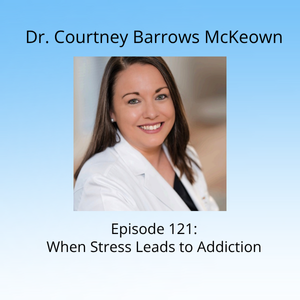
Ep 121 When Stress Leads to Addiction with Dr. Courtney Barrows McKeown
All of us have some tendency towards addiction. It could be to achieve, it could be to sugar, it could be to alcohol, it could be to medications, it could be anything.
Join my special guest today, Dr. Courtney Barrows McKeown, as she shares her experience of pulling it all back together and thriving after struggling with addiction, to spinning out of control, to having her medical license suspended and even being hospitalized after a psychotic episode.
“I was trying to cover it all up. I certainly was too terrified to admit to anybody. And so they just thought I was having a ‘mental breakdown’ or whatever.” -Dr. Courtney Barrows McKeown
About Dr. Courtney Barrows McKeown
Courtney Barrows McKeown, MD is a board-certified general surgeon. She earned her medical degree at New York Medical College, graduating Alpha Omega Alpha. She completed her general surgery residency training in 2020 at Beth Israel Deaconess Medical Center in Boston, MA, and received additional subspecialty training in hepatopancreatobiliary (HPB surgery) in the Midwest. She started her career as a community general surgeon in New Hampshire, and is excited for her next opportunity, where she will be moving to TN to join Dr. Vertrees' Columbia Surgical Partners as a general surgeon.
Dr. Barrows McKeown recently sat down for an interview and wrote a follow up article on Rethinking Residency, where she shared her story of struggling with perfectionism, mental health, and addiction during training - including the trials and tribulations she faced and the barriers she overcame to get her health and career back on track. She has recently partnered with the Dr. Lorna Breen Heroes' Foundation to advocate, increase awareness, and identify solutions to promote physician health and well-being. She is grateful to be celebrating three years of recovery next month. Her mission is to provide hope and mentorship to other early career physicians who may be struggling with similar issues she faced, reduce stigma, and help drive systemic changes in order to make our professional climate better for the next generation of surgeons.
In her free time, Dr. Barrows McKeown enjoys spending time with her husband and their dog Buddy, golfing, kayaking, and is an avid Boston sports fan.
Find Out More
- https://rethinkingresidency.com/wellness/overcome-early-career-physician-setbacks/
- https://rethinkingresidency.com/wellness/overcoming-addiction-in-residency/
- Facebook - https://www.facebook.com/courtney.barrows
- Linked In - www.linkedin.com/in/courtney-barrows-mckeown-md
- Instagram - @courtb_mckeown_md

Episode 120: When Stress Causes You to Overeat with Dr. Heather Awad
We have really hard jobs.
It's easy to forget that, especially when the only thing that we notice are the behaviors we do to deal with the negative feelings we have from our jobs.
Understanding our own behaviors we wish we didn't have will also help us understand our patients better.
Dr. Heather Awad, the Vibrant MD, shares really helpful insights that will shift your perspective on overeating and temptations.
“I had someone who was just feeling very sad and resentful that these other people could eat cake all the time, and she could not. I said, well, let me just ask you in a very neutral way, ‘Do you want to eat cake every day?” -Dr. Heather Awad
Key Takeaways
- Master stress eating and achieve weight loss effortlessly.
- Discover effective strategies to overcome stress eating for good.
- Transform habits and behavior with successful change methods.
- Embrace mindfulness and savor the joy of food like never before.
- Cultivate self-compassion and understand the power of quitting habits.
About Dr. Heather Awad
Heather Awad, MD is a family doctor in Minnesota who helps professional women over age 50 lose weight for the last time. She is also a certified Life and Weight Loss Coach through the Life Coach School, and has additional training in Positive Intelligence coaching. She hosts the Vibrant-MD podcast where she discusses weight loss, women’s health, and food.
Find Out More
Family Medicine Doctor and CEO Vibrant Weight Loss for professional women: https://www.heatherawadmd.com/
Host of Vibrant-MD podcast on Apple, Spotify or anywhere you get your podcasts: https://app.kajabi.com/podcasts/2147488988/feed
LinkedIn: https://www.linkedin.com/in/heatherawadmd/
Instagram: https://www.instagram.com/heatherawadmd/
Facebook: https://www.facebook.com/heathervibrantmd and https://www.facebook.com/groups/1003612497095969
YouTube: https://www.youtube.com/channel/UC8ksjIG1j7eIRttczBE1o2Q
Key Moments
00:00:02 - Introducing Dr. Heather Awad
00:02:37 - Understanding Stress Eating
00:06:25 - Overcoming Food Pushing and Cravings
00:09:19 - Dealing with Social Expectations
00:13:18 - Healthy Coping Mechanisms
00:14:37 - Understanding Addiction and Compassionate Counseling
00:17:24 - Tips for Overcoming Addictive Habits
00:19:23 - Appreciating Real Food and Nourishment
00:21:43 - Changing Mindset and Kicking Habits Down the Road
00:22:47 - Seeking Support and Deep Habit Work

Episode 158: When you are "Beyond Tired" with Dr. Funke Afolabi-Brown
In this episode, sleep physician Dr. Funke Afolabi-Brown, author of 'Beyond Tired: A Sleep Physician's Guide to Solving Your Child's Sleep Problems' discusses the impact of children on sleep patterns, the difference between sleep deprivation and insomnia, and shares practical tips for improving sleep quality.
Dr. Afolabi-Brown highlights the importance of self-care, the role of physical activity, and dietary choices in achieving restful sleep. They also address common sleep disorders like sleep apnea and offer advice for new mothers and busy professionals. Listeners are encouraged to pay attention to sleep habits and seek professional help for persistent sleep issues.
00:00 Introduction and Guest Welcome
00:46 Meet Dr. Funke Afolabi-Brown
01:29 The Importance of Self-Care for Parents
02:34 Dr. Brown's Journey to Sleep Medicine
04:11 Understanding Sleep Deprivation vs. Insomnia
06:19 Common Sleep Disorders and Statistics
09:04 Steps to Improve Sleep Quality
12:27 The Role of Sleep Studies
18:14 Postpartum Sleep Strategies
26:24 Sleep Issues in Different Life Stages
32:36 Conclusion and Where to Find More Resources
https://www.therestfulsleepplace.com/about
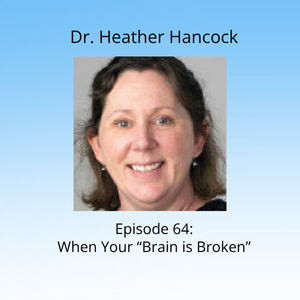
Boss Business of Surgery Series – Episode 64
When You Feel Like Your Brain Is Broken: Dr. Heather Hancock’s Story
In this powerful and deeply personal episode of the Boss Business of Surgery Series, Dr. Amy Vertrees speaks with Dr. Heather Hancock, a trauma and critical care surgeon, military veteran, and artist, about what it means to navigate a demanding surgical career while living with bipolar disorder.
Dr. Hancock shares her extraordinary journey—from a childhood marked by poverty and emotional neglect, to academic excellence, medical training, and leadership—alongside the profound mental health challenges that emerged during residency and fellowship. Her story offers rare insight into psychosis, stigma, misdiagnosis, denial, and the long road back to professional identity.
This episode is not just about mental illness. It is about identity, resilience, advocacy, and the possibility of becoming yourself again—even after your sense of self feels fractured.
In this episode, you’ll hear:
-
What it feels like when “your brain is broken” and you know something is wrong before others believe you
-
How early life experiences shaped self-reliance, achievement, and resilience
-
The role of validation, mind-reading, and internal narratives in shaping self-doubt
-
Dr. Hancock’s first psychotic episode during surgical training and how it unfolded
-
Why high-functioning physicians are often the least believed when mental illness emerges
-
The devastating impact of stigma—from colleagues, institutions, and even mental health professionals
-
Navigating the military medical system, medical boards, and physicians’ health programs
-
The difference between punitive and non-punitive physician health programs—and why it matters
-
How thousands of physicians are quietly monitored for mental health or substance use concerns
-
What it took to fight for the right to remain a surgeon
-
How bias and “poisoned wells” in training environments affect recovery and confidence
-
Why mentorship, advocacy, and being truly seen can change everything
-
The contrast between societal support for cancer versus mental illness
-
How lived experience has deepened compassion, patient connection, and clinical presence
-
Recognizing early warning signs of an episode and trusting your own insight
-
Practical advice for physicians who are newly wondering if something is wrong
Key themes:
-
Mental illness does not erase competence
-
High achievement can mask suffering
-
Stigma often creates more harm than the diagnosis itself
-
Early help and self-referral matter
-
You can return to baseline—and continue practicing safely
-
Identity is not defined by diagnosis
Resources discussed:
-
State Physicians Health Programs (PHPs)
-
Early, consistent psychiatric care
-
Non-punitive monitoring programs
-
Advocacy, mentorship, and self-trust
This episode is essential listening for surgeons and physicians who feel isolated in their struggle, fear what a diagnosis might mean for their career, or worry they may never feel like themselves again. Dr. Hancock’s story offers hope, realism, and a roadmap forward—grounded in honesty, courage, and lived experience.
Helping Patients Through Challenging Situations

Episode 19: Write your last chapter with palliative medicine physician Dr. Faryal Michaud
The latest podcast episode is with Dr. Faryal Michaud - a palliative medicine physician who is elevating the practice of palliative care. She encouraged us to start having these conversations early.
"If every life is a book, then the last chapter matters."
The first role of the palliative physician is to find out where the patient is at in their knowledge of the situation.
The palliative physician cares for not just the patient, but the family as well.
They explain what "everything" looks like, when the patient and family say they want "everything."
If your time is limited, what is most important to you. She has the patients describe what they want, then offer solutions based on what they want.
She notes that surgeons often consult her for goals of care, but palliative care can also help with symptom management and dealing with "difficult" families and be an advocate for the patients.
She also shares her journey from hospital employed practice where she did not agree with metrics that made her feel trapped to amplifying her voice on her podcast and with her coaching practice.
She can be reached at www.drfaryal.com and her Facebook group called “Physicians Living Intentionally." Her podcast is called “Write Your Last Chapter”
Her most downloaded episode is titled: Do it anyway
Please rate and review the show!
Do you have a topic you want covered? Send me an email at [email protected]

Boss Business of Surgery Series – Episode 89
Best Case / Worst Case: Helping Patients Make Decisions When Surgery Is Hard
In this episode of the Boss Business of Surgery Series, Dr. Amy Vertrees speaks with Dr. Gretchen Sorzie, a vascular surgeon at the University of Wisconsin and nationally recognized researcher in clinician–patient communication.
Dr. Sorzie’s work focuses on one of the most challenging parts of surgical practice: helping patients and families make decisions in situations filled with uncertainty, high risk, and serious illness. Rather than relying on statistics alone, she introduces a more human, narrative-based framework—Best Case / Worst Case—that helps patients truly understand what surgery may look like in their real lives.
This episode explores why traditional informed consent often fails patients and surgeons alike, and how storytelling, transparency, and clinical judgment can dramatically improve shared decision-making.
In this episode, you’ll learn:
-
Why informed consent practices haven’t meaningfully evolved since the 1950s
-
How surgeons unintentionally mislead patients by focusing on risks instead of lived experience
-
Why patients often agree to surgery under false assumptions about recovery and outcomes
-
What the Best Case / Worst Case framework is and when it is most useful
-
How scenario-based storytelling helps patients imagine life after surgery
-
Why percentages and complication lists rarely translate into understanding
-
The role of plausibility in describing outcomes—not optimism or catastrophe
-
How to clearly communicate best, worst, and most likely scenarios
-
Why families often feel “betrayed” after surgery—and how better conversations prevent this
-
How graphic aids help patients, families, and care teams stay aligned
-
Why surgeons should not pretend neutrality when they believe surgery is a bad idea
-
How hiding clinical judgment undermines patient autonomy
-
Why offering choices without context can push patients toward treatments they don’t want
-
How to respond when families say they are “hoping for a miracle”
-
Why “I wish” can be one of the most honest and compassionate responses
-
How better preoperative conversations reduce moral distress for surgeons
Key concepts discussed:
-
Best Case / Worst Case scenario planning
-
Storytelling versus statistics in serious illness care
-
Plausible outcomes vs. improbable extremes
-
Transparency over neutrality in high-stakes decisions
-
Values-based decision-making
-
Surgeon responsibility beyond the operating room
Resources mentioned:
-
Best Case / Worst Case Toolkit
-
Being Mortal by Atul Gawande
-
Sharon Kaufman’s work on medical decision-making
-
VitalTalk (communication skills training)
-
Patient Preferences Project
-
American College of Surgeons resources
-
Upcoming viewpoints in JAMA Surgery
This episode is essential listening for surgeons who regularly care for critically ill patients, struggle with end-of-life decision-making, or feel caught between “doing everything” and doing what truly aligns with a patient’s goals and values. Dr. Sorzie offers a compassionate, practical framework that improves clarity, trust, and integrity—for patients, families, and surgeons alike.

Ep 134: Aligning patients' expectation with reality with Dr. Kimberly Kopecky
The latest BOSS podcast features Dr. Kimberly Kopecky, a surgical oncologist researching the importance of aligning patients' expectations with reality in the context of cancer surgery.
Dr. Kopecky shares her background and motivation for pursuing surgical oncology and palliative medicine training to better communicate with patients and understand their values and expectations.
We talked about shared decision-making, eliciting patient preferences, addressing misunderstandings, and the challenges of managing expectations, particularly in cancer surgery where patients may not feel they have a choice.
Dr. Kopecky highlights the need to complement shared decision-making with an explicit focus on aligning expectations and describes her ongoing research efforts to capture patients' experiences and incorporate them into preoperative discussions.
The conversation also touches on the reluctance to study patient regret and the importance of open communication about potential outcomes and complications.
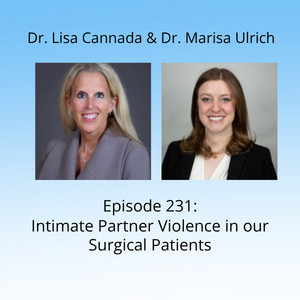
This episode explores intimate partner violence (IPV) in the orthopedic/surgical patient population — an issue surgeons encounter frequently but often fail to recognize or feel unprepared to address.
The discussion focuses on:
- Awareness
- Identification
- Surgeon responsibility
- Practical next steps
Key message:
👉 Surgeons see IPV regularly — whether they realize it or not.
👩⚕️ Guest Introductions
Dr. Lisa Canada
- Orthopedic trauma surgeon
- University of North Carolina School of Medicine – Charlotte Campus
-
25 years in practice
- Professional pillars:
- Education
- Mentorship
- Clinical excellence
- Co-author of paper on IPV in orthopedic patients
Motivation: Bridging clinical care and education to help surgeons recognize hidden violence affecting patients.
Dr. Marissa Ullrich
- Third-year orthopedic surgery resident
- Mayo Clinic, Rochester
- Medical school: Ohio State University
- Passionate about whole-patient care
Key realization:
Medical training teaches mandatory reporting for:
- Children
- Elderly
- Vulnerable adults
➡️ But no standardized system exists for adult IPV screening.
🔹 What Is Intimate Partner Violence?
IPV is broader than many physicians assume.
Common Misconceptions
❌ Only married couples
❌ Only male-on-female violence
❌ Only long-term relationships
Reality
IPV can involve:
- Spouses
- Boyfriends/girlfriends
- Dating partners
- Roommates
- Caregivers
- Any gender combination
- Any age group
🔹 Why Surgeons Must Care
Surgeons often encounter IPV first because injuries bring patients to medical attention.
Examples include:
- Fractures
- Recurrent injuries
- Injuries inconsistent with reported mechanism
- Multiple prior visits
Orthopedic and trauma surgeons are uniquely positioned to identify abuse patterns.
🔹 The Hidden Gap in Medicine
Training emphasizes:
- Child abuse reporting
- Elder abuse reporting
But lacks:
- Standardized adult IPV detection
- Education on resources
- Clear clinical pathways
Result:
➡️ Physicians suspect abuse but don’t know what to do next.
🔹 Clinical Red Flags
Surgeons should consider IPV when they notice:
- Multiple injuries over time
- Vague or inconsistent injury history
- Injuries inconsistent with mechanism described
- Frequent “falls”
- Delayed presentation for care
- Partner answering questions for patient
- Patient reluctance or anxiety
Especially important in:
- Fragility fracture patients
- Elderly individuals with caregivers
- Repeat trauma presentations
🔹 Core Takeaways for Surgeons
1. You Are Already Seeing IPV
Statistically, surgeons encounter affected patients weekly.
2. Recognition Is the First Step
You don’t need to solve everything — awareness matters.
3. Think Beyond the Injury
Treat the whole patient, not just the fracture or operation.
4. Pattern Recognition Saves Lives
Connecting repeated injuries can reveal abuse.
🔹 Cultural Shift Needed in Surgery
The episode highlights a broader shift:
- Moving from purely technical care → holistic patient care
- Expanding surgeon identity beyond operator
- Embracing advocacy and safety as part of surgical responsibility
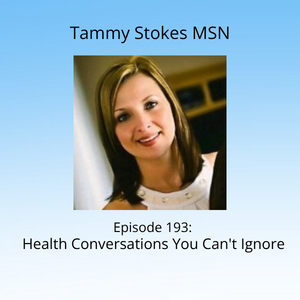
In this deeply moving and practical episode, palliative care nurse Tammy Stokes shares how a personal health crisis at age 36—nearly 100% blockage in three arteries—transformed her career and mission in healthcare. Now an advocate and leader in palliative care in Tennessee, she brings firsthand experience and clinical insight to the often-avoided conversations about serious illness, family dynamics, and end-of-life care.
Tammy discusses:
-
The difference between palliative and hospice care
-
The emotional and spiritual impact of critical illness on patients and families
-
Why advanced care planning is essential—at any age
-
How her personal experiences with her father and brother shaped her philosophy of care
-
Tools from her book, including scripts to start hard conversations
-
The power of patient autonomy and how to honor it in clinical practice
Whether you’re a surgeon, nurse, or family caregiver, this episode equips you to lead hard conversations with courage, compassion, and clarity.
🧠 Key Topics:
-
[00:00] Introduction to Tammy Stokes and her book
-
[00:03] Her personal health crisis and its impact
-
[00:06] Transformation into a more compassionate nurse
-
[00:12] Transition into palliative care and first patient experience
-
[00:17] Scripts and strategies for difficult conversations
-
[00:22] Creating communication plans with patients and families
-
[00:31] Handling family disagreements and honoring patient wishes
-
[00:35] The case for early and ongoing advance care planning
-
[00:39] Real-life stories of honoring her father’s and brother’s end-of-life preferences
📘 Resources Mentioned:
-
Break the Silence: Health Conversations You Can’t Ignore by Tammy Stokes
-
Tennessee Palliative Care Advisory Council
-
Hospice and Palliative Care Nurses Association
📌 Takeaways:
-
Start the conversation before the crisis.
-
Honor what patients want, not what we fear.
-
Be vulnerable—it opens the door to trust and truth.
-
Scripts and structured communication can reduce fear and overwhelm.
🔗 Connect with Tammy:
-
Facebook: Tammy Stokes – Break the Silence: Health conversations you can't ignore, buy it here
-
Speaking engagements: Reach out via her Facebook page, Tammy Stokes Book Launch Party 8/1
🎧 Listen to More:
Subscribe to the BOSS Business of Surgery Series for more real conversations about what really matters in medicine. I would appreciate if you rate and review the show as well!
Taking Care of the Most Important Person in Your Life (You!)

Episode 9: Transitioning out of surgery, self-care and boundaries with Dr. Victoria Silas
Dr. Victoria Silas is a pediatric orthopedic surgeon who is transitioning from her role as a surgeon to a coach. She has great advice for things you can do right now to enjoy your surgical career, extending the life of your surgical career, and transitioning out of surgery.
Dr. Silas struggled with boundaries and her identity early in her career. She decided to become a coach through Martha Beck's program (fun fact- the author of this month's bookclub). This allowed her to continue in her career as she learned the lessons of putting herself in the equation and doing something for herself each day. She learned to focus on her identity outside of surgery, which helped her as she transitioned out of surgery.
She shares her thoughts on perfectionism, how she "wasn't perfect enough to be a perfectionist" and strategies she has for boundaries, and advice for those transitioning out of surgery (yes, everyone will be OK!).
She can be found at Medical Minds Consulting here or www,medicalmindsconsulting.com
This episode is for you if:
- You are thinking about transitioning out of surgery as your commitment runs it's course.
- You want to know more about tips to sustain your surgical career
- You want to know more about coaching and thought work
- You want to know more about boundaries
Find more information about BOSS here or www.BOSSsurgery.com

Episode 13: Doing what you love is not selfish with Dr. Janelle Wagner
Hello Surgeons!
The latest podcast episode talks about experiences we can all relate to- changing our mind from what we think we want to do, becoming a new attending and the desire to change a struggling system.
Dr. Janelle Wagner is a plastic surgeon with additional fellowship training in hand surgery. She did not follow the traditional path. She initially went into TV after college thinking that she wanted to be famous. But a less than satisfying job had her questioning her career choices.
She decided to return to school to be an OB/gyn, but that didn't fit either. She followed her interests and found the right path for her. She is now a successful plastic surgeon with a flexible career and started a business called "Money Med School" where she helps others learn how to manage their money.
She had great advice on dealing with a challenging system.
- Is your system amenable to change?
- Do you have supportive administration?
- Do your colleagues want this change, too?
- Are the changes in line with your institution's goals?
- Am I valued here?
- You are the most important factor to consider and that is NOT selfish. Your wellness matters. You are not going to help anyone if you are not taken care of first.
- You are never trapped
"Doing something you love is NOT selfish" - Dr. Wagner
Dr. Wagner's website is moneymedschool.com
Instagram and Facebook @moneymedschool
YouTube.com/c/MoneyMedSchool
You can find more information about Dr. Vertrees and the BOSS Business of Surgery Series at www.BOSSsurgery.com

Boss Business of Surgery Series – Episode 18
Life Without Limits: Endurance, Gaslighting, and Reclaiming Yourself with Dr. Julie Riley
In this episode of the Boss Business of Surgery Series, Dr. Amy Vertrees speaks with Dr. Julie Riley, urologist, academic surgeon, residency program director, and newly minted Ultraman triathlete, about endurance—both on the racecourse and in a surgical career.
Dr. Riley shares the extraordinary journey that led her to complete an Ultraman triathlon: a three-day endurance event involving a 6.2-mile swim, 262 miles of cycling, and a 52.4-mile run. But this episode goes far beyond athletics. It is a conversation about identity, isolation, gaslighting, coaching, boundaries, and choosing a life without artificial limits.
Through her racing experience and career transition, Dr. Riley illustrates how surgeons often place invisible ceilings on themselves—and how community, self-trust, and asking for help can change everything.
In this episode, you’ll learn:
-
What an Ultraman triathlon actually involves—and why it’s as much mental as physical
-
How endurance training mirrors the emotional challenges of a surgical career
-
Why isolation is one of the biggest threats to surgeon well-being
-
How defining success before you start protects joy and resilience
-
Why persistence often matters more than speed or talent
-
How gaslighting shows up in professional environments—and why it’s so disorienting
-
How repeated mixed messages erode self-trust over time
-
The role coaching plays in recognizing unhealthy dynamics
-
Why leaving a “good” job can be harder than leaving a bad one
-
How COVID created a “great pause” that clarified values for many surgeons
-
Why asking for help is not weakness—but a performance advantage
-
How community and support fuel both endurance racing and career transitions
-
How to recover confidence after a difficult job experience
-
Why processing your experience matters more than giving feedback
-
How boundaries, clarity, and self-respect shape better professional outcomes
Key themes:
-
There are no fixed limits—only chosen ones
-
Isolation magnifies struggle; community multiplies strength
-
Self-kindness improves performance
-
Success is persistence, not perfection
-
You don’t have to do hard things alone
-
Trusting yourself is a skill that can be rebuilt
Resources mentioned:
-
Boss Business of Surgery Series
-
It’s Complicated course: bosssurgery.com/itscomplicatedcourse
-
Group and individual coaching
-
Endurance athletics as a framework for resilience
This episode is a powerful listen for surgeons who feel stuck, isolated, or quietly questioning whether there might be more available to them. Dr. Riley’s story is a reminder that endurance isn’t about suffering through—it’s about choosing support, redefining success, and allowing yourself to grow beyond the limits you never needed in the first place.

Boss Business of Surgery Series – Episode 20
When Everything Changes: Illness, Identity, and What Truly Matters with Dr. Maura Lipp
In this deeply moving episode of the Boss Business of Surgery Series, Dr. Amy Vertrees speaks with Dr. Maura Lipp, an ICU physician whose career and life have been shaped by extraordinary challenges—including frontline work during H1N1 and COVID, a diagnosis of chronic illness, and a life-altering diagnosis of stage IV metastatic cancer.
Dr. Lipp shares the moment her world changed overnight, how quickly identity can be stripped away when illness intervenes, and what it means to navigate medicine not as the physician—but as the patient. This conversation explores grief, perspective, palliative care, disability, finances, identity loss, and the quiet resilience required to live day-to-day when the future is uncertain.
This episode is not only about illness. It is about meaning, dignity, relationships, and redefining “enough.”
In this episode, you’ll learn:
-
How subtle symptoms led to a sudden diagnosis of widely metastatic cancer
-
What it feels like to receive devastating news as a physician—and as a human being
-
The emotional weight of telling loved ones a diagnosis you never expected
-
How quickly professional identity can disappear when illness intervenes
-
Why losing work involuntarily feels different than choosing to step away
-
How perspectives on mid-career dissatisfaction change when work is taken away
-
The emotional complexity of hope, grief, and uncertainty
-
How lived experience reshapes how physicians understand palliative care
-
Why palliative care early in illness is essential—not optional
-
The loneliness of serious illness and the importance of support systems
-
Why asking for help is hard for physicians—and why it matters
-
How allowing others to help is a gift to them, not a burden
-
The identity crisis that comes when work has defined your life
-
Why preserving parts of yourself outside medicine matters
-
How to think about what you would take—and leave—from your career
-
The often-overlooked realities of disability insurance and financial planning
-
Why individual disability insurance is critical for physicians
-
How quickly income can change—and what physicians rarely understand about offsets
-
What truly matters when everything else falls away
Key themes:
-
Identity beyond medicine
-
Illness as an unchosen transition
-
Grief for a life interrupted
-
Redefining success and “enough”
-
The power of presence and community
-
Letting go of trivial worries
-
Living intentionally when time feels fragile
Resources discussed:
-
Palliative care as part of comprehensive cancer care
-
Disability insurance considerations for physicians
-
Boss Business of Surgery Series: https://bosssurgery.com
This episode is essential listening for physicians at any stage of career—especially those navigating burnout, illness, identity shifts, or major life transitions. Dr. Lipp’s honesty, humility, and wisdom remind us that life is fragile, medicine is not our only worth, and the things that matter most are often the ones we overlook until everything else is stripped away.

Boss Business of Surgery Series – Episode 26
You Don’t Need Permission: Entrepreneurship, Burnout, and Choosing Your Own Path with Dr. Sharon McLaughlin
In this episode of the Boss Business of Surgery Series, Dr. Amy Vertrees sits down with Dr. Sharon McLaughlin, plastic surgeon, entrepreneur, founder of the Female Physician Entrepreneurs Facebook group, and creator of Mind Lull, to talk about career autonomy, entrepreneurship, and the power of making decisions without asking for permission.
Dr. McLaughlin shares her personal journey through burnout, career transition, and reinvention—closing a surgical practice, navigating utilization management roles, and ultimately building physician-focused business communities. This episode offers practical insight for physicians who feel stuck, restless, or quietly questioning whether the path they’re on is still the right one.
At its core, this conversation is about listening to your intuition, building financial and emotional flexibility, and creating a life that actually works for you.
In this episode, you’ll learn:
-
How burnout can quietly build—even in a “successful” surgical career
-
Why questioning your career path doesn’t mean you’ve failed
-
The danger of making abrupt career changes without mentorship or planning
-
Why having a coach or mentor during transitions can save years of stress
-
What it means to stop explaining yourself—and why you don’t owe anyone justification
-
How intuition shows up when something is no longer aligned
-
Why entrepreneurship appeals to physicians seeking autonomy and creativity
-
How business ownership can coexist with (or even improve) a medical career
-
Why financial planning and early investing create freedom of choice later
-
How living “up to your salary” can trap you in decisions you no longer want
-
The importance of building community before you need it
-
Why most businesses fail—and how planning prevents that
-
How physicians’ skills naturally translate to speaking, consulting, and business leadership
-
Why consistency matters more than hustle
-
How overwhelm is often a planning problem—not a motivation problem
Key themes:
-
Autonomy over obligation
-
Intuition as legitimate data
-
Burnout as a signal, not a weakness
-
Financial literacy as freedom
-
Entrepreneurship as a creative outlet
-
Community as a catalyst for growth
-
Planning as an antidote to overwhelm
Resources mentioned:
-
Female Physician Entrepreneurs Facebook Group
-
Mind Lull (focus and productivity tools): https://mindlull.com
-
Boss Business of Surgery Series: https://bosssurgery.com
This episode is a must-listen for physicians who feel pulled toward something different but aren’t sure how—or whether—they’re “allowed” to want more. Dr. McLaughlin’s message is clear and freeing: you get to choose, you don’t need permission, and you’re allowed to change your mind.

Boss Business of Surgery Series – Episode 65
Medicine, Marriage, and Money: How Strong Relationships Set You Free with Dr. Kate Mangona
In this episode of the Boss Business of Surgery Series, Dr. Amy Vertrees speaks with Dr. Kate Mangona, pediatric radiologist, physician coach, real-estate investor, and founder of Medicine, Marriage, and Money, about the invisible dynamics shaping physicians’ lives at home and at work.
Dr. Mangona shares how intentional work on marriage, money, and mindset can dramatically improve freedom, fulfillment, and sustainability—both personally and professionally. Drawing from her experience as a physician married to a physician, a mother of three, a business owner, and a relationship coach, she offers a compassionate framework for navigating partnership without resentment, overfunctioning, or burnout.
This episode is about reclaiming connection—without sacrificing ambition, empathy, or autonomy.
In this episode, you’ll learn:
-
Why relationship strain often shows up as irritability, resentment, or emotional exhaustion
-
How physicians unintentionally fall into the “parent–child” dynamic with their spouse
-
Why treating your partner like a third child destroys intimacy and connection
-
How stories—not circumstances—drive conflict in marriage
-
Why getting specific about daily frustrations creates real change
-
How reconnecting with your original love story can reignite closeness
-
Why advice doesn’t work—and awareness does
-
How empathy becomes draining when boundaries are missing
-
How to stop absorbing your partner’s emotions without disconnecting
-
Why emotional neutrality is a skill that can be learned
-
How financial collaboration can increase freedom instead of stress
-
Why investing time in marriage yields the highest return of any relationship
-
How entropy affects relationships when they’re not actively tended
-
Why outsourcing and support systems protect high-performing physicians
-
How to recognize when your relationship needs intentional repair—not endurance
Key themes:
-
Connection over control
-
Awareness instead of blame
-
Boundaries without withdrawal
-
Empathy without emotional overload
-
Partnership as a performance advantage
-
Relationships as an investment—not an afterthought
Resources mentioned:
-
Medical Marriage Survival Guide (18-page guide + workbook)
-
Six-Day Marriage Challenge (based on predictors of divorce)
-
Gottman Method principles
-
Medicine, Marriage, and Money: https://medicinemarriageandmoney.com
-
Instagram: @katemangonemd
-
Boss Business of Surgery Series: https://bosssurgery.com
This episode is essential listening for physicians who feel stretched thin, emotionally reactive, or disconnected at home—and who suspect that strengthening their closest relationship might be the key to greater freedom everywhere else. Dr. Mangona’s message is clear: when medicine, marriage, and money are aligned, life feels lighter—and more intentional.
Protecting Yourself

Episode 39: Treat yourself like an elite athlete with Dr. Geeta Lal
If you are one of the 60-70% of surgeons who have pain, fatigue and numbness and only recall ergonomics as “stand up straight- and suck it up” then this episode is for you.
Dr. Geeta Lal is an endocrine surgeon who experienced work-related musculoskeletal symptoms herself, like many of us have done. She first wondered if it was just her, but when she realized that musculoskeletal injuries in surgeons was more prevalent than in industries like construction work, she became committed to increasing awareness of and developing solutions to counteract the impact of poor ergonomics on surgeons' professional and
personal lives. She is the founder of Surgical Ergonomics, a speaking and coaching business, and a co-founder and Inaugural President of the new Society of Surgical Ergonomics.
She shared the effects of poor ergonomics: loss of productivity, shortened careers, loss of income to the surgeon and the hospital, and degradation of quality. She has so much to share including these highlights:
- Pay attention to your symptoms, they are not in your head
- Take breaks to reverse the posture you are holding (5 min every 30 min, micro breaks at 20 sec every 20 -30 min, or 90 sec every 45 min).
- Pay attention to your equipment and choose the lightest loupes and headlamps
- Become familiar with optimum positioning
- Join the society to help your ergonomic ideas make it to the industry where it counts (your reps are often sales reps)
Find more information at:

Episode 33: Boundaries build relationships with Dr. Amy Vertrees
Healthy boundaries promote empowerment. We are safe to interact with the world. We can be around people and not worry about them manipulating us. We can hold any job, because we can protect ourselves from overworking or being taken advantage of. It is a critical part of negotiating with ourselves and the people around us. Without boundaries, we are a set up for resentment, passive aggressive behavior and disappointment. I want more for you.
Enrollment for everything is a negotiation is open, head to BOSSsurgery.com for more information.

Episode 46: You can create Brave Boundaries with Dr. Sasha Shillcutt
The latest BOSS podcast episode features Dr. Sasha Shillcutt, a cardiac anesthesiologist who is committed to helping women physicians have better lives by creating better boundaries. Her lessons are universal, so don't think that she is only talking to women.
This episode is so critical for every one of us, because many of the problems we are having can be traced to a lack of boundaries.
- You may think that boundaries are about keeping the bad things out- but it's also about keeping the good things in
- With more work from home, it is more important than ever to be intentional around protecting yourself
- What are your priorities- and are they reflected on your schedule?
- What is necessary for an effective boundary?
- What about the backlash? (Is it really as bad as we think?)
Listen to the episode to hear more!
https://www.bosssurgery.com/podcasts/boss-business-of-surgery-series
More from Dr. Shillcutt can be found here:
https://www.becomebraveenough.com/

Boss Business of Surgery Series – Episode 51
We Are at Risk: Physician Burnout, Brain Health, and Preventing Tragedy with Dr. Michelle Chestovich
In this profoundly important episode of the Boss Business of Surgery Series, Dr. Amy Vertrees speaks with Dr. Michelle Chestovich, family medicine physician, life coach, and physician-suicide-prevention advocate, about the dangerous, often invisible path many physicians are walking.
This conversation goes beyond burnout. It addresses risk, exhaustion, self-doubt, stigma, and the systemic pressures of medicine that place physicians—especially women physicians—at significantly higher risk for mental health crises and suicide.
Dr. Chestovich shares both her professional journey into coaching and the deeply personal loss of her sister, Dr. Gretchen Butler, a radiologist and mother of three who died by suicide. Her story is a powerful reminder that competence, achievement, and dedication do not protect us from danger when our brains are overwhelmed.
In this episode, you’ll learn:
-
Why burnout is not just uncomfortable—but potentially life-threatening
-
The staggering reality that nearly 400 physicians die by suicide each year
-
Why women physicians are at even higher risk
-
How overwork, isolation, anxiety, and sleep deprivation compound risk
-
Why “just pushing through” is not resilience—it’s danger
-
How sleep deprivation impairs judgment at levels comparable to intoxication
-
Why feeling trapped is one of the most concerning warning signs
-
How physicians normalize unsustainable workloads without realizing the cost
-
Why having children does not always protect against crisis
-
How guilt, responsibility, and scarcity thinking keep physicians from asking for help
-
The role of isolation during COVID and remote work in worsening risk
-
Why stigma around mental health still prevents early intervention
-
How coaching helps physicians interrupt dangerous thought patterns
-
Why “enough” is a decision—not a productivity metric
-
How identity, worth, and performance become dangerously intertwined
-
Why prevention must happen before a breaking point
Key themes:
-
Physicians are an at-risk population
-
Burnout is a brain-health issue
-
Exhaustion changes thinking—not character
-
Feeling trapped is a red flag
-
Productivity is not worth
-
“Nothing has gone wrong” when you need help
-
Sustainable careers require intentional boundaries
-
Coaching is evidence-based prevention, not indulgence
Resources mentioned:
-
Physician coaching as an evidence-based intervention for burnout
-
Research published in JAMA supporting coaching effectiveness
-
Cleveland Clinic outcomes showing reduced burnout and system savings
-
Dr. Chestovich’s website: https://mamadoclifecoach.com
-
Podcast: Remind Yourself
-
Boss Business of Surgery Series: https://bosssurgery.com

Episode 52: Protecting yourself with disability insurance with Dr. Stephanie Pearson
The latest BOSS podcast episode features Dr. Stephanie Pearson
She is an OB/Gyn and learned the hard way about the details of disability insurance when she was injured at work.
Her injury could have brought her down- and almost did- but she turned a devastating injury into a remarkable hero's journey.
She is committed to make sure other physicians don't make the same mistakes that she did. She is on a mission to make sure we are well-informed and empowered to make educated decisions on our disability insurance. She makes a complicated concept simple.
She also shared her struggles after her injury. She is also committed to normalize the struggles that we all have, because we are truly an at-risk profession. Injuries can hurt more than just our career.
Find her at: https://pearsonravitz.com/

Boss Business of Surgery Series – Episode 82
When Being a Surgeon Is Used Against You: Divorce, Custody, and Resilience with Dr. Jennifer Whittington (Part 1)
In this episode of the Boss Business of Surgery Series, Dr. Amy Vertrees speaks with Dr. Jennifer Whittington, surgical oncologist in New York City, about what happens when life veers sharply away from the “Hallmark-card” version of success—and how resilience is forged when your career is used against you.
Dr. Whittington shares her deeply personal story of navigating divorce, custody battles, financial strain, and single parenthood during a demanding surgical oncology fellowship. This is a candid, unfiltered conversation about fear-based decisions, systemic bias, shame, and survival—and how grit, preparation, and community made it possible to keep both her career and her child.
This episode is Part 1 of a two-part conversation and focuses on the early and middle stages of Dr. Whittington’s journey.
In this episode, you’ll learn:
-
How personal tragedy during training shaped Dr. Whittington’s path into surgical oncology
-
Why the “straight and narrow” medical career path is more myth than reality
-
How divorce can escalate quickly—and why the person you divorce is not the person you married
-
Why trying to have a “cheap” divorce often leads to devastating long-term consequences
-
How being a surgeon and working long hours can be weaponized in custody disputes
-
The financial realities of divorce, mediation, and family court for physicians
-
Why separating finances early is critical when divorce is imminent
-
How fear-based decisions compound stress and cost over time
-
What it’s like to fight for custody while earning a fellow’s salary
-
The hidden shame many physicians carry during personal crises
-
How exhaustion can be misinterpreted as disengagement in training programs
-
Why asking for help—and rebuilding your village—is essential
-
How learning emotional restraint and a “poker face” became a survival skill
-
The importance of legal preparation, documentation, and mental health evaluations
-
How courtroom skills translated into stronger leadership, teaching, and clinical presence
Key themes:
-
Resilience under extreme pressure
-
The intersection of career, identity, and motherhood
-
Bias against women physicians in family court
-
Financial vulnerability during training
-
Shame and isolation in professional environments
-
Community as a lifeline
-
Emotional regulation as a transferable leadership skill
Resources & mentions:
-
Boss Business of Surgery Series: https://bosssurgery.com
-
Become the Boss MD (book release June 20)
-
Support resources for managing negative emotions
This episode is essential listening for surgeons and physicians navigating divorce, custody issues, or major life upheavals—especially those worried that their profession may be used against them. Dr. Whittington’s story is a powerful reminder that survival sometimes looks quiet, unglamorous, and exhausting—but resilience is built in those moments nonetheless.
When You Are Crispy and Burning Out

Episode 1: Growth Days with Dr. Amy Vertrees
Physicians need “Growth Days” Physicians are overwhelmed and burned out. We have an epidemic of “too busy.” Many of us think we could get so much more accomplished if we had more time. Why aren’t we taking the time? Doctors need to start taking “Growth Days.” These aren’t sick days, mental health days or vacation days. Growth days are days strategically taken during the month that are specifically meant for personal growth. www.BOSSsurgery.com

Episode 10: You don't have to dread call with Dr. Karen Leitner
Fellow coach Dr. Karen Leitner and I talk about how we don't have to dread call. You may not ever love it, but there are definitely strategies to decrease the fear and uncertainty.
What are the problems with call?
- We make it three times longer than it has to be: 24 hours of dread, 24 hours of misery, 24 hours of feeling regret afterward
- We feel like we are in impossible situations: I don’t know what to do, and I can’t fix all of their problems
-We tie our self-worth to the patient's outcome, so we ruminate on the chart and vitals because we are trying to find our value (because we don’t find it within us)
Strategies for success:
-Recognizing that treating patients with dignity, kindness, compassion, and brutal honesty may be the true success in patient care, rather than just survival of the patient.
-Working with the patient. Ask them the questions: What is your understanding of the situation? What do you want to get out of this? What are you willing to give up?
-Asking yourself if you consent to the procedure. Are you paying attention to the informed consent that you are asking the patient to sign? Would you sign it for yourself?
-Realizing you only get to live a choice one way, you will never know what happened if you chose a different path. Why wouldn’t you believe you are doing your best, and that you made the best choice?
-Remind yourself that you are not the one who is ill (take your own pulse)
-Plan to talk with someone ahead of time about your fears
-Hearing what is going on in your head, so you can redirect and talk to yourself kindly
-Own the story of your call so you can own the ending- it’s ok not to know the right answer right away, you can figure it out
-You don't have to own everything: get on the same page with your partners with effective handoffs and embracing systems-based practice.
You can find Dr. Leitner and her program "How to Feel Better" here (www.karenleitnermd.com) and her article at
www.kevinmd.com/blog/2021/07/physicians-stop-dreading-call.html
You can find more information about Dr. Vertrees and the BOSS Business of Surgery Series at www.BOSSsurgery.com

Episode 2: Why we became surgeons with Dr. Amy Vertrees
I had a theory that a reason some of us were not satisfied with work was that our reason for becoming surgeons didn't apply to us anymore. Many of you responded, and there were themes for why we became surgeons. Although not all reasons apply anymore, there are some truly inspiring reasons, and I wanted to share them with you. It inspired me again to remember the time when I was making the decision. I hope you all are inspired, too, as you head back to our original "why."

Episode 25: Preventing burnout by learning more about money with the MoneyfitMD Dr. Latifat Akintade
The latest BOSS Business of Surgery Series podcast features Dr. Latifat Akintade, the MoneyfitMD. She coaches women physicians about money so they can burnout less. We had a great talk about how our thoughts and fears about money can hold us back. She had some great insights including:
- Separate the money we make from our value as a human. Money is a thank you for the work that we do, but it is not the measure of who we are. Unless we do that, we will never feel like we have enough.
- Simplifying the language of money shows us that it doesn’t have to be hard. And we don’t have to learn everything about money right away, or even learn everything there is to know.
- Recognize when we are feeling fear or shame about money, and that these come from thoughts that are holding us back (like money is hard, money is bad, I am too busy, I am greedy if I think about money, I should have learned all this already).
- When physicians have money, we do good things with it.
- We already have the tools to succeed with money
- Slow down, rest, relax, don’t burnout learning about money
She shared her Financial Liberation Plan:
- Know you why- why do you want to practice medicine, why are you choosing this life. Explore the limited beliefs and past traumas to learn more about how you are approaching money.
- Identifying your own unfair advantage- We all have characteristics that will help us be successful. For example, as doctors we know how to study, learn, collaborate with others, asking questions and, figure things out. Turn that flashlight on to knowledge about money
- Look at the numbers- find your minimum viable expense. If you lost your job, how much would you need to get by? It’s often less than you think.
- Diversify your sources of income- and it doesn’t have to happen in one day
- Empower ourselves, find our communities and invest in ourselves. She noted that her networth increased as she increased investment in herself. I noticed that when I invested in myself, that was when my life started to change, too.

Episode 28: Health care design for health care equity and burnout prevention with Dr. Heena Santry
The latest BOSS podcast features Dr. Heena Santry, a double-boarded trauma and acute care surgeon and consultant talking about how health care design can help health care equity and prevent moral injury and burnout.
She had two guiding principles as a surgeon: creating a just culture in surgery and advancing health equity. She was excelling along the typical academic track when she realized that she had an opportunity to reach more than just an academic department. She became a consultant for a health care architectural design firm where she uses her experience and skills as a surgeon, her leadership skills, quality research, epidemiologic survey research and geographic information systems to create efficient, equitable spaces in a diverse set of hospitals. Her work allows hospitals to best organize themselves to achieve their population goals considering aspects like trends of aging in the population, kinds of diseases in the area, proximity to other hospitals, and strategies to achieve high quality equitable care.
She is especially passionate about the physicians’ lounge which can break down barriers in the workplace. The lounge has the potential to provide an organic chance to sit with peers in a place focused on wellness, natural light, food for fuel, and a variety of options for comfortable seating either alone or together.
As a mother and a surgeon, many women who did not have any mentors reached out to her for advice. She created an online space for surgeon mothers that allowed networking, relatable content, venting, isolation prevention that has been invaluable for thousands of female surgeons. This space provides opportunity for sponsorship, mentorship, coaching and sharing experiences that has led to real-life networking as well.

Episode 30: Decreasing burnout and stress with Dr. Robyn Tiger the StressfreeMD
The latest BOSS podcast features Dr. Robyn Tiger, a diagnostic radiologist and founder of StressFreeMD. She has been a leader in the field of evidence-based self-care tools and burnout thriver.
“I made my mess my message”
She began her wellness career when after 10 years in practice she had somatic symptoms that no one could figure out- migraines, headache, vertigo, tinnitus, couldn’t sleep, reflux, chest pain, and paresthesias. She would consistently workout and eat a vegan diet, but despite being physically healthy, she didn’t feel well. She spontaneously took a 5-week series on yoga meditation (initially rolling her eyes at the concept), but was surprised when she felt calm, clear, not even tired anymore.
She found the solution was bringing homeostasis back to her autonomic system. She learned how to take care of herself from the inside out. Over time, she transitioned from solely body-based work to mindset with coaching, because it is hard to work with our thoughts when our autonomic system is out of whack. She learned to be a doctor in a different way by balancing physiology and managing our mind.
The solution is not as inaccessible as it seems. She provides “stress-free snacks” to quickly feel better when something comes up. These are quick easy things to do all day long. You can find more information about her podcast, free videos and latest projects at https://www.stressfreemd.net/
Career Challenges

Boss Business of Surgery Series – Episode 68
When the Job Is the Problem: Under-Engagement, Career Fit, and Finding the Right Surgical Partner with Dr. Sara Rasmussen
In this episode of the Boss Business of Surgery Series, Dr. Amy Vertrees sits down with Dr. Sara Rasmussen, pediatric transplant surgeon, to unpack a rarely discussed but critically important career truth: sometimes it’s not burnout or overwork—it’s the wrong job.
Dr. Rasmussen shares her extraordinary career journey through academic surgery, pediatric liver transplant, and multiple institutions, including the experience of building programs, navigating leadership changes, and ultimately recognizing when a position no longer aligned with her professional identity, health, or values.
Drawing on a 2022 study by Delmont et al. (Surgery, University of Cincinnati), this conversation explores the finding that nearly 25% of early-career transplant surgeons leave the field within three years—not from overwork, but from under-engagement. Dr. Rasmussen’s story brings that data to life with clarity, honesty, and hope.
This episode is about career fit, agency, partnership, and the courage to leave when growth is blocked.
In this episode, you’ll learn:
-
Why under-engagement—not workload—drives early attrition in transplant surgery
-
How leadership changes can quietly derail a previously fulfilling career
-
The danger of “mind-reading” your role instead of asking explicit questions
-
Why asking detailed questions before accepting a job is essential
-
How micromanagement erodes confidence—even in highly experienced surgeons
-
Why data doesn’t always change institutional behavior
-
How professional misalignment can manifest as panic attacks, hypertension, and physical symptoms
-
The difference between hierarchical environments and true team-based care
-
Why staying and “trying harder” is not always the right answer
-
How coaching helped clarify what was actually non-negotiable
-
The moment when health becomes the deciding factor
-
How children often understand more than we expect during major life transitions
-
Why modeling self-respect is one of the greatest lessons parents can teach
-
What true surgical partnership looks like during complications
-
How the right partner supports growth without judgment
-
Why strength and thoughtfulness can be assets—or liabilities—depending on environment
Key themes:
-
Under-engagement as a career risk
-
Job fit vs. self-blame
-
The cost of staying in misaligned systems
-
Leadership and psychological safety
-
Health as a career signal
-
Modeling boundaries for children
-
The power of shared vision
-
Surgical partnership rooted in trust
-
Growth through supportive challenge
Resources & mentions:
-
Delmont et al., Surgery (2022): Early-career transplant surgeon attrition
-
Boss Business of Surgery Series: https://bosssurgery.com
-
Become the Boss MD

Boss Business of Surgery Series – Episode 86
When It’s Not You: Toxic Jobs, Career Red Flags, and Designing Your Own Path with Dr. Claire Isbell
In this episode of the Boss Business of Surgery Series, Dr. Amy Vertrees speaks with Dr. Claire Isbell, trauma and critical care surgeon, about what happens when you do everything “right” — train hard, get the job, show up prepared — and still find yourself in one toxic work environment after another.
Dr. Isbell shares her candid journey through multiple difficult jobs, including working in the same practice as her surgeon spouse, navigating leadership turnover, maternity leave bias, COVID-era instability, and the emotional toll of being made to feel like you are the problem. This is a raw, validating conversation for physicians who quietly wonder, “Is it me… or is this job just wrong?”
In this episode, you’ll learn:
-
Why the belief that “training guarantees stability” is one of medicine’s biggest myths
-
The unique challenges of working in the same practice as your spouse
-
How leadership turnover and staffing instability quietly erode morale
-
What maternity leave bias can look like in surgical practice
-
How unconscious and overt bias show up around pregnancy and parenthood
-
Why being removed from leadership roles after leave is a major red flag
-
How silence, whispers, and lack of transparency damage trust
-
Why isolation after a partner leaves a practice can become unbearable
-
How dread, anxiety, and emotional withdrawal signal misalignment
-
Why leaving without another job lined up can still be the healthiest choice
-
How toxic environments make surgeons question their competence
-
Why multiple bad jobs do not mean you are the problem
-
The subtle red flags of a dysfunctional practice: body language, turnover, culture
-
How unmanaged leadership mindsets affect entire teams
-
Why good performance does not protect you in unhealthy systems
-
How redefining success allowed Dr. Isbell to rebuild her career intentionally
-
Why designing your career around your life — not the reverse — is possible
Key themes:
-
“It’s not you” is sometimes the truest diagnosis
-
Toxic jobs create self-doubt, not clarity
-
Environment matters as much as skill
-
Maternity leave is not a vacation
-
Career identity can be rebuilt
-
Leaving is sometimes an act of strength
-
You are allowed to outgrow roles
-
Surgeons can design non-linear, sustainable careers
Resources mentioned:
-
Feeling Safe at Work: Five Things You Could Do Right Now to Have a Better Life at Work
-
Become the Boss MD
-
Boss Business of Surgery Series: https://bosssurgery.com

Boss Business of Surgery Series – Episode 83 (Part 2)
Leaving a Toxic Job, Protecting Yourself, and Rebuilding Your Village with Dr. Jennifer Whittington
In Part 2 of this powerful conversation, Dr. Amy Vertrees continues her discussion with Dr. Jennifer Whittington, surgical oncologist in New York City, focusing on what happens after you recognize a job is toxic—and how to leave safely, ethically, and intact.
This episode moves beyond awareness and into strategy: how to protect your career, your patients, and your mental health when resignation may trigger retaliation, and how rebuilding your professional and personal village is not only possible—but transformative.
Dr. Whittington shares concrete, hard-earned lessons about contracts, job transitions, allyship, debt, grief, and rebuilding a life that no longer fits the “Hallmark” version of success—but is deeply aligned and sustainable.
In this episode, you’ll learn:
-
Why not hiring a contract lawyer can be one of the most expensive mistakes early-career surgeons make
-
What questions must be clarified in writing before accepting a job (call, reimbursement, block time, expectations)
-
Why being discouraged from speaking to the prior surgeon is a major red flag
-
How respect—or lack of it—is often the earliest signal of a toxic environment
-
Why ethics and standard of care matter as much as workload
-
How to safely prepare for resignation when retaliation is a concern
-
What documents and credentials must be secured before leaving a hostile job
-
Why emotional restraint (“the consummate professional”) can be a career-saving skill
-
How allies across roles—nurses, PAs, surgeons, staff—can quietly protect you
-
Why shame thrives in isolation—and dissolves in community
-
How leaving the wrong job can restore confidence, clarity, and momentum
-
Why career “non-linearity” on a CV does not equal failure
-
How trauma, critical care work, and unorthodox paths can strengthen surgical skill
-
Why becoming debt-free was both a financial and emotional turning point
-
How rebuilding a village—professionally and personally—creates resilience
-
Why supporting trainees and advocating for childcare equity is a leadership issue
Key themes:
-
Contracts are protection, not formalities
-
Respect is non-negotiable
-
Ethics and integrity are career anchors
-
Preparation prevents retaliation
-
Allyship exists at every level
-
Shame diminishes when stories are shared
-
Debt is a hidden stressor in physician vulnerability
-
Villages can be rebuilt
-
Success does not have to look traditional
-
Advocacy often grows from lived experience
Resources & mentions:
-
Boss Business of Surgery Series: https://bosssurgery.com
-
Become the Boss MD
-
Advocacy for subsidized childcare for surgical trainees
This episode is essential listening for surgeons considering leaving a difficult job—or quietly enduring one out of fear. Dr. Whittington’s story reinforces a critical truth: when a village falls apart, it can be rebuilt—and sometimes stronger, wiser, and more aligned than before.

Episode 90: When you get suddenly laid off with Dr. Audrey Bauer
What would you do if you suddenly found yourself without a job?
The latest BOSS podcast features Audrey Bauer, MD. She is a bariatric surgeon who was suddenly laid off.
She discovered just how many challenges she would face when she realized she was not as financially secure as she thought... and what was worse, being a specialized surgeon actually hurt her chances of getting another job. Locums has some pitfalls, too.
We talked about the lessons she learned in her path from being laid off, and her future is bright on a path she didn't expect. Her lifestyle now may make you envious!

Episode 93: We always have a choice with Dr. Sharon Stein
One of the biggest preventable challenges we face is telling ourselves we don’t have choices,
but the fact is we always do.
In the latest BOSS podcast, I talk with fellow surgeon coach Dr. Sharon Stein about the choices we have in life and in our jobs.
We talked what gets in the way of making decisions.
How we get in our own way.
The "right" path for us is waiting, and at every point there is a decision tree.
(You will also hear why my OR folks never let me get something from my car- LOL)
My guest is Sharon L. Stein, MD, FACS, FASCRS, is a colorectal surgeon and Professor of Surgery at Case Western Reserve University (CWRU) School of Medicine. She is also a certified coach and founded her own coaching program, The Intentional Surgeon, and started The Surgeon’s Lounge, a group coaching program dedicated to strengthening physicians’ voices and improving the culture of medicine.@slsteinmd
www.linkedin.com/in/sharonsteinmd
www.facebook.com/sharon.stein.355
www.thesurgeonslounge.com

Boss Business of Surgery Series – Episode 96
When Work Goes Away: Identity, Panic, and the Freedom to Evolve with Dr. Mel Thacker
In this episode of the Boss Business of Surgery Series, Dr. Amy Vertrees speaks with Dr. Mel Thacker, ENT surgeon, lifestyle medicine physician, and surgeon coach, about what happens when work defines your identity—and then suddenly disappears.
Like many physicians, Dr. Thacker experienced a profound reckoning during the COVID-19 pandemic. When surgeries stopped and distractions vanished, she was forced to sit with long-buried emotions, unresolved stories, and the realization that her sense of worth had become dangerously entangled with achievement and productivity.
This conversation is a powerful exploration of identity, resilience, panic, mindset work, and the freedom that comes from learning how to manage your own brain.
In this episode, you’ll learn:
-
How growing up in instability shaped Dr. Thacker’s drive, perfectionism, and relationship with achievement
-
Why school became a source of safety, structure, and validation
-
How success can quietly become a substitute for self-worth
-
Why reaching professional goals doesn’t guarantee fulfillment
-
How the pandemic stripped away distraction and exposed unprocessed fear and shame
-
What panic attacks feel like—and how they can emerge when the nervous system is overwhelmed
-
Why insomnia, catastrophizing, and fear are signals—not failures
-
How separating facts from stories can interrupt spirals of anxiety
-
What a “thought diuresis” is—and how getting thoughts out of your head changes everything
-
Why resisting negative emotions makes them stronger
-
How learning to feel emotions all the way through restores control
-
The “buffalo vs. cow” analogy for facing mental storms
-
Why mindset work is a daily practice, not a one-time fix
-
How internal validation replaces external approval
-
Why success is better defined as the freedom to evolve, not a fixed endpoint
-
How goals matter less than the person you become while pursuing them
-
Why life is 50/50—and why accepting that creates peace
-
How rediscovering connection with patients restored joy in clinical work
-
Why coaching differs from advice-giving—and why it works
-
How physicians can become better “thought partners” for patients and themselves
Key themes:
-
Identity beyond medicine
-
Panic as a nervous system response, not weakness
-
Achievement vs. internal validation
-
Emotional avoidance vs. emotional ownership
-
Growth through mindset and self-reflection
-
Success as evolution, not arrival
-
Coaching as brain management
-
Reclaiming joy through authentic connection
Resources & mentions:
-
Dr. Mel Thacker Coaching: https://melthackercoaching.com
-
Instagram: @the_surgeon_coach
-
Lifestyle Medicine (six pillars framework)
-
The Happiness Advantage by Shawn Achor
-
The Obstacle Is the Way by Ryan Holiday
-
Boss Business of Surgery Series: https://bosssurgery.com
This episode is essential listening for surgeons who feel unmoored when work slows down, uneasy when achievement no longer soothes anxiety, or quietly afraid of what’s underneath the busyness. Dr. Thacker’s story offers reassurance and clarity: you are not broken—your brain is doing exactly what it was designed to do, and you can learn to lead it somewhere better.
New Attendings
Ep 132: Advice for new attendings in their first job with Dr. Derrick Burgess
This episode discusses advice for new attending physicians starting at a new practice. It covers topics such as building relationships with colleagues and the community, understanding the practice's expectations, seeking mentorship, negotiating contracts, and handling job transitions or losses.
The key points include:
- Doing due diligence when choosing a job to ensure the practice aligns with expectations and can support the desired specialty.
- Being willing to say 'yes' to tasks outside one's specialty initially to build relationships and establish a patient base.
- Seeking mentorship from experienced colleagues, former attendings, or specialty organizations for guidance.
- Thoroughly reviewing employment contracts, understanding exit clauses, and negotiating favorable terms.
- Maintaining professionalism and building trust with the local community to attract patient referrals.
- Preparing for potential job changes or losses by understanding contract terms and having a support system.
- Exploring entrepreneurial pursuits like podcasting to combat burnout and find fulfillment outside clinical practice.The discussion provides valuable insights for new attendings navigating the challenges of starting a medical practice and building a successful career.

Ep 135: Pitfalls in joining a practice: Advice for both sides
Dr. Vertrees shares insights and tips from experienced surgeons on navigating the transition, building relationships, managing expectations, and finding success in the new role. Key topics covered include understanding cultural differences, communicating effectively, asking for help, time management, handling complications, building a referral base, and redefining success beyond just being a surgeon. The episode emphasizes the importance of open communication, setting boundaries, and embracing personal and professional growth throughout one's surgical career.
Chapters
Introduction
Dr. Vertrees introduces the topic of pitfalls when joining a new practice and shares her motivation for creating a self-coaching course called 'Become the Boss MD Self-Coaching.' She highlights the importance of learning lessons not taught in residency to become a successful surgeon.
Transitioning from Residency to Practice
The host discusses the fundamental differences between residency and a job, emphasizing the shift in rules, culture, support systems, and expectations. She encourages surgeons to embrace their ability to influence their experience positively, even if the job does not initially meet their expectations.
Asking for Help and Building Relationships
The article stresses the importance of asking for help and building relationships with colleagues, nurses, and staff. It provides advice from experienced surgeons on when and how to ask for help, as well as tips for senior attendings on supporting and encouraging new graduates.
Managing Expectations and Communicating Effectively
The article discusses the concept of 'want match,' where both parties' desires align, and offers strategies for managing expectations and communicating effectively with partners. It emphasizes the importance of open communication, setting boundaries, and understanding each other's perspectives.
Time Management and Efficiency
The article provides tips on time management, including prioritizing tasks, creating templates, and setting aside 'CEO time' for working on the business. It also stresses the importance of completing notes promptly to avoid burnout and maintain a good reputation.
Building a Referral Base and Marketing
The article offers advice on building a referral base, such as meeting with primary care physicians and gastroenterologists, sending letters about patient care, and understanding the referral patterns in the practice. It also suggests marketing strategies for new graduates.
Handling Complications and Building Trust
The article discusses the importance of being present and communicating openly with patients and families when complications arise. It provides strategies for building trust and maintaining a good reputation, such as following Brené Brown's steps for shame resilience.
Redefining Success and Personal Growth
The article encourages surgeons to redefine success beyond just being a surgeon and to embrace personal and professional growth throughout their careers. It emphasizes the importance of finding satisfaction in efforts, relationships, and the ability to help others, rather than solely focusing on work identity.
Closing Thoughts and Resources
The host concludes by emphasizing the value of coaching and self-coaching for surgeons, and mentions her book 'Become the Boss MD, Success Beyond Residency' and the upcoming 'Become the Boss MD Self-Coaching' course.
Action Items
- Head to bosssurgery.com to join the wait list for the Become the Boss MD Self-Coaching course, where there will be plenty of bonuses.
- Get the book 'Become the Boss MD, Success Beyond Residency' at bosssurgery.com or anywhere books are sold, like amazon.com.
- As a new graduate, ask for help as soon as you think it's the case, and don't hesitate to call your partners when you need assistance.
- As a senior partner, pop into the operating room to check on new graduates and offer help without waiting for them to call.
- Introduce new graduates to the staff and build them up, fostering a supportive environment.
- Create a list of equipment and preferences for cases, and communicate openly with partners about any changes or additions.
- Build relationships with primary care physicians, gastroenterologists, and other potential referral sources in the area.
- Send letters to referring providers about their patients' care and treatment plans to maintain communication and build trust.
- Set aside dedicated 'CEO time' to work on the business, improve efficiency, and plan for personal and professional growth.
- Complete notes promptly and efficiently to avoid burnout and maintain a good reputation within the practice.
- When complications arise, follow Brené Brown's steps for shame resilience: reach out to a trusted source, talk kindly to yourself, and own your story to maintain trust with patients and families.
- Redefine success beyond just being a surgeon, and embrace personal and professional growth throughout your career.
Ep 136 The Mastery in General Surgery program with Dr. Preston Miller
This episode talks about the Mastery in General Surgery program, which aims to provide advanced postgraduate training for surgeons interested in pursuing a career in general surgery. The program covers various aspects beyond clinical training, such as practice management, billing, legal issues, and the business side of surgery. Dr. Miller explains that the program is designed to address the shortage of general surgeons in the United States, particularly in rural and non-urban areas. He emphasizes that the program offers flexibility, allowing participants to tailor their training to their specific needs and interests. The program provides a safety net and mentorship for surgeons transitioning into practice, while also offering autonomy. Dr. Miller discusses the application process, program structure, curriculum, financing, and the benefits for both participants and hosting sites. The conversation also touches on the broader issue of maintaining competency and addressing gaps in surgical practice, highlighting the need for support and guidance within the surgical community.
For more information, head to Mastery in General Surgery Program
Episode 141: The benefits of American College of Surgeons membership with Dr. Michael Sutherland
Do you know all that the American College of Surgeons membership has to offer?
The latest BOSS podcast features Dr. Michael Sutherland, the Director of Membership Services of the American College of Surgeons (ACS). He talks about all that the ACS has to offer.
The ACS is the largest surgical organization in the world, representing over 92,000 members across 13 surgical specialties. Its mission is to safeguard the standards of surgical practice and elevate the quality of care through various programs, registries, and data-driven initiatives.
ACS membership includes access to discounted insurance programs, practice management resources, coding and reimbursement support, and personal financial management services. The ACS also plays a crucial role in advocacy and health policy, engaging with government agencies and insurance companies to shape policies that impact surgical practice.
Key recommendations are:
- Explore the ACS website (facs.org) and update your member dashboard to ensure your profile information is accurate and tailored to your surgical specialty and interests.
2. Bookmark and utilize the Surgical Risk Health Calculator available on the ACS website to facilitate informed discussions with patients about potential surgical outcomes based on real data.
3. Attend the annual Clinical Congress event to access cutting-edge education, vendor exhibits, surgical simulations, and networking opportunities with peers from around the world.
4. Investigate the various ACS podcasts, including 'House of Surgery,' 'Surgical Readings from SRGS,' and 'The Operative Word,' to stay updated on surgical topics and research.
5. Reach out to the ACS Member Services team ([email protected]) for assistance in finding resources or exploring opportunities to get involved with the organization.
6. Encourage medical students, residents, and younger surgeons to join the ACS and take advantage of the free membership during residency to experience the value proposition and resources available.

Episode 50: Crafting a powerful message with Dr. Dena George
Have you ever wondered why patients don't do what you say?
There is the message we give, and there is the message they receive.
How do we make sure that they hear our message?
Dr. Dena George is a family practice physician, StoryBrand certified marketing guide and creator of the "Create an Unstoppable Life" podcast, and Army veteran and founder of the Women Warrior Healers.
We had such a great conversation!
- A powerful message lets the patients buy in to their care
- We don't have to give all of the information to patients at once
- We can speak to their pain, and show how we can lessen it
- We can focus from right here and right now, not what they have done before
- The two things patients want to know: Do you understand my problem and can you help me?
- We put pressure on ourselves to know the right answer, even when it is not possible to know for sure
We also talked about:
- Crafting a powerful message on your website
- How she created an unstoppable life after she kept getting stuck
- Peace is an inside job
And we shared some of the powerful messages that we learned on deployment:
- How medical support conveys the message of hope and survival and critical to the war effort
- Remembering how much soldiers sacrificed
- Creating the Women Warrior Healers community
https://georgemdcoaching.com
https://georgemdcoaching.com/podcast
Episode 156: Getting the most out of conferences (without the drama) with Dr. Amy Vertrees
This podcast episode discusses strategies for making the most out of attending medical conferences as a surgeon. The host shares personal experiences and insights on preparing for conferences, managing thoughts and emotions, networking effectively, reflecting on career goals, and following up after the event. Key points include setting intentions beforehand, being mindful of self-talk, making meaningful connections, allowing for flexibility in plans, and practicing self-compassion throughout the experience.
Chapters
Introduction and Anticipation
The host introduces the topic of attending conferences and the mixed feelings of excitement and dread that often accompany them. She emphasizes the value of anticipating the event and enjoying the experience before, during, and after. Preparing for presentations and packing in advance can help reduce stress and allow for a more positive mindset.
Managing Thoughts and Emotions
The host acknowledges the various thoughts and emotions that can arise during conferences, such as self-doubt, imposter syndrome, and feelings of inadequacy. She encourages recognizing these as choices and practicing self-compassion. Strategies like setting deadlines, being present, and listening to one's body are recommended.
Networking and Connecting
Networking and making meaningful connections are highlighted as essential aspects of conferences. The host suggests preparing an elevator pitch, being open to new contacts, and following up after the event. Social media can also be a valuable tool for extending connections and promoting one's work.
Reflection and Career Goals
The host emphasizes the importance of reflecting on career goals and direction during and after conferences. Feelings of inspiration, intimidation, or discouragement can provide valuable feedback on desired growth areas. Gratitude and self-compassion are encouraged throughout the process.
Post-Conference Follow-Up
After the conference, the host recommends recording lessons learned, reviewing materials, completing CME requirements, submitting expenses for reimbursement, and scheduling a buffer day for reflection and recalibration. Proper follow-up can help maximize the benefits of attending the conference.
Action Items
- Set intentions and goals for the conference beforehand
- Prepare an elevator pitch for networking opportunities
- Practice self-compassion and manage self-talk during the conference
- Make an effort to connect with peers, mentors, and speakers
- Utilize social media to extend connections and promote your work
- Reflect on career goals and direction during and after the conference
- Record lessons learned and follow up on materials or connections
- Complete CME requirements and submit expenses for reimbursement
- Schedule a buffer day for reflection and recalibration after the conference
Complications
Episode 21: Shame resilience and what patients really want after complications with Dr. Amy Vertrees
This week's episode is the edited webinar "It's Complicated" where I talk about some strategies for dealing with complications. I have created a full 3 month program focusing on this (registration now closed), because so much is involved in our reaction to complications. This episode focuses on the most important aspect of complications: shame resilience. If you can keep yourself from feeling shame, then you are more likely to recover from a complication. You will be available to receive help from others.
Speaking of help from others, Dr. Laura Brown offered a tip that can help deal with the trauma of complications. After you have a complication, go to the store and buy the tallest candle. Light it every night to honor the patient you lost. When the candle is out, make that be the end of your second guessing yourself and your care. This is a way to honor the patient and yourself. She stated, "I find it focused my ‘tape’ in my head and limited it to candle time. During one bad week of residency, I had a record of seven candles. It’s never been that bad since. It kept me from burning out."

Boss Business of Surgery Series – Episode 99
Thriving Despite Having Complications: Shame, Self-Compassion, and Reclaiming Yourself as a Surgeon with Dr. Amy Vertrees
In this special replay episode of the Boss Business of Surgery Series, Dr. Amy Vertrees shares the core teachings from her Thriving Despite Having Complications webinar, a synthesis of lessons from three months of group coaching in It’s Complicated.
This episode addresses one of the most difficult and least discussed realities of surgical practice: how complications affect us emotionally, cognitively, and professionally—and how unexamined shame, perfectionism, and prolonged stress can quietly erode confidence, joy, and safety over time.
Rather than offering platitudes, Dr. Vertrees walks listeners through a practical, neuroscience-informed framework for understanding complications, separating facts from stories, breaking the stress cycle, and building true shame resilience. This is a guided reflection designed to help surgeons stop becoming the “second victim” and begin thriving again.
In this episode, you’ll learn:
-
Why complications feel personal—even when they are unavoidable
-
How surgeons become the “second victim” after adverse events
-
Why suffering after complications is common—but not inevitable
-
How perfectionist thinking magnifies distress and self-blame
-
The difference between responsibility and self-blame
-
Why failure itself is neutral—and how our thoughts create suffering
-
How training culture contributes to prolonged stress cycles
-
Why criticism during residency can become unrecognized trauma
-
How the primitive brain blocks access to clear thinking under stress
-
What the prolonged stress cycle looks like in surgical careers
-
Practical ways to interrupt stress cycles (emotional + physical)
-
Why venting alone is not enough to heal
-
How redefining “winning” protects long-term resilience
-
Why perfection is poorly defined—and dangerous as an identity
-
The difference between confidence and self-confidence
-
Why self-confidence is rooted in self-compassion, not experience alone
-
How unkind self-talk undermines safety in the OR
-
How partner dynamics can either protect or erode confidence
-
Why complications don’t cause emotions—thoughts do
-
How to identify and work with shame, guilt, fear, and overwhelm
-
The difference between clean pain and dirty pain
-
How emotional alchemy transforms shame into responsibility
-
Why suppressing emotions makes them stronger
-
How to pause, ground, and regain clarity during complications
-
The three pillars of shame resilience:
-
Reaching out to trusted support
-
Speaking kindly to yourself
-
Owning the story so you can own the ending
-
-
Why transparency after complications often heals everyone involved
-
What patients actually want after complications—and what they don’t
-
How avoiding conversations increases distress for patients and teams
-
Why outcome tracking must include context, volume, and fairness
-
How to assess performance without self-punishment
-
Why building a relationship with yourself is the foundation of safety
Key themes:
-
Complications are inevitable; shame is optional
-
Perfectionism is a trait—not an identity
-
Responsibility builds skill; self-blame destroys confidence
-
Self-compassion is a performance tool, not indulgence
-
Safety in surgery includes emotional safety
-
Shame thrives in isolation and disappears in light
-
You are allowed to be human in a high-stakes profession
Resources mentioned:
-
Burnout: The Secret to Unlocking the Stress Cycle – Emily & Amelia Nagoski
-
What Happened to You? – Bruce Perry & Oprah Winfrey
-
The Perfectionist’s Guide to Losing Control – Katherine Schafler
-
Daring Greatly – Brené Brown
-
A Woman’s Guide to Power Unbound – Cassie Urbaniak
-
It’s Complicated group coaching program
-
Stop Hating Clinic (group coaching)
-
Become the Boss MD
-
Boss Business of Surgery Series: https://bosssurgery.com
transcript (22)
This episode is essential listening for surgeons who carry complications long after the chart is closed. Dr. Vertrees offers a grounded, compassionate reminder: you can take responsibility without destroying yourself, learn without self-punishment, and thrive in this profession without abandoning your humanity.
The session was day three of a launch week focused on complications in surgery, presented by Amy Vertrees, MD, a surgeon, author, podcast host, and certified coach. Dr. Vertrees emphasized that complications are inevitable in surgical practice and offered guidance on how surgeons can manage them with clarity, self-compassion, and practical strategy.
Dr. Vertrees began by outlining the main topics for the session: understanding what a complication is, perfectionist thinking, asking for help, the prolonged stress cycle, self-compassion, managing negative emotions, shame resilience, confidence and self-confidence, and peer review assessment.
She defined a complication as a failure to achieve a stated outcome, specifically the ideal of a perfect procedure where nothing goes wrong. Dr. Vertrees addressed perfectionist thinking as a double-edged sword. While striving for excellence is admirable, the constant pursuit of perfection can lead to fear, overwork, burnout, and self-criticism. She recommended shifting focus from the gap between achievement and perfection to recognizing the best effort given with the knowledge, skill, and resources available at the time.
Dr. Vertrees discussed the prolonged stress cycle as a major issue for surgeons. When stress continues without recovery, it can lead to rumination, hypervigilance, impaired cognition, decreased empathy, irritability, anxiety, depression, isolation, and potentially self-harm. She offered strategies to interrupt this cycle, including deep breathing, music, exercise, mindset work, and community support.
For managing complications during surgery, Dr. Vertrees advised surgeons to check their pulse, take deep breaths, step back mentally, ask for help, and focus on the next best step. She emphasized that the surgeon’s response affects the entire operating room because everyone on the team is looking to the surgeon for leadership and emotional steadiness.
She also discussed the importance of clear communication when asking for help. Surgeons should understand their own expectations and communicate them directly to partners or colleagues. If a surgeon needs someone to scrub in, they should say so clearly rather than assuming the other person knows what is needed.
After a complication, Dr. Vertrees stressed the importance of naming emotions, practicing self-compassion, and using shame resilience strategies. These include reaching out to trusted sources, talking kindly to yourself, and owning the story so you can shape the narrative rather than letting shame control it. She highlighted that patients primarily want to know what happened, that the surgeon did their best, that they will not be abandoned, and that learning occurred from the experience.
Dr. Vertrees also discussed peer review, advising surgeons to control the narrative in the medical record, document decision-making clearly, respond non-defensively to inquiries, and seek legal counsel when necessary. She emphasized the importance of measuring outcomes and knowing your numbers so confidence can be grounded in facts rather than fear.
The session concluded with advice on debriefing with teams and communicating with patients’ families after complications. Dr. Vertrees emphasized the importance of addressing emotional concerns before moving into technical details, especially when speaking with families.
Chapters
Introduction to Complications in Surgery
00:00:00
Amy Vertrees, MD welcomed attendees to day three of launch week, focused on complications in surgery. She acknowledged that complications can feel like a heavy topic, but emphasized that every surgeon will experience them. Dr. Vertrees introduced herself as a surgeon, author, podcast host, and certified coach, and explained that complications are a topic “near and dear” to her heart. She outlined the main topics for the session, including perfectionist thinking, asking for help, the prolonged stress cycle, self-compassion, shame resilience, confidence, and peer review assessment.
Understanding Complications and Perfectionist Thinking
00:01:46
Dr. Vertrees began by discussing two common statements about surgical complications: “The only surgeon who doesn’t have complications is the one who doesn’t operate,” and “Every surgeon carries within himself a small cemetery where from time to time he goes to pray.” She defined a complication as a failure to achieve a stated outcome, specifically the outcome of a perfect procedure. She described perfectionist thinking as a double-edged sword. Striving for excellence can be valuable, but focusing only on the gap between current performance and perfection can create fear, overwork, and burnout. She recommended celebrating the best effort made with the knowledge and resources available at the time.
The Prolonged Stress Cycle
00:07:17
Dr. Vertrees explained how surgeons can get stuck in prolonged stress cycles, especially after complications, hostile workplace interactions, difficult patients, or ongoing pressure. She emphasized that surgical jobs are inherently difficult and that not everyone can do this work. When stress continues without recovery, it can lead to rumination, hypervigilance, impaired cognitive function, decreased empathy, irritability, anxiety, depression, and even self-harm. She recommended interrupting the stress cycle with deep breathing, especially exhaling, music, exercise, mindset work, neuroplasticity, and community support.
Managing Complications During Surgery
00:11:25
Dr. Vertrees offered practical guidance for managing complications in the moment. She advised surgeons to check their pulse first, take deep breaths to interrupt the stress response, step back mentally, ask for help, and focus on the next best step. She used the analogy of viewing a maze from above versus being inside it to explain the importance of gaining perspective. She also emphasized that a surgeon’s response during a complication influences the entire operating room because the team is looking to the surgeon for steadiness and leadership.
Asking for Help and Managing Expectations
00:13:51
Dr. Vertrees discussed the importance of clear communication when asking for help. She encouraged surgeons to clarify both their own expectations and their partner’s expectations. She shared examples of misunderstandings, such as a junior surgeon expecting a senior partner to scrub in while the senior partner hesitated because they did not want to appear to be taking over. Dr. Vertrees advised surgeons to be direct: “I really need you. Can you scrub in?” She also discussed “want mismatches,” where partners may have different expectations, and recommended identifying alternative sources of support when needed.
After the Complication: Managing Emotions
00:18:51
Dr. Vertrees emphasized the importance of naming emotions after a complication. She described emotional intelligence as a language surgeons can learn and discussed “emotional alchemy,” the ability to transform one emotion into another. She distinguished between guilt, which says, “I feel bad that this happened,” and shame, which says, “I feel bad because there is something wrong with me.” She introduced Brené Brown’s shame resilience framework: reaching out to trusted sources, practicing self-compassion, and owning the story. Dr. Vertrees described self-compassion as feeling a negative emotion while wrapping it in love and respect for yourself.
Communicating with Patients After Complications
00:24:51
Dr. Vertrees discussed what patients often need after a complication. They want to know what happened while they were asleep, that the surgeon did their best, that they will not be abandoned, and that the surgeon learned from the experience. She emphasized the importance of being present, acknowledging the reality of what happened, and offering certainty and stability during a confusing and frightening time.
Peer Review and Professional Consequences
00:27:12
Dr. Vertrees addressed the peer review process and acknowledged that surgeons have legitimate reasons to feel concerned. She emphasized that the purpose of peer review should be quality improvement and patient safety. She advised surgeons to control the narrative in the medical chart by clearly documenting decision-making. She outlined potential outcomes of peer review, including no action, education, remediation, privilege restrictions, or National Practitioner Data Bank reporting. She also advised surgeons not to sign anything without careful consideration and to seek legal counsel when serious concerns arise.
Building Confidence Despite Complications
00:33:48
Dr. Vertrees distinguished between confidence and self-confidence. Confidence comes from knowing you can do something because you have done it before. Self-confidence is the ability to take chances, stretch yourself, and manage failure. She recommended breaking complex procedures into smaller components and recognizing that surgeons often know most of what they need to do, with only a small portion requiring special focus. She also emphasized the importance of measuring outcomes and knowing your numbers, including complication rates and case volumes. As she explained, information settles drama, and math helps calm fear.
Debriefing with Teams and Families
00:41:54
In response to audience questions, Dr. Vertrees discussed the importance of debriefing with both teams and patients’ families after complications. For families, she recommended leading with emotional reassurance before moving into technical details, such as: “I know things took a little longer, but everything is okay.” For team debriefs, she recommended acknowledging everyone’s efforts, discussing what went well, identifying what could have gone better, and clarifying next steps.
Dealing With Difficult People
Episode 3: The Difficult Partner Webinar Replay
The Difficult Partner was a webinar recently offered, and this is the replay. If you have a difficult partner, this episode is for you. www.BOSSsurgery.com

Episode 8: Admin is not the enemy with Dr. Margo Shoup
Dr. Shoup will help us see that the administrators are leaders who learn to elevate others, not be the shining star themselves. They consider how to make the system work for everyone.
This episode is for you if you are in the following positions:
- You are not sure how to get what you want from your administration
- You want to know specific steps to achieve success for your project, getting a new partner, etc.
- You wonder the role of email- are you doing it wrong?
- You want to learn how to leverage the 4 powers in an organization
- You are interested in being an administrator, and want to know how to go about it.
- You wonder if you should you get an MBA
Find more information at https://www.bosssurgery.com/
Boss Business of Surgery Series – Episode 32
Everything Is a Negotiation: Difficult Conversations, Emotional Triggers, and Leading Yourself First
This episode is a replay of the “Navigating an Important Meeting” webinar, where Dr. Amy Vertrees dives into one of the most essential—but least taught—skills in medicine: how to navigate difficult conversations without losing your composure, your credibility, or yourself.
Using a real operating room conflict involving gender bias, tension, and perceived disrespect, Dr. Vertrees walks listeners through what actually determines the outcome of high-stakes meetings. Spoiler: it’s not who’s “right.” It’s how well you understand your internal dialogue, emotional triggers, and negotiating position before you ever speak.
This episode expands the idea that everything is a negotiation—with colleagues, leadership, systems, and most importantly, with yourself.
In this episode, you’ll learn:
-
Why the first negotiation is always internal
-
How righteous indignation quietly puts you into a victim role
-
Why anger is a secondary emotion—and what it’s usually protecting
-
How past micro-traumas from training shape present-day reactions
-
Why email feels safer than in-person conversations—and when that backfires
-
How fear of “losing composure” prevents surgeons from advocating for themselves
-
The difference between guilt (“something happened”) and shame (“something is wrong with me”)
-
Why shame thrives in silence and dissolves when examined
-
How unexamined thoughts create emotional spirals that feel like facts
-
Why everyone in a conflict has their own version of reality—and why that matters
-
How certainty (“I am absolutely right”) blocks curiosity and progress
-
Why meetings feel so high-stakes for surgeons—and how to lower the stakes intentionally
-
How to define success in a meeting in ways you can fully control
-
Why listening and curiosity immediately shift power dynamics
-
Practical techniques to regulate your nervous system during conflict
-
Why “no” is often the beginning of a negotiation—not the end
-
How asking “What would it take to get to yes?” reveals hidden constraints
-
Why being future-focused changes how you show up today
-
How integrity restores agency—even when outcomes don’t change
-
Why confidence comes from practice, not personality
Key themes:
-
Internal leadership precedes external advocacy
-
Emotional safety determines meeting outcomes
-
Anger is information—not instruction
-
Curiosity diffuses power struggles
-
You don’t need to “win” to be effective
-
Negotiation is a skill—not a trait
Program highlighted:
At the end of the episode, Dr. Vertrees shares details about her Everything Is a Negotiation group coaching program—a three-month experience designed to help surgeons advocate effectively, navigate conflict without burnout, and build durable confidence.
Boss Business of Surgery Series – Episode 59
Feeling Safe at Work: Five Strategies to Reclaim Trust, Power, and Emotional Stability
This episode is a replay of the “Feeling Safe at Work” webinar, where Dr. Amy Vertrees breaks down one of the most fundamental—but often overlooked—needs for surgeons: the ability to feel safe in your work environment, regardless of circumstances.
Rather than focusing on external fixes or hoping others will change, this episode reframes safety as an internal skill—one rooted in self-trust, emotional awareness, boundaries, and intentional leadership of your own thoughts and reactions.
Dr. Vertrees outlines five common traps that keep surgeons feeling unsafe at work and offers practical, mindset-based strategies to step out of them and regain agency.
In this episode, you’ll learn:
-
What surgeons actually mean when they say they want to “feel safe at work”
-
Why safety is less about control and more about self-trust
-
How loss of trust in yourself fuels dread, resentment, and burnout
-
Why feeling unsafe often shows up as:
-
Dread going to work
-
Feeling disrespected or unappreciated
-
Frustration, irritability, and powerlessness
-
Emotional exhaustion and disengagement
-
The five traps that undermine safety at work:
-
Mind reading
-
How filling in the blanks about others’ intentions creates unnecessary conflict
-
Why separating facts from stories immediately lowers emotional charge
-
-
Not managing negative emotions
-
Why emotions are feedback—not instructions
-
How anger often masks powerlessness
-
Why fear leads to avoidance, not safety
-
How naming emotions restores clarity and choice
-
-
Falling into victim or villain roles
-
Why righteous indignation is often disguised victimhood
-
How blaming others for how you feel gives away your power
-
How shifting into curiosity, observation, or leadership restores agency
-
-
Trying to change other people
-
Why “they should…” is a red flag thought
-
How trying to fix others puts them on the defensive
-
The difference between changing people and influencing them
-
How curiosity and emotional regulation create cooperation
-
-
Failing to create boundaries
-
Why boundaries protect you from others—and from yourself
-
The five steps to an effective boundary:
-
Define the boundary
-
Communicate it
-
Define a consequence
-
Follow through
-
Allow exceptions only when you like your reasons
-
-
How violating your own boundaries erodes self-trust
-
Why unsustainable schedules are created before clinic ever starts
-
Additional insights from the live discussion:
-
How decision fatigue worsens emotional reactivity late in the day
-
Why resisting reality (“I should still be able to do this”) increases suffering
-
How unsustainable clinic and OR schedules are driven by unexamined beliefs
-
Why you can’t out-think an unsustainable system—you have to question the beliefs that built it
-
How safety grows when you trust yourself to handle discomfort, mistakes, and emotions
Key themes:
-
Safety is an internal skill, not an external condition
-
Trusting yourself is the foundation of confidence and resilience
-
Emotions are information—not problems
-
Boundaries are acts of self-leadership
-
You don’t need a perfect environment to feel safe
-
Self-trust creates emotional freedom—even in hard systems
Resources & programs mentioned:
-
Boss Business of Surgery Series: https://bosssurgery.com
-
Boss Continuity Program (monthly or annual coaching)
-
Stop Hating Clinic
-
One-on-one coaching with Dr. Vertrees
This episode is essential listening for surgeons who feel chronically tense, reactive, or exhausted at work and want to reclaim a sense of stability without waiting for the system to change. Dr. Vertrees’ message is clear and empowering: feeling safe at work begins with trusting yourself—and that skill can be learned.
Boss Business of Surgery Series – Episode 160
I was warned not to talk about this. And another friend told me that not talking was the problem.
In the last 4 years I have learned a lot about dealing with difficult situations and our thoughts.
I hope that my opinions will help you understand yourself and your neighbor, because just like power corrupts, powerlessness is a dangerous and destructive force.
The decision from votes does not have to be a dark day, this could be a day where circumstances have led to a call to action. We have free will in our mind, that is where our power is, and we can choose where to direct it. Emotions are the fuel that move in the direction you choose.
So pick a direction, and fuel it with the emotion you choose.

Boss Business of Surgery Series – Episode 167
In this conversation, Dr. Jen Johansson shared her journey from being a dentist to pursuing a more holistic approach to life and work. Dr. Johansson discussed her experiences with seasonal depression, feeling misaligned in her dental career, and eventually finding a new path through digital marketing and coaching. The discussion focused on how to have difficult conversations about controversial topics while maintaining empathy and understanding. Dr. Johansson explained her approach using the 'map of consciousness' framework developed by Dr. David Hawkins, which categorizes human emotions and states of being. The conversation also covered how to navigate discussions with people holding different worldviews, particularly in the context of religious beliefs and social issues. Dr. Johansson emphasized the importance of checking one's own energy before engaging in difficult conversations and the value of approaching these discussions with curiosity rather than defensiveness.
Chapters
00:00:02 Introduction and Background of Dr. Jen Johansson
Dr. Johansson introduced herself, sharing her background growing up in upstate New York, experiencing seasonal depression, and eventually becoming a dentist. She discussed her journey through dental school, feeling like an imposter, and facing personal challenges like gut health issues and infertility.
00:05:08 Transition from Dentistry to New Path
Dr. Johansson described her transition from clinical dentistry to digital marketing, initially helping other dentists with online marketing before burning out. She eventually reduced her clinical hours to 12 hours a week and began developing her new business in 2023.
00:15:35 The Map of Consciousness Framework
Dr. Johansson explained Dr. David Hawkins' map of consciousness, detailing the scale from shame and fear at the bottom to love, joy, and enlightenment at the top. She discussed how this framework helps understand people's worldviews and reactions.
00:18:44 Approaching Difficult Conversations
Dr. Johansson shared her approach to having difficult conversations, emphasizing the importance of checking one's own energy first, asking permission before discussing sensitive topics, and maintaining a mindset of curiosity and empathy.
00:48:30 Ground Heal Thrive Coaching Program
Dr. Johansson introduced her coaching program called Grounded Now, explaining its two branches: burnout recovery and business coaching. She described the framework of 'Ground Heal Thrive' focusing on internal safety, pattern recognition, and living life on one's own terms.
Action Items
00:49:09 Dr. Johansson mentioned implementing a 90-day coaching program with two branches: burnout recovery and business coaching 00:51:25 Dr. Johansson suggested offering one-off one-hour sessions as an alternative to the 90-day program 00:18:44 Dr. Johansson emphasized the importance of checking one's own energy before engaging in difficult conversations 00:15:35 Dr. Johansson recommended using the map of consciousness framework to understand different worldviews
Different Career Options
Boss Business of Surgery Series – Episode 56
Community Surgery: Scope, Boundaries, Ego, and Building a Practice That Fits Your Life
with Dr. Kathy Ma
In this episode of the Boss Business of Surgery Series, Dr. Amy Vertrees talks with Dr. Kathy Ma, a community orthopedic foot and ankle surgeon, about what life actually looks like outside the academic ivory tower — the advantages, the hidden pitfalls, and the mindset shifts required to thrive as a community surgeon.
Dr. Ma shares her journey from physical therapist to orthopedic surgeon, her early years navigating the limitations of community hospitals, and the hard-earned lessons that helped her redesign a practice aligned with her skills, values, and family life. This is a candid conversation about ego, isolation, transfer decisions, boundaries, and redefining what “enough” looks like in a surgical career.
In this episode, you’ll learn:
-
Why most surgeons misunderstand what community surgery really involves
-
How assumptions from academic training create friction with community surgeons
-
Why patient transfers are often about system limitations, not surgeon skill
-
How lack of pediatric, ID, ICU, or in-house coverage affects surgical decision-making
-
Why whisper networks and indirect criticism are especially damaging early in practice
-
How people-pleasing and self-blame cause surgeons to hold onto cases too long
-
The difference between being capable of a surgery and being the best person to do it
-
How ego quietly influences decisions to keep complex cases
-
Why surgeons must consider post-op resources — not just the operation itself
-
How isolation uniquely affects community surgeons
-
The emotional toll of watching predictable poor outcomes, even when care is appropriate
-
Why doing fewer complex cases can actually improve patient care
-
How “mission-first” thinking clarifies difficult transfer decisions
-
Why being the hero is often fueled by dopamine rather than good boundaries
-
How surgeons unintentionally violate their own limits
-
Why disappointment is unavoidable — and necessary — for sustainability
-
How learning to tolerate disappointment protects against burnout
-
Why sleep, family time, and white space are not indulgences
-
How opening an ambulatory surgery center transformed Dr. Ma’s practice
-
Why outpatient surgery accelerated after COVID
-
How efficiency and autonomy restore joy in surgical work
-
The difference between being visible and being valuable
-
Why community surgeons don’t need podiums or publications to have meaningful careers
Key themes:
-
Community surgery is not “less than” academic surgery
-
Patient safety includes system capacity and surgeon sustainability
-
Ego and identity drive many early-career decisions
-
Boundaries are learned skills, not character traits
-
Disappointment is the cost of sustainability
-
Being needed is different from being indispensable
-
You don’t have to do everything to be an excellent surgeon
-
A fulfilling career doesn’t have to be loud or highly visible
-
“Enough” is a valid destination
Advice for academic surgeons:
-
Don’t assume why a patient is being transferred
-
Pick up the phone and talk directly to the community surgeon
-
Recognize the hidden system constraints outside tertiary centers
-
Understand that many “no’s” come from administration, not surgeons
-
Direct communication builds trust and protects patients
Resources:
-
Boss Business of Surgery Series: https://bosssurgery.com
This episode is essential listening for surgeons considering community practice — and for academic surgeons who want to better understand the realities their community colleagues face. Dr. Ma’s closing message is both grounding and reassuring: you don’t need a grand, visible career to have a meaningful one — doing good work, caring for patients, and building a life that fits is more than enough.
Episode 17: Pitfalls of different surgery practice models with Dr. Matt Endara
The latest podcast episode is with Dr. Matt Endara- a plastic surgeon who has experienced multiple practice models. I thought this would be a great time to talk about different models given that many of you are looking for jobs.
On this episode, we talked about how you get paid:
Many hospital-based practices are rvu based. This is a productivity model with rvu (relative value unit) as the benchmark for determining your productivity. Each case, note, procedure have an assigned rvu value. The amount you get paid per rvu is dependent on the region you are in, and can be negotiated.
Private practice models are run by individual surgeons. They can be small or large, depending on the specialty or the area. It is important to understand the overhead (expenses) and income generated to know if you are joining a viable practice. Many private practices are joining practice management groups which handle the HR, regulations, bills/insurance denials, negotiating contracts with insurance companies. This hybrid allows control of the practice without some of the headaches (Dr. Vertrees' practice is this model)
Aesthetics is often fee-for-service models without going through insurance. Many plastic surgeons will have a mixed model with aesthetics (fee-for-service) and insurance based practice (Dr. Endara's practice is this model).
(although we didn't talk about it- Kaiser is an example of paying by the hours worked with possibility of partner. We also did not cover private practices where you "buy in" and have the potential to "make partner". Definitely get a lawyer and an accountant to review the options for a job like this).
What are some of the pitfalls to look for?:
- Family-run business or mom-and-pop businesses that don't know their numbers. They may have a viable practice, but noone really knows
- The payor mix in the area. If there are a lot of uninsured, you may have challenges maintaining a viable practice
- What will you get paid after the guaranteed income is up?
- Do you know what are the trade-offs for big city practices and smaller community hospitals?
- Are you keeping up with the times (new technology) and protecting against lack of diversity (pandemic-proofing your practice)
Please rate and review the show!
Do you have a topic you want covered? Send me an email at [email protected]
Dr. Endara can be found at https://perfectenn.com/about

Boss Business of Surgery Series – Episode 58
Leadership, Limits, and Letting Go of Over-Responsibility
with Dr. Lara Hochman
In this episode of the Boss Business of Surgery Series, Dr. Amy Vertrees speaks with Dr. Lara Hochman, surgeon, coach, and physician leader, about one of the most common — and most exhausting — patterns in medicine: over-responsibility.
Dr. Hochman shares how high-achieving physicians are trained to absorb responsibility far beyond what is healthy or necessary, often confusing leadership with self-sacrifice. This conversation explores how over-functioning quietly drives burnout, resentment, and emotional exhaustion — and how learning to set limits does not mean lowering standards or caring less.
Instead, this episode reframes boundaries, delegation, and emotional regulation as core leadership skills that protect patients, teams, and physicians themselves.
In this episode, you’ll learn:
-
How physicians are trained to over-identify with responsibility
-
Why being “the reliable one” often leads to silent burnout
-
The difference between leadership and over-functioning
-
How taking responsibility for everyone else’s emotions drains energy
-
Why fixing problems for others robs them of growth and accountability
-
How guilt shows up when physicians start setting limits
-
Why boundaries initially feel uncomfortable — even when they’re necessary
-
How resentment is often a signal that limits have been crossed
-
Why saying yes too often creates downstream consequences
-
How emotional regulation changes team dynamics
-
The cost of rescuing colleagues instead of collaborating with them
-
How to recognize when responsibility has tipped into self-abandonment
-
Why “I’ll just do it myself” is rarely neutral
-
How perfectionism and people-pleasing reinforce over-responsibility
-
Why boundaries are not ultimatums — they’re clarity
-
How to tolerate others’ disappointment without taking it personally
-
Why leadership requires letting others feel discomfort
-
How practicing limits builds trust rather than eroding it
-
Why sustainable leadership includes rest, recovery, and self-respect
Key themes:
-
Over-responsibility is learned — and can be unlearned
-
Leadership is not self-sacrifice
-
Boundaries protect relationships
-
Resentment is valuable data
-
Emotional regulation is a leadership skill
-
You can care deeply without carrying everything
-
Letting go creates space for others to step up
Resources & mentions:
-
Boss Business of Surgery Series: https://bosssurgery.com
-
Coaching and leadership development for physicians
-
Become the Boss MD
This episode is essential listening for surgeons and physicians who feel chronically overextended, emotionally responsible for everyone around them, or quietly resentful despite loving their work. Dr. Hochman’s message is both grounding and freeing: you can be an excellent leader without carrying what was never yours to hold.
Episode 74: From immigrant to owning 4 surgery centers with Dr. Angelina Postoev
Dr. Angelina Postoev MD. FACS is an entrepreneur and triple board certified surgeon by the American Board of Surgery and the American Academy of Cosmetic Surgery. She is the president and co-founder of IBI HealthCare Institute Surgery Centers with locations in Buckhead, Atlanta and Loganville , GA since 2011. She completed her residency at the Cleveland Clinic Foundation, one year of surgical critical care at the Ohio state, and finally one year of Cosmetic surgery fellowship. Dr. Postoev is also a clinical professor of surgery, and educates the importance of promoting women in healthcare and business. Dr. Postoev has over 12 years of experience that she brought to IBI HealthCare Institute.
An immigrant of Europe, Dr. Postoev moved to Ohio with her family at the age of 15. She was academically accelerated when she arrived in the states and began her collegiate career at 16 vears old at Ohio State Universitv. After completing residency at the famed Cleveland Clinic Foundation Dr. Postoey opened her own practice. She and her team are widely known for staving at the leading edge of the latest developments in Bariatric surgical to non-surgical approaches. She has been successful operating multi location practices to connect with patients directly and educating them on the best treatments for their overall health needs.
Dr.Postoev has her sights set on expansion and will be opening a fifth practice location in the Orlando, FL area. She has created a national reputation for herself as
an expert general, and cosmetic surgeon.
Patients come from all over the country to consult with Dr. Postoev. She is one of very few doctors with a unique skill set in her specialties. Dr. Postoev is driven to educate and truly advocate for the patient.

Boss Business of Surgery Series – Episode 80
When Your Body Says No: Burnout, Boundaries, and Listening to the Signals
with Dr. Weilli Grey
In this episode of the Boss Business of Surgery Series, Dr. Amy Vertrees speaks with Dr. Weilli Grey, surgeon and physician leader, about what happens when the body starts sending signals that the pace, pressure, or expectations of work are no longer sustainable.
Dr. Grey shares her personal experience of physical symptoms, exhaustion, and warning signs that were easy to rationalize away — until they couldn’t be ignored. Together, they explore how physicians are trained to override discomfort, dismiss symptoms, and keep going, often at the expense of long-term health, clarity, and joy.
This episode reframes burnout not as weakness or failure, but as information — a signal that something needs attention, adjustment, or protection.
In this episode, you’ll learn:
-
How physicians are conditioned to ignore physical and emotional warning signs
-
Why burnout often shows up first in the body, not the mind
-
How fatigue, pain, and anxiety become “normalized” in medical culture
-
Why powering through symptoms delays recovery rather than preventing it
-
How chronic stress affects sleep, cognition, and emotional regulation
-
Why high performers are especially skilled at minimizing red flags
-
The difference between resilience and self-abandonment
-
How boundaries protect health before crisis hits
-
Why listening to your body requires unlearning medical training norms
-
How guilt shows up when physicians slow down or step back
-
Why rest is often the most uncomfortable — and necessary — intervention
-
How identity tied to productivity complicates recovery
-
Why saying “something isn’t right” is an act of leadership
-
How early intervention prevents forced endings later
-
The cost of waiting until you are completely depleted
-
How tuning into physical signals rebuilds trust with yourself
-
Why sustainable careers require ongoing recalibration, not endurance
Key themes:
-
The body keeps score
-
Burnout is information, not failure
-
Symptoms are signals, not inconveniences
-
Listening early prevents crisis later
-
Boundaries protect health and longevity
-
Productivity is not the same as worth
-
Self-trust is rebuilt by paying attention
-
You are allowed to adjust before breaking
Resources & mentions:
-
Boss Business of Surgery Series: https://bosssurgery.com
-
Become the Boss MD
-
Coaching and burnout recovery support for physicians
This episode is essential listening for surgeons who feel persistently tired, disconnected from their bodies, or uneasy about how much they are pushing themselves. Dr. Grey’s story is a powerful reminder that your body is not betraying you — it is communicating with you, and learning to listen can change everything.

Episode 85: Pursuing your passion project and staying in medicine with Dr. Sujin Lee
The latest BOSS podcast episode features Dr. Sujin Lee, a neurorehab physician in private practice and a certified coach. She has a passion for helping physicians pursue their passion projects by learning more about entrepreneurship and how it is possible while also still pursuing medicine.
So many of us are struggling, but you don’t have to leave medicine. The best way to stay in medicine and pursue your passion projects is to learn more about boundaries, your values, and self-compassion.
She shows us that It’s possible to help others on a bigger scale, and the secret is learning the entrepreneur mindset.
“ Nobody went to medical school by themselves. Nobody went through the residency by themselves. The reason why there's a program, the reason why there is a school is because they know it's hard in the entrepreneur space, especially a physician entrepreneur space, there's not that many community. So finding that community is very helpful.”
You can find more about her through her website sujinleemd.com FB page https://www.facebook.com/sujinleemd IG https://www.instagram.com/sujinleemd/
Leaving Jobs
Episode 17: Pitfalls of different surgery practice models with Dr. Matt Endara
he latest podcast episode is with Dr. Matt Endara- a plastic surgeon who has experienced multiple practice models. I thought this would be a great time to talk about different models given that many of you are looking for jobs.
On this episode, we talked about how you get paid:
Many hospital-based practices are rvu based. This is a productivity model with rvu (relative value unit) as the benchmark for determining your productivity. Each case, note, procedure have an assigned rvu value. The amount you get paid per rvu is dependent on the region you are in, and can be negotiated.
Private practice models are run by individual surgeons. They can be small or large, depending on the specialty or the area. It is important to understand the overhead (expenses) and income generated to know if you are joining a viable practice. Many private practices are joining practice management groups which handle the HR, regulations, bills/insurance denials, negotiating contracts with insurance companies. This hybrid allows control of the practice without some of the headaches (Dr. Vertrees' practice is this model)
Aesthetics is often fee-for-service models without going through insurance. Many plastic surgeons will have a mixed model with aesthetics (fee-for-service) and insurance based practice (Dr. Endara's practice is this model).
(although we didn't talk about it- Kaiser is an example of paying by the hours worked with possibility of partner. We also did not cover private practices where you "buy in" and have the potential to "make partner". Definitely get a lawyer and an accountant to review the options for a job like this).
What are some of the pitfalls to look for?:
- Family-run business or mom-and-pop businesses that don't know their numbers. They may have a viable practice, but noone really knows
- The payor mix in the area. If there are a lot of uninsured, you may have challenges maintaining a viable practice
- What will you get paid after the guaranteed income is up?
- Do you know what are the trade-offs for big city practices and smaller community hospitals?
- Are you keeping up with the times (new technology) and protecting against lack of diversity (pandemic-proofing your practice)
Please rate and review the show!
Do you have a topic you want covered? Send me an email at [email protected]
Dr. Endara can be found at https://perfectenn.com/about

Episode 29: When you love your career, but life happens with Dr. Riikka Mohorn
Dr. Riikka Mohorn is a trauma/general surgeon and sudden widow when her husband unexpectedly passed away at 46 years old. Her life was initially all chaos managing her three young children and a general surgery career that she loved. She found help anywhere she could, and although it was difficult, she knew that it had to be possible to manage it all. Over time, she gradually prioritized her life. She loved her career and had what most surgeons have: the “can’t work less” mentality. She learned that she can do a lot of things, but not all things were possible. She had mom guilt that she sometimes overcame, and sometimes didn’t. She discovered coaching and learned that she could pivot her career, work less and live more, although it took her years to overcome the overworking mentality. She trained herself to see the small wins, and not the failures. She became a coach herself, and she is helping others realize they do have options when they have been thinking they don’t, and that it is ok to prioritize yourself and to have hobbies. She and her husband always delayed their plans, and she is encouraging us all to live now. She discovered life is fantastic when you get to do the things you enjoy. That life can be hard, but it can also be fabulous.

Boss Business of Surgery Series – Episode 31
Money, Meaning, and Building a Career on Your Own Terms
with Dr. Bethany Malone
In this episode of the Boss Business of Surgery Series, Dr. Amy Vertrees speaks with Dr. Bethany Malone, general surgeon and physician entrepreneur, about the complicated relationship physicians have with money — and how financial clarity can unlock freedom, alignment, and intentional career choices.
Dr. Malone shares her journey through traditional surgical training, early career decision-making, and the realization that financial literacy is not optional for physicians who want autonomy. Together, they explore how money beliefs formed during training quietly shape fear, overwork, and people-pleasing — and how learning to understand, plan for, and talk openly about money changes everything.
This episode reframes money not as a taboo or moral issue, but as a tool for choice, stability, and self-trust.
In this episode, you’ll learn:
-
Why physicians are often highly paid but financially anxious
-
How medical training discourages open conversations about money
-
Why earning more does not automatically create freedom
-
How lifestyle inflation traps physicians in decisions they no longer want
-
The difference between income and financial security
-
Why financial literacy is a form of self-advocacy
-
How fear-based money decisions show up as overwork and burnout
-
Why surgeons stay in misaligned jobs longer than necessary
-
How clarity about numbers reduces emotional decision-making
-
Why money shame keeps physicians silent and isolated
-
How financial planning creates options — not pressure
-
Why understanding your “enough” number changes how you practice
-
How money beliefs intersect with worth, identity, and success
-
Why asking for help with finances is not weakness
-
How entrepreneurship can complement — not replace — a surgical career
-
Why intentional planning protects against regret
-
How aligning money with values restores agency
Key themes:
-
Money is a tool, not a moral judgment
-
Financial literacy creates freedom of choice
-
Fear thrives in vagueness; clarity restores power
-
Overwork is often a financial problem in disguise
-
You don’t have to sacrifice fulfillment for security
-
“Enough” is a powerful and personal number
-
Talking about money reduces shame
-
Autonomy grows with understanding
Resources & mentions:
-
Boss Business of Surgery Series: https://bosssurgery.com
-
Become the Boss MD
-
Physician entrepreneurship and coaching resources
This episode is essential listening for surgeons who feel uneasy about finances, uncertain about long-term sustainability, or quietly worried that money — rather than values — is driving their career decisions. Dr. Malone’s message is both practical and reassuring: when you understand your money, you gain the freedom to choose a career that actually fits your life.

Boss Business of Surgery Series – Episode 45
Permission to Want More: Identity, Alignment, and Redefining Success
with Amanda Hill, Attorney
In this episode of the Boss Business of Surgery Series, Dr. Amy Vertrees speaks with Amanda Hill, attorney and professional coach, about the quiet but powerful tension many high-achieving professionals experience: doing everything they were taught to do — and still feeling misaligned, constrained, or unfulfilled.
Drawing on her legal background and coaching work, Amanda brings an outside-of-medicine perspective to conversations surgeons often have only with themselves: Is this really what success is supposed to feel like? Together, Amy and Amanda explore how external achievement, titles, and approval can mask internal disconnection — and how giving yourself permission to want more is often the first step toward sustainable change.
This episode is about identity, values, and learning to trust yourself when the life you built no longer fits the person you’re becoming.
In this episode, you’ll learn:
-
Why external success doesn’t always translate into fulfillment
-
How high-achieving cultures condition people to ignore internal signals
-
Why “this should be enough” is a red-flag thought
-
How achievement can become a substitute for self-trust
-
Why dissatisfaction doesn’t mean you chose the wrong career
-
How guilt shows up when professionals imagine different paths
-
Why wanting more is not the same as being ungrateful
-
How identity becomes fused with role, title, and reputation
-
Why slowing down can feel more threatening than pushing harder
-
How values clarification changes decision-making
-
Why comparison keeps people stuck in roles they’ve outgrown
-
How fear of disappointing others overrides personal truth
-
Why burnout often follows prolonged self-abandonment
-
How curiosity opens doors that force never will
-
Why you’re allowed to evolve beyond earlier goals
-
How redefining success restores agency
-
Why alignment matters more than optics
-
How internal permission creates momentum
Key themes:
-
Wanting more is not failure
-
Alignment matters as much as achievement
-
Identity is allowed to evolve
-
Guilt often signals growth
-
Self-trust is a learnable skill
-
Burnout is a message, not a verdict
-
Success is personal, not inherited
-
You don’t need permission from anyone but yourself
Resources & mentions:
-
Boss Business of Surgery Series: https://bosssurgery.com
-
Become the Boss MD
-
Coaching and professional alignment resources
This episode is essential listening for surgeons who look successful on paper but feel restless, constrained, or quietly disconnected from their work. Amanda Hill’s perspective offers a refreshing reminder from outside medicine: you are allowed to want a life that fits — and you don’t have to justify that desire to anyone.

Episode 44: Normalizing negotiation with Michael Johnson Jr, Esq, physician contract lawyer
The latest podcast episode features Michael Johnson Jr. Esq, a physician contract lawyer who is committed to help physicians negotiate effectively and stand up for what is right.
We covered so much in this episode!
- When should you start considering contract negotiations? (it's earlier than you think!)
- What may hold you back from starting your job and keep you from making money?
- What should you ask on interviews?
- Do you have an exit strategy, and what should your contract have in it to support this strategy?
- Can you negotiate if they say "this is a standard contract"?
- What are the most common mistakes made in contract negotiations?
Find more information on Michael Johnson, Jr:
Instagram @physiciancontracts.com
Episode 60: When a big system doesn't understand what you do with Dr. Steve Siegal
Website: www.gisurgical.com Tweets: @SteveSiegalMD Instagram: @SteveSiegalMD LinkedIn: https://www.linkedin.com/in/SteveSiegalMD
Youtube: https://www.youtube.com/c/SteveSiegalMD Email: [email protected]
Private Practice
Boss Business of Surgery Series – Episode 42
When You’re the Only One: Visibility, Bias, and Finding Your Voice in Surgery
with Dr. Tea Nguyen
In this episode of the Boss Business of Surgery Series, Dr. Amy Vertrees speaks with Dr. Tea Nguyen, surgeon and physician leader, about the unique challenges that arise when you are the only one — the only woman, the only person of color, or the only surgeon who doesn’t fit the dominant culture of a department or institution.
Dr. Nguyen shares her experiences navigating visibility, bias, and unspoken expectations in surgical training and practice. Together, they explore how being “different” often leads physicians to overperform, self-silence, or question themselves — and how reclaiming your voice is both a personal and professional act of leadership.
This conversation offers validation and practical insight for surgeons who feel watched, scrutinized, or isolated, and who want to show up with clarity rather than self-erasure.
In this episode, you’ll learn:
-
What it’s like to practice surgery when you are the “only one” in the room
-
How visibility can feel both empowering and exhausting
-
Why underrepresentation often leads to overfunctioning
-
How implicit bias shapes expectations and evaluations
-
Why silence becomes a survival strategy — and its long-term cost
-
How code-switching and self-monitoring drain emotional energy
-
Why excellence does not shield physicians from bias
-
How self-doubt can be reinforced by systemic dynamics
-
Why speaking up often feels riskier for underrepresented physicians
-
How microaggressions accumulate over time
-
Why representation matters — not just symbolically, but practically
-
How to decide when to speak, when to wait, and when to walk away
-
Why internal validation is essential when external feedback is inconsistent
-
How to separate your worth from others’ discomfort
-
Why boundaries are especially important when visibility is high
-
How mentorship and sponsorship differ — and why both matter
-
Why you don’t owe assimilation at the cost of authenticity
-
How reclaiming your voice restores energy and confidence
Key themes:
-
Visibility without support creates strain
-
Bias thrives in silence and ambiguity
-
Overfunctioning is a common response to marginalization
-
Self-trust is essential when feedback is unreliable
-
You are not imagining what you’re experiencing
-
Leadership includes choosing yourself
-
Authenticity is not unprofessional
-
You belong without shrinking
Resources & mentions:
-
Boss Business of Surgery Series: https://bosssurgery.com
-
Become the Boss MD
-
Coaching and leadership development resources for surgeons
This episode is essential listening for surgeons who feel isolated, hyper-visible, or unsure whether their experiences are “real” or valid. Dr. Nguyen’s story is a powerful reminder that you don’t need to disappear to survive — your voice, perspective, and presence matter exactly as they are.
Boss Business of Surgery Series – Episode 47
When the Rules Are Unclear: Trusting Yourself, Navigating Ambiguity, and Leading Without a Map
with Dr. Jenna Caporaso
In this episode of the Boss Business of Surgery Series, Dr. Amy Vertrees speaks with Dr. Jenna Caporaso, surgeon and physician leader, about what it feels like to practice in environments where expectations are vague, feedback is inconsistent, and the “rules” seem to change depending on who you are.
This conversation explores how ambiguity in medicine — unclear expectations, shifting goalposts, and unwritten norms — quietly erodes confidence and keeps physicians stuck in overthinking, people-pleasing, and self-doubt. Rather than offering quick fixes, this episode focuses on rebuilding internal trust when external clarity is missing.
At its core, this is a conversation about learning to lead yourself when the system doesn’t provide a roadmap.
In this episode, you’ll learn:
-
Why unclear expectations are more destabilizing than direct conflict
-
How ambiguity fuels overfunctioning, self-monitoring, and burnout
-
Why physicians default to assuming they are the problem
-
How inconsistent feedback undermines confidence over time
-
Why “just work harder” rarely resolves systemic ambiguity
-
How perfectionism becomes a coping strategy in unclear systems
-
Why seeking approval is exhausting — and unsustainable
-
How to distinguish between facts, interpretations, and assumptions
-
Why trusting yourself becomes critical when guidance is unreliable
-
How to make decisions without complete information
-
Why clarity often has to be created, not discovered
-
How internal alignment reduces reactivity to external noise
-
Why leadership includes tolerating uncertainty
-
How to stop outsourcing self-trust to authority figures
-
Why ambiguity feels personal — but usually isn’t
-
How values serve as anchors when rules are unclear
-
Why waiting for permission can stall growth indefinitely
-
How choosing yourself restores momentum and confidence
Key themes:
-
Ambiguity erodes confidence faster than criticism
-
Overthinking is a rational response to unclear systems
-
Self-trust is essential when guidance is inconsistent
-
You don’t need perfect information to lead
-
Clarity begins internally
-
Confidence grows through decision-making, not certainty
-
You are allowed to define success when the system doesn’t
-
Leadership starts before authority
Resources & mentions:
-
Boss Business of Surgery Series: https://bosssurgery.com
-
Become the Boss MD
-
Coaching and leadership resources for physicians
This episode is essential listening for surgeons who feel unsettled by mixed messages, unclear expectations, or a constant sense of needing to “figure it out” alone. Dr. Jenna Caporaso’s story — and Dr. Vertrees’ guidance — offer a steady reminder: when the rules are unclear, your values and self-trust can become the map.
Boss Business of Surgery Series – Episode 48
Staying Human in High-Stakes Medicine: Burnout, Boundaries, and Choosing Yourself
with Dr. Cheruba Prabakar
In this episode of the Boss Business of Surgery Series, Dr. Amy Vertrees speaks with Dr. Cheruba Prabakar, surgeon and physician leader, about what it takes to remain human, grounded, and self-trusting in a profession that often rewards self-neglect.
Dr. Prabakar shares her experiences navigating surgical training and practice while confronting the emotional toll of high expectations, unrelenting responsibility, and the quiet pressure to keep going no matter the cost. Together, Amy and Cheruba explore how burnout develops not from weakness, but from prolonged misalignment, suppressed needs, and unexamined beliefs about what a “good doctor” should sacrifice.
This episode centers on boundaries, self-compassion, and the courage to choose yourself before crisis forces the choice.
In this episode, you’ll learn:
-
How burnout develops gradually — often long before it’s recognized
-
Why high-achieving physicians are especially vulnerable to self-abandonment
-
How medical culture normalizes exhaustion and emotional suppression
-
Why “pushing through” delays healing rather than preventing it
-
How guilt shows up when physicians begin setting boundaries
-
Why rest can feel unsafe in achievement-driven environments
-
How identity becomes fused with responsibility and reliability
-
Why saying no often feels harder than saying yes
-
How resentment signals crossed boundaries
-
Why self-compassion improves judgment and patient care
-
How listening to your internal signals restores clarity
-
Why you don’t need to be at a breaking point to make changes
-
How slowing down can actually increase effectiveness
-
Why choosing yourself is an act of professionalism, not selfishness
-
How sustainable practice requires ongoing recalibration
-
Why boundaries protect both physicians and patients
-
How redefining success creates space for longevity
Key themes:
-
Burnout is a signal, not a failure
-
Boundaries are learned skills
-
Self-compassion supports performance
-
Exhaustion distorts perspective
-
You are allowed to change before crisis
-
Sustainability requires intention
-
Caring deeply doesn’t require self-sacrifice
-
Choosing yourself protects your future patients
Resources & mentions:
-
Boss Business of Surgery Series: https://bosssurgery.com
-
Become the Boss MD
-
Coaching and burnout-recovery resources for physicians
This episode is essential listening for surgeons who feel chronically tired, emotionally stretched, or quietly disconnected from themselves at work. Dr. Prabakar’s story reinforces a powerful truth: you don’t have to give everything away to be an excellent surgeon — staying human is part of the job.

Boss Business of Surgery Series – Episode 155
When You Outgrow the System: Identity, Courage, and Choosing a New Path
with Dr. Una
In this episode of the Boss Business of Surgery Series, Dr. Amy Vertrees speaks with Dr. Una, physician, entrepreneur, and advocate for professional autonomy, about what happens when the system you trained for no longer fits who you are — or who you’re becoming.
Dr. Una shares her journey of questioning traditional medical pathways, confronting internal and external resistance, and ultimately choosing a career aligned with her values, energy, and vision for impact. This conversation explores the emotional complexity of outgrowing medicine as it is traditionally practiced — including fear, grief, relief, and freedom — and what it takes to trust yourself through that transition.
This episode is about identity, courage, and giving yourself permission to evolve, even when the path forward isn’t clearly marked.
In this episode, you’ll learn:
-
How physicians recognize they’ve outgrown traditional systems
-
Why success on paper doesn’t guarantee alignment in real life
-
How internal conflict often precedes external change
-
Why questioning the system can trigger guilt and self-doubt
-
How fear of judgment keeps physicians stuck longer than necessary
-
Why burnout is often a mismatch — not a lack of resilience
-
How entrepreneurial thinking opens new possibilities for physicians
-
Why letting go of an old identity can feel like grief
-
How clarity emerges after action, not before
-
Why permission must be self-granted — not externally approved
-
How redefining impact restores motivation and joy
-
Why autonomy is a legitimate professional value
-
How to navigate criticism from colleagues and institutions
-
Why values alignment matters more than titles
-
How community and mentorship support non-traditional paths
-
Why sustainable careers require flexibility and reinvention
-
How courage grows through repeated self-trust
-
Why choosing yourself protects long-term well-being
Key themes:
-
Outgrowing systems is not failure
-
Identity is allowed to evolve
-
Courage often comes after discomfort
-
Permission must be internal
-
Burnout can signal misalignment
-
Autonomy fuels sustainability
-
Letting go creates space for impact
-
There is no single “right” way to practice medicine
Resources & mentions:
-
Boss Business of Surgery Series: https://bosssurgery.com
-
Become the Boss MD
-
Physician entrepreneurship and leadership resources
This episode is essential listening for surgeons and physicians who feel constrained by systems that no longer align with their values or vision. Dr. Una’s story is a powerful reminder that you are allowed to change, allowed to want something different, and allowed to build a career that fits the life you want to live.
Boss Business of Surgery Series – Episode 54
Building a Surgery Center: Autonomy, Ownership, and Reclaiming Control
with Dr. Christine Seaworth
In this episode of the Boss Business of Surgery Series, Dr. Amy Vertrees speaks with Dr. Christine Seaworth, surgeon and physician leader, about the realities of building and operating a surgery center — and why ownership can be a powerful antidote to frustration, inefficiency, and loss of control in traditional healthcare systems.
Dr. Seaworth shares her experience moving from hospital-based practice to developing a surgery center, highlighting both the opportunities and the challenges that come with physician ownership. Together, they explore how autonomy, systems thinking, and intentional leadership can restore joy, efficiency, and alignment in surgical practice.
This episode offers a grounded look at what it really takes to build something of your own — and why more surgeons are choosing this path.
In this episode, you’ll learn:
-
Why many surgeons feel constrained by hospital-based systems
-
How ownership changes decision-making and accountability
-
What motivates surgeons to explore surgery center models
-
The difference between practicing medicine and running a business
-
Why inefficiency is often a systems problem, not a people problem
-
How surgeon leadership improves workflow and patient experience
-
The financial and operational realities of surgery center ownership
-
Why autonomy restores engagement and satisfaction
-
How quality, safety, and efficiency can coexist
-
Why physicians must understand the business side of care
-
How ownership shifts power dynamics with hospitals and vendors
-
Why transparency improves trust and outcomes
-
How burnout is often linked to lack of control
-
The role of collaboration in successful surgery centers
-
Why not every surgeon needs to own — but many benefit from understanding ownership
-
How long-term thinking protects sustainability
-
Why building something aligned with your values matters
-
How ownership allows surgeons to practice on their own terms
Key themes:
-
Autonomy fuels engagement
-
Ownership creates responsibility — and freedom
-
Systems matter more than individual effort
-
Efficiency supports quality care
-
Burnout often stems from misalignment
-
Physicians are capable leaders and builders
-
Control over environment improves outcomes
-
Sustainability requires intentional design
Resources & mentions:
-
Boss Business of Surgery Series: https://bosssurgery.com
-
Become the Boss MD
-
Resources on surgery center development and physician leadership
This episode is essential listening for surgeons who feel boxed in by hospital systems, curious about ownership, or interested in building practice models that support both excellent care and professional fulfillment. Dr. Seaworth’s perspective reinforces a powerful truth: when surgeons have control over their environment, everyone — patients, teams, and physicians — benefits.
Boss Business of Surgery Series – Episode 57
Choosing Yourself Without Burning It All Down: Boundaries, Clarity, and Sustainable Change
with Dr. Melanie Seybt
In this episode of the Boss Business of Surgery Series, Dr. Amy Vertrees speaks with Dr. Melanie Seybt, surgeon and physician leader, about what it looks like to make meaningful change without blowing up your career, reputation, or relationships.
Dr. Seybt shares her experience navigating dissatisfaction, burnout signals, and the pressure to either “endure” or “escape.” Together, they explore a more nuanced third option: intentional change built on clarity, boundaries, and self-trust. This conversation reframes career shifts not as dramatic exits, but as thoughtful recalibrations that protect both professional integrity and personal well-being.
This episode is especially relevant for surgeons who sense something needs to change — but don’t want to torch everything they’ve worked so hard to build.
In this episode, you’ll learn:
-
Why many physicians believe the only options are endurance or escape
-
How burnout often begins as quiet misalignment rather than crisis
-
Why ignoring early signals makes change harder later
-
How clarity creates momentum without chaos
-
Why boundaries feel threatening before they feel supportive
-
How guilt shows up when physicians prioritize themselves
-
Why incremental change is often more sustainable than dramatic exits
-
How values-based decisions reduce regret
-
Why self-trust is built through small, consistent choices
-
How to evaluate what actually needs to change — and what doesn’t
-
Why rest improves judgment rather than delaying progress
-
How to tolerate others’ disappointment without self-betrayal
-
Why sustainable careers evolve over time
-
How identity flexibility prevents burnout
-
Why choosing yourself does not require rejecting your past
-
How clarity allows you to move forward without burning bridges
-
Why “less drastic” does not mean less meaningful
-
How alignment restores energy and perspective
Key themes:
-
Change doesn’t have to be extreme to be effective
-
Boundaries protect more than they cost
-
Burnout often signals misalignment
-
Self-trust grows through action
-
You are allowed to evolve without erasing your past
-
Sustainable careers are built intentionally
-
Guilt often accompanies growth
-
Clarity reduces fear
Resources & mentions:
-
Boss Business of Surgery Series: https://bosssurgery.com
-
Become the Boss MD
-
Coaching and career-alignment resources for physicians
This episode is essential listening for surgeons who know something needs to change but feel frozen by fear of making the “wrong” move. Dr. Seybt’s perspective offers reassurance and permission: you can choose yourself thoughtfully, steadily, and without destroying what you’ve built.
Infertility/The Costs of Our Career

Episode 43: The cost of delaying childbearing with Dr. Carolina Sueldo
The latest BOSS podcast features Dr. Carolina Sueldo: an OB/Gyn and REI specialist. She shares so much wisdom.
Did you know that 1 in 4 women physicians will experience infertility issues? I know I had no idea.
#WeWillNotAccept1in4
It's on all of us to support our colleagues and ourselves- speak up, share stories, give permission.
Training doesn't have to keep you from having a family.
Don't let our training length rob you of the family you want.
She hears this all the time from her patients:
- I wish I had known
- I wish someone have given me this option
We covered so much in this episode!
- Start asking about fertility early, especially if you have painful or irregular periods
- What a visit and testing is like
- What's next if the testing shows problems
- Freezing eggs vs embryos
- Advances in IVF
- Challenges in the post Roe v Wade world
Contact Details:
www.wsfc.com
[email protected]
Facebook: @DrCarolinaSueldo
Instagram: @DrCarolinaSueldo
YouTube Channel: Dr Carolina Sueldo

Boss Business of Surgery Series – Episode 61
From Burnout to Reinvention: Reclaiming Purpose, Autonomy, and Self-Trust
with Dr. Abhay Singh
In this episode of the Boss Business of Surgery Series, Dr. Amy Vertrees speaks with Dr. Abhay Singh, surgeon and physician leader, about burnout as a turning point — not an endpoint — and what it looks like to intentionally reinvent your career from a place of clarity rather than collapse.
Dr. Singh shares his journey through exhaustion, questioning long-held assumptions about success, and ultimately redesigning his professional life in a way that honors both ambition and humanity. Together, they explore how burnout often signals a deeper misalignment — and how curiosity, self-trust, and experimentation can open doors physicians were never taught to consider.
This episode offers a thoughtful, grounded conversation about identity, autonomy, and building a career that evolves with you.
In this episode, you’ll learn:
-
How burnout often develops beneath the surface long before it’s acknowledged
-
Why high-achieving physicians struggle to recognize early warning signs
-
How medical training discourages exploration outside traditional paths
-
Why burnout is frequently about misalignment, not inadequacy
-
How curiosity becomes a powerful antidote to stagnation
-
Why identity flexibility protects long-term well-being
-
How experimenting with new roles builds clarity and confidence
-
Why autonomy is a legitimate professional value
-
How redefining success reduces pressure and restores motivation
-
Why physicians often wait for permission that never comes
-
How self-trust is rebuilt through action rather than certainty
-
Why reinvention doesn’t require abandoning medicine entirely
-
How letting go of rigid expectations creates space for growth
-
Why fulfillment and ambition are not mutually exclusive
-
How reflection transforms burnout into insight
-
Why sustainable careers require periodic reinvention
-
How community supports nontraditional paths
-
Why choosing yourself protects longevity in medicine
Key themes:
-
Burnout is information, not failure
-
Identity is allowed to evolve
-
Curiosity creates momentum
-
Autonomy fuels sustainability
-
Reinvention can be intentional, not reactive
-
You don’t need permission to change
-
Self-trust grows through experimentation
-
There is more than one right way to practice medicine
Resources & mentions:
-
Boss Business of Surgery Series: https://bosssurgery.com
-
Become the Boss MD
-
Physician leadership, coaching, and reinvention resources
This episode is essential listening for surgeons who feel stuck, depleted, or quietly curious about what else might be possible. Dr. Singh’s story offers reassurance and perspective: burnout doesn’t have to be the end of your story — it can be the beginning of a more intentional, sustainable chapter.

Ep 123 Finding a flexible job and helping women with fertility issues with Dr. Erica Bove
Have you heard these myths about balancing medicine and fertility?
- Myth 1: You have to sacrifice your career for your family.
- Myth 2: Fertility treatments always work.
- Myth 3: You can't have it all.
Join my special guest today, Dr. Erica Bove, as she shares her story of practicing medicine on her own terms while navigating fertility challenges. From breaking free of traditional constraints to empowering women physicians, her path to achieving work-life balance and informed fertility decisions will inspire you.
“This was the first time in six years I had cried. And I remember having this image of this open, gaping wound.” -Dr. Erica Bove
Key Takeaways
- Discover the transformative impact of coaching on increasing self-awareness and personal growth.
- Overcome the barriers of perfectionism and self-doubt to unlock your full potential in both your professional and personal life.
- Learn effective strategies for balancing the demands of your career with your personal priorities and well-being.
- Gain insights into the unique fertility challenges faced by female physicians and how to navigate them with confidence.
- Understand the importance of proactive fertility preservation and make informed decisions about your reproductive health.
About Dr. Erica Bove
Erica Bove, MD, is a double board certified OB-GYN and Reproductive Endocrinologist (REI) physician at the University of Vermont, as well as a certified life coach through The Life Coach School. She is also the founder of Love and Science: Thriving Through Infertility. She has a keen interest in marrying an evidence-based approach with intuitive knowing in the context of a trusting relationship.
She is beyond excited to bring coaching skills and paradigms to help women professionals thrive while undergoing fertility treatments. She is an expert in the field of sex and intimacy, as well as embodiment and mindful self compassion. She believes that the best outcomes are obtained when the whole person is seen and understood.
Her mission is to heal and support the healers and to create a legacy she is proud of.
If you're curious:
- Undergrad: University of Notre Dame
- Med school: University of Vermont
- Residency: New York Presbyterian Hospital-Columbia
- Fellowship: University of Michigan
Find Out More
- Linked In: www.linkedin.com/in/erica-bove-0701a0173
- IG: https://www.instagram.com/loveandsciencefertility/
- FB: https://www.facebook.com/profile.php?id=61553692167183
Key Moments
00:00:00 - Empowering Women in Medicine
00:02:38 - Recognizing Unmet Needs
00:06:04 - The Power of Coaching
00:09:57 - Challenging Limiting Beliefs
00:11:41 - Rethinking Success and Reality
00:12:15 - Internal Success Metrics
00:13:18 - Creating Job Flexibility
00:15:24 - Job Transition and New Opportunities
00:21:02 - Fertility Coaching Practice
00:24:06 - Addressing Emotions and Priority Shifts in Infertility Journey
00:26:06 - Increased Risk of Infertility in Surgeons
00:28:00 - Fertility Preservation and Support for Surgery Residents
00:29:51 - Proactive Approach to Fertility Awareness
00:33:28 - Creating a Supportive Culture in Medicine

Episode 133: It's never too early to consider fertility with Dr. Valerie Libby
The latest BOSS podcast features Dr. Valerie Libby, a fertility doctor and reproductive endocrinologist. We talked about how it is never too early to talk about fertility. She discusses her personal experience with egg freezing during her residency and the importance of fertility preservation for surgical residents. Dr. Libby shares details about a program she started at Shady Grove Fertility to provide discounted egg freezing services specifically for surgical residents, as studies have shown they have a higher burden of infertility due to the demanding nature of their training. We also talked about how egg freezing works, the legal implications surrounding embryos and more.
- Visit the Shady Grove Fertility website and look up the 'Egg Freezing for Surgical Residents' program to find contact information and express interest in participating.
Valerie Libby, MD, MPH, FACOG is board certified in obstetrics and gynecology and board eligible in reproductive endocrinology and infertility. She has expertise in the diagnosis and treatment of infertility, including polycystic ovary syndrome, male factor infertility, and ovarian aging. She is also accomplished in the areas of fertility preservation and elective egg freezing.
Dr. Libby joined Shady Grove Fertility in September 2020 and is seeing patients at SGF's Atlanta – Northside and Buckhead locations.
Follow her @valerielibbymd on Instagram
Egg Freezing for Surgical Residents Program: https://www.shadygrovefertility.com/treatments/egg-freezing/surgical-residents-program/ and email [email protected]
Bad Reviews/Getting Sued

Episode 5: The positive side of negative patient reviews with Dr. Amy Vertrees
We can argue if patient reviews are a good idea or bad, but it doesn't change the fact that they are here to stay for now.
This episode will show you that bad patient reviews are not all bad. They may convey a message you want. They may alert you to a problem in your office that you should address. And there are ways you can improve your ratings. The most important goal is to challenge the idea that bad patient reviews mean something about us as surgeons.
www.BOSSsurgery.com

Episode 4: The MedMal Coach talks about litigation stress with Dr. Laura Fortner
Surgeons are included in the high risk specialties that are nearly guaranteed to get sued. Even if we do not actually get sued, the threat of litigation is a constant influence in our career.
Dr. Laura Fortner is The MedMal coach. She is an OB/gyn who has generously shared her own litigation experience. She was able to survive and then thrive. She has critical information that helps us all recognize the signs of litigation stress and what to do about it. Her emphasis to normalize a process we will all experience to help us move from shame to acceptance. Dr. Fortner's "Common myths about medical malpractice" can be found at www.Themedmalcoach.com.
For more information about BOSS business of surgery series visit www.BOSSsurgery.com.

Episode 75: The MedMal Coach talks about avoiding litigation with Dr. Laura Fortner
Surgeons are included in the high risk specialties that are nearly guaranteed to get sued. Even if we do not actually get sued, the threat of litigation is a constant influence in our career.
Dr. Laura Fortner is The MedMal coach. She is an OB/gyn who has generously shared her own litigation experience. She was able to survive and then thrive. She has critical information that helps us all recognize the signs of litigation stress and what to do about it. Her emphasis to normalize a process we will all experience to help us move from shame to acceptance. Dr. Fortner's "Common myths about medical malpractice" can be found at www.Themedmalcoach.com.
the link to my waitlist for the safe, confidential, non-discoverable space for physicians dealing with bad outcomes and/or medical malpractice.
https://www.themedmalcoach.com/healthcareherowaitlist
For more information about BOSS business of surgery series visit www.BOSSsurgery.com.
Becoming an Advocate
Episode 6: Speakup Ortho and Ending Residency Harassment and Bullying with Dr. Arianna Gianakos
On this episode, Dr. Amy Vertrees talks with Dr. Arianna Gianakos, an orthopedic surgeon and advocate on abuse during surgical resident training.
She recently published a study on bullying, discrimination, harassment, sexual harassment, and the fear of retaliation during surgical residency training: a systematic review. The paper noted some shocking statistics:
37% of trainees experienced burnout
33% experienced anxiety or depression
71% decided not to report abusing behavior with over half concerned that they would experience retaliation
56% reported that they were retaliated against for reporting
Women were more likely to experience this behavior, which could prevent diversity in surgical specialties.
The paper can be found here:
https://pubmed.ncbi.nlm.nih.gov/35006329/
Dr. Arianna Gianakos is one of the founding members of #SpeakUpOrtho where she is leading a SpeakUp Coalition Call to Action Initiative with leaders in various medical specialties across the country aiming to improve the culture of residency training to effect policy change. She is a physician advocate in Physician Just Equity providing peer-support to physicians who experience workplace conflicts, through education, research, empowerment and advocacy while facilitating institutional culture change.
She discusses what we can do now:
- Define what constitutes unacceptable behavior
- Implement protocols for confidential reporting without fear of retaliation
- Third party of trained professional to have on staff
- Training sessions to be incorporated as part of mandatory education for faculty and residents
Physician Just Equity can be found here:
https://physicianjustequity.com/
The mission: Physician Just Equity exists to provide peer-support to physicians and surgeons in the United States who experience workplace conflicts, through education, research, empowerment and advocacy - Championing a Balanced Resolution - while facilitating institutional culture change that optimizes patient care.
#Speakup Ortho can be found here:
Instagram: https://www.instagram.com/speakuportho/
Twitter: #SpeakUpOrtho is an initiative to increase awareness of bias, inequities, and harassment within orthopaedic surgery.
Facebook: https://www.facebook.com/speakup.ortho
As a surgeon coach, I see the consequences of this abuse and how it has shaped our careers, our views about ourselves. It affects how we interact in our current practice. Join the BOSS Facebook group to see how we can start unraveling the experiences that are not helping us, and to learn strategies to let us be the best surgeons we can be without sacrificing ourselves, too.
www.BOSSsurgery.com
Episode 11: Advocacy and leading a purpose-driven life with Dr. Joseph Sakran
Dr. Joseph Sakran had a choice. He could be a victim of gun violence, or he could turn an unfortunate event and turn it into something that impacts other people. He chose to become a trauma surgeon, a leader in academics and gun control advocate.
Dr. Sakran created the Twitter handle @ThisIsOurLane. This movement was successful because of all the people who said, "Enough is enough. Let me tell you what we are facing." This united all health care workers, domestic and abroad. We had data and science, but this movement spoke to the hearts and minds of the public. Emotion is needed to move from value to action. This allowed us to communicate and resonate with the public. Now is the time to have a multidisciplinary group that takes a multifaceted group.
Three broad points stood out to him after his year in the Senate studying health policy:
1- Health care workers need to be involved in the policy making process to create better legislation
2- Ideas are not enough- strategy and action need to follow
3- Bipartisanship in necessary
The action does not have to be at the federal level- most governing happens at the local and state level. Most people don't think they can make a difference, but local outreach can be the most effective strategy.
We often think that failure as a surgeon after gun violence is a medical failure. But Dr. Sakran points out that the gun violence itself is the first failure- a societal failure. And this can be the hardest to deal with because intervening is harder, it's not up to us, and requires skills that you may or may not have.
He has great advice about constraint. We have to take care of ourselves, or we will not be able to impact the mission. We have to be deliberate with our time, too, because those closest to us need us and the movement will move on without us because the work never ends.
Boss Business of Surgery Series – Episode 20
When Success Stops Feeling Good: Burnout, Identity, and Rewriting the Rules
with Dr. Maura Lipp
In this episode of the Boss Business of Surgery Series, Dr. Amy Vertrees speaks with Dr. Maura Lipp, surgeon, educator, and physician leader, about what happens when you reach milestones you worked years to achieve — and still feel exhausted, disconnected, or unfulfilled.
Dr. Lipp shares her experiences navigating surgical training, early career pressure, and the internal conflict that arises when the external markers of success no longer align with how life actually feels. Together, they explore how medical culture rewards endurance while discouraging reflection — and why burnout often emerges when physicians are no longer willing to abandon themselves to meet expectations.
This episode centers on identity, values, and the courage to question long-held definitions of success.
In this episode, you’ll learn:
-
Why burnout often appears after “making it,” not before
-
How achievement can mask misalignment for years
-
Why physicians struggle to name dissatisfaction once goals are reached
-
How medical training conditions self-sacrifice as professionalism
-
Why questioning success can trigger guilt and fear
-
How identity becomes fused with role and performance
-
Why exhaustion distorts perspective and decision-making
-
How reflection creates space for honest assessment
-
Why rest is necessary for clarity, not a reward for productivity
-
How values-based decision-making restores agency
-
Why redefining success is a leadership act
-
How permission to question creates momentum
-
Why fulfillment requires ongoing recalibration
-
How curiosity replaces shame in the change process
-
Why physicians are allowed to evolve beyond early goals
-
How community reduces isolation during transitions
-
Why sustainability matters more than optics
-
How choosing yourself protects long-term well-being
Key themes:
-
Burnout is not failure — it’s information
-
Success is allowed to change meaning
-
Identity can evolve without erasing the past
-
Reflection restores clarity
-
Exhaustion clouds judgment
-
Permission must be internal
-
Sustainability requires intention
-
You are allowed to want something different
Resources & mentions:
-
Boss Business of Surgery Series: https://bosssurgery.com
-
Become the Boss MD
-
Physician leadership and career-alignment resources
This episode is essential listening for surgeons who feel confused by dissatisfaction after achieving long-sought goals, or who wonder why success doesn’t feel the way they expected it to. Dr. Lipp’s perspective offers reassurance and permission: you’re not broken — you’re responding honestly to a life that’s asking to be redesigned.

Episode 28: Health care design for health care equity and burnout prevention with Dr. Heena Santry
The latest BOSS podcast features Dr. Heena Santry, a double-boarded trauma and acute care surgeon and consultant talking about how health care design can help health care equity and prevent moral injury and burnout.
She had two guiding principles as a surgeon: creating a just culture in surgery and advancing health equity. She was excelling along the typical academic track when she realized that she had an opportunity to reach more than just an academic department. She became a consultant for a health care architectural design firm where she uses her experience and skills as a surgeon, her leadership skills, quality research, epidemiologic survey research and geographic information systems to create efficient, equitable spaces in a diverse set of hospitals. Her work allows hospitals to best organize themselves to achieve their population goals considering aspects like trends of aging in the population, kinds of diseases in the area, proximity to other hospitals, and strategies to achieve high quality equitable care.
She is especially passionate about the physicians’ lounge which can break down barriers in the workplace. The lounge has the potential to provide an organic chance to sit with peers in a place focused on wellness, natural light, food for fuel, and a variety of options for comfortable seating either alone or together.
As a mother and a surgeon, many women who did not have any mentors reached out to her for advice. She created an online space for surgeon mothers that allowed networking, relatable content, venting, isolation prevention that has been invaluable for thousands of female surgeons. This space provides opportunity for sponsorship, mentorship, coaching and sharing experiences that has led to real-life networking as well.

Boss Business of Surgery Series – Episode 67
Redefining Success in Surgery: Alignment, Autonomy, and Building a Life That Fits
with Dr. Adam Harrison
In this episode of the Boss Business of Surgery Series, Dr. Amy Vertrees speaks with Dr. Adam Harrison, surgeon and physician leader, about what it means to build a successful surgical career that is aligned with personal values, priorities, and long-term sustainability — not just external expectations.
Dr. Harrison shares his reflections on surgical training, career decision-making, and the quiet pressure physicians feel to follow prescribed paths even when those paths no longer fit. Together, they explore how success in surgery is often narrowly defined — and how expanding that definition allows surgeons to reclaim autonomy, clarity, and fulfillment.
This conversation focuses on intentional career design, identity flexibility, and trusting yourself enough to choose what works for you.
In this episode, you’ll learn:
-
Why traditional definitions of success don’t work for everyone
-
How surgical culture reinforces narrow career expectations
-
Why dissatisfaction often signals misalignment rather than failure
-
How identity becomes tied to external validation
-
Why autonomy is a legitimate professional value
-
How clarity emerges through reflection and experimentation
-
Why waiting for certainty keeps physicians stuck
-
How values-based decisions reduce regret
-
Why sustainable careers evolve over time
-
How curiosity opens new possibilities without burning bridges
-
Why comparison undermines confidence and clarity
-
How redefining success restores motivation and energy
-
Why fulfillment and ambition can coexist
-
How choosing alignment protects against burnout
-
Why flexibility matters more than prestige
-
How intentional design creates long-term satisfaction
-
Why trusting yourself is a skill — not a personality trait
-
How giving yourself permission changes everything
Key themes:
-
Success is personal, not inherited
-
Alignment matters as much as achievement
-
Autonomy fuels sustainability
-
Identity is allowed to evolve
-
Curiosity creates momentum
-
You don’t need permission to choose differently
-
Sustainable careers are intentionally built
-
Self-trust grows through action
Resources & mentions:
-
Boss Business of Surgery Series: https://bosssurgery.com
-
Become the Boss MD
-
Coaching and leadership resources for surgeons
This episode is essential listening for surgeons who feel constrained by traditional definitions of success or quietly curious about alternative ways to practice and live. Dr. Harrison’s perspective reinforces a powerful truth: you’re allowed to design a career that fits your life — not just the expectations you inherited.
Ep 115: The voice for physician unionization with Dr. Junaid Niazi
Have you noticed that being a physician these days is like many voices screaming into the void?
What if we could gather together as one loud voice?
Is it time to start forming unions?
My guest Dr. Junaid Niazi is part of the largest physician unions that formed recently. He was initially hesitant about what unions would bring, but the idea that real change in physician work flows and physician wellness.
“They may have had some negative images or ideas of what a union is based on other unions and seeing those unions function, but again, a union is what the people make it out to be just like our democracy as a whole. So our democracy only works as well as the people who are running it are. ” - Dr. Junaid Niazi
Does the thought of unionization make you nervous? Maybe it’s time to dive deeper. Join me today with Dr. Junaid Niazi as we explore the benefits of physician unionization as a way forward to gain more respect, value and financial security for clinicians.
“What recourse is there when medicine's getting so corporatized, and decisions are being made from spreadsheets?”
-Dr. Junaid Niazi
Making Money Work For Us

Episode 23: Creating Wealthy Minded Women Physicians with Dr. Bonnie Koo
The latest BOSS podcast features Bonnie Koo, MD!
We talked about the entrepreneur journey, coaching, the importance of personal development, and of course money!
She is founder of Wealthy Mom, MD and the author of “Defining Wealth for Women (n.): Peace, Purpose, and Plenty of Cash.” Her book is what is missing in financial education - money mindset. Her book challenges money myths that many still think are true. She offers practical steps that allow us to start unraveling some of our thoughts about money. She teaches the opposite what other people think- she offers another way.
She shared the most important lesson there is about money: Your only limitation is your mind.
The problem is that we have been told stories about money that may not even be true. She challenges us to ask- is that really true? What if that myth is not true, and that is what is holding us back?
We often think that making money is trading time for money- that we must work more, see more patients. We can question traditional medicine and consider other paths available. We may have judgments about how we make money (like thinking some job is a “cop out”) that may be holding us back. She challenges the idea that there is a ceiling for how much money you can make.
Money brings up thoughts like corruption and greed. She challenged the idea that money changes who we are. What if money makes you more of who you already are? For example, with more money, you could be more generous.
She challenges the idea that saving is the only way to make money and debt is bad. If you think that debt is bad- you are missing an opportunity to build wealth. By leveraging low interest debt to higher paying investments, you could be making more money over simply saving money.
She works with women who feel like their spending is out of control. Overdesire is often the problem, but she teaches others how to retrain your brain. This is a teachable skill that starts with learning the ability to sit with an uncomfortable feeling
Dr. Bonnie Koo can be found at https://wealthymommd.com/
Episode 25: Preventing burnout by learning more about money with the MoneyfitMD Dr. Latifat Akintade
The latest BOSS Business of Surgery Series podcast features Dr. Latifat Akintade, the MoneyfitMD. She coaches women physicians about money so they can burnout less. We had a great talk about how our thoughts and fears about money can hold us back. She had some great insights including:
- Separate the money we make from our value as a human. Money is a thank you for the work that we do, but it is not the measure of who we are. Unless we do that, we will never feel like we have enough.
- Simplifying the language of money shows us that it doesn’t have to be hard. And we don’t have to learn everything about money right away, or even learn everything there is to know.
- Recognize when we are feeling fear or shame about money, and that these come from thoughts that are holding us back (like money is hard, money is bad, I am too busy, I am greedy if I think about money, I should have learned all this already).
- When physicians have money, we do good things with it.
- We already have the tools to succeed with money
- Slow down, rest, relax, don’t burnout learning about money
She shared her Financial Liberation Plan:
- Know you why- why do you want to practice medicine, why are you choosing this life. Explore the limited beliefs and past traumas to learn more about how you are approaching money.
- Identifying your own unfair advantage- We all have characteristics that will help us be successful. For example, as doctors we know how to study, learn, collaborate with others, asking questions and, figure things out. Turn that flashlight on to knowledge about money
- Look at the numbers- find your minimum viable expense. If you lost your job, how much would you need to get by? It’s often less than you think.
- Diversify your sources of income- and it doesn’t have to happen in one day
- Empower ourselves, find our communities and invest in ourselves. She noted that her networth increased as she increased investment in herself. I noticed that when I invested in myself, that was when my life started to change, too.
You can find more about Dr. Latifat at:
TheMoneyfitmd podcast: https://www.moneyfitmd.com/podcast
And her core money curriculum at: https://www.moneyfitmd.com/msb

Boss Business of Surgery Series – Episode 53
Leading Without Losing Yourself: Boundaries, Burnout, and Sustainable Leadership
with Dr. Heather Signarelli
In this episode of the Boss Business of Surgery Series, Dr. Amy Vertrees speaks with Dr. Heather Signarelli, surgeon and physician leader, about the hidden cost of leadership in medicine — and what it takes to lead well without sacrificing yourself in the process.
Dr. Signarelli shares her experiences navigating responsibility, expectations, and the pressure to always be available, capable, and composed. Together, they explore how physicians often step into leadership roles without the tools, boundaries, or permission needed to stay well — and how burnout frequently follows when responsibility outpaces support.
This conversation reframes leadership not as self-sacrifice, but as clarity, containment, and sustainability.
In this episode, you’ll learn:
-
Why leadership in medicine often comes without training or protection
-
How responsibility quietly expands beyond what’s reasonable
-
Why high performers are most vulnerable to leadership burnout
-
How physicians confuse availability with effectiveness
-
Why “being the strong one” is emotionally costly
-
How unclear boundaries erode energy and decision-making
-
Why burnout in leaders is often invisible until it’s severe
-
How guilt shows up when leaders begin setting limits
-
Why saying no is a leadership skill — not a failure
-
How emotional labor compounds fatigue over time
-
Why leadership does not require absorbing everyone else’s stress
-
How self-awareness improves leadership effectiveness
-
Why sustainable leadership includes rest and recovery
-
How modeling boundaries gives teams permission to do the same
-
Why containment builds trust more than overextension
-
How redefining leadership expectations restores alignment
-
Why you’re allowed to lead differently than those before you
-
How protecting yourself protects your team
Key themes:
-
Leadership without boundaries leads to burnout
-
Responsibility must be contained to be sustainable
-
Availability is not the same as effectiveness
-
Boundaries are acts of leadership
-
Burnout often hides behind competence
-
Leaders are allowed to be human
-
Modeling health shapes culture
-
Sustainability is a leadership responsibility
Resources & mentions:
-
Boss Business of Surgery Series: https://bosssurgery.com
-
Become the Boss MD
-
Leadership and burnout-prevention resources for physicians
This episode is essential listening for surgeons and physician leaders who feel overextended, emotionally taxed, or quietly depleted by the weight of responsibility. Dr. Signarelli’s perspective offers a powerful reminder: you can lead with integrity and compassion without losing yourself — leadership is strongest when it’s sustainable.
Boss Business of Surgery Series – Episode 63
RVUs, Reality, and Reclaiming Control: Understanding the Business of Surgery
with Dr. Amy Vertrees
In this solo episode of the Boss Business of Surgery Series, Dr. Amy Vertrees breaks down one of the most misunderstood — and most influential — forces shaping surgeons’ professional lives: RVUs.
Dr. Vertrees explains how RVU-based compensation models impact workload, decision-making, burnout, and autonomy, often in ways surgeons were never taught to recognize during training. This episode pulls back the curtain on how productivity metrics shape expectations — and why understanding the business side of surgery is essential for protecting both your career and your well-being.
This is a practical, clarifying episode designed to help surgeons make informed decisions instead of unknowingly absorbing misaligned incentives.
In this episode, you’ll learn:
-
What RVUs actually measure — and what they don’t
-
How RVU models influence workload and expectations
-
Why many surgeons feel constantly behind despite “good numbers”
-
How productivity metrics quietly drive burnout
-
Why RVUs reward volume, not complexity or cognitive labor
-
How non-clinical work often goes uncompensated
-
Why surgeons are rarely taught how compensation models work
-
How misunderstanding RVUs leads to poor contract decisions
-
Why transparency matters in employment agreements
-
How RVUs shape scheduling, call expectations, and availability
-
Why chasing numbers can distort professional priorities
-
How RVU pressure impacts patient care and physician health
-
Why autonomy requires financial literacy
-
How understanding metrics restores negotiating power
-
Why surgeons must separate worth from productivity
-
How aligning incentives protects sustainability
-
Why knowledge is leverage in medical careers
-
How informed surgeons make better long-term decisions
Key themes:
-
RVUs are a tool — not a measure of worth
-
Productivity models shape behavior
-
Transparency protects physicians
-
Financial literacy is professional self-defense
-
Autonomy requires understanding incentives
-
Burnout is often structurally driven
-
Knowledge restores agency
-
You are more than your numbers
Resources & mentions:
-
Boss Business of Surgery Series: https://bosssurgery.com
-
Become the Boss MD
-
Resources on physician contracts and compensation
This episode is essential listening for surgeons who feel pressured by productivity targets, confused by compensation structures, or unsure why hard work never seems to translate into relief. Dr. Vertrees’ message is clear and empowering: when you understand the system, you regain the ability to choose how you work within — or beyond — it.

Episode 71: Money with Dr. Elisa Chiang
The latest BOSS podcast features Dr. Elisa Chiang, oculoplastic surgeon and founder of "Grow your wealthy mindset" podcast and coaching program.
In this episode we talked about financial considerations from the start to the finish of our career, because each step of the way has its own challenges.
As a resident, we have less income and more potential. Choosing incremental luxuries, protecting yourself with disability insurance, and Roth IRAs are early considerations.
Along our career, we make more money, but also have more expenses like houses, investments, and considerations for retirement. Our time is more valuable, and buying your time back becomes more important. She also talked about when to retire.
She created a financial independence worksheet found here:
https://www.growyourwealthymindset.com/fiworkbook
Learning more about your finances is a critical strategy for decreasing burnout.

Boss Business of Surgery Series – Episode 73
Learning to Pause: Regulation, Perspective, and Sustainable Decision-Making
with Dr. Devon Gimbel
In this episode of the Boss Business of Surgery Series, Dr. Amy Vertrees speaks with Dr. Devon Gimbel, surgeon and physician leader, about the underestimated power of pausing — and why the ability to slow down internally is essential for good decision-making, leadership, and long-term sustainability in medicine.
Dr. Gimbel shares insights from her own experiences navigating pressure, responsibility, and high-stakes environments, where quick reactions are rewarded but thoughtful regulation is rarely taught. Together, they explore how surgeons are trained to override internal signals, rush toward solutions, and equate speed with competence — and how this conditioning often leads to exhaustion, reactivity, and regret.
This conversation reframes pausing not as hesitation or weakness, but as a skill that improves clarity, judgment, and resilience.
In this episode, you’ll learn:
-
Why surgeons are trained to prioritize action over reflection
-
How constant urgency impacts nervous system regulation
-
Why reactivity often masquerades as decisiveness
-
How pausing creates space for better clinical and professional decisions
-
Why slowing down internally doesn’t mean slowing down care
-
How chronic stress narrows perspective and options
-
Why many physicians feel unsafe resting or stepping back
-
How self-regulation supports leadership effectiveness
-
Why emotional awareness improves communication and trust
-
How pauses interrupt burnout cycles
-
Why overfunctioning increases errors and dissatisfaction
-
How intentional pauses restore agency and choice
-
Why clarity often follows regulation, not analysis
-
How small moments of pause compound over time
-
Why being calm is a skill, not a personality trait
-
How surgeons can practice pausing in real-world settings
-
Why sustainable performance requires nervous system care
-
How learning to pause protects long-term well-being
Key themes:
-
Regulation precedes clarity
-
Speed is not the same as effectiveness
-
Pausing improves decision quality
-
Reactivity is costly over time
-
Calm is a leadership skill
-
Sustainability requires nervous system awareness
-
You are allowed to slow down internally
-
Better decisions come from steadiness, not urgency
Resources & mentions:
-
Boss Business of Surgery Series: https://bosssurgery.com
-
Become the Boss MD
-
Leadership, regulation, and burnout-prevention resources for physicians
This episode is essential listening for surgeons who feel perpetually rushed, reactive, or drained by the constant demand to perform. Dr. Gimbel’s perspective offers a grounded reminder: pausing is not a loss of momentum — it’s how you regain control, clarity, and longevity.
Meet Your Host
Amy Vertrees, MD is a board-certified general surgeon, certified coach, and the founder and host of the BOSS Business of Surgery Series podcast — a show dedicated to helping surgeons build confidence, clarity, and control in their careers by mastering the skills residency never taught them. After completing surgical training and serving in the military, Amy realized that clinical excellence alone wasn’t enough to navigate the complexities of contracts, practice dynamics, negotiation, and career growth. What started as her personal journey to learn “what’s next” transformed into a mission to empower fellow surgeons with the tools to thrive both professionally and personally. .
Learn More >