Welcome to the
The BOSS Business of Surgery Series Podcast
With Amy Vertrees, MD
Becoming an Advocate

Episode 6: Speakup Ortho and Ending Residency Harassment and Bullying with Dr. Arianna Gianakos
On this episode, Dr. Amy Vertrees talks with Dr. Arianna Gianakos, an orthopedic surgeon and advocate on abuse during surgical resident training.
She recently published a study on bullying, discrimination, harassment, sexual harassment, and the fear of retaliation during surgical residency training: a systematic review. The paper noted some shocking statistics:
37% of trainees experienced burnout
33% experienced anxiety or depression
71% decided not to report abusing behavior with over half concerned that they would experience retaliation
56% reported that they were retaliated against for reporting
Women were more likely to experience this behavior, which could prevent diversity in surgical specialties.
The paper can be found here:
https://pubmed.ncbi.nlm.nih.gov/35006329/
Dr. Arianna Gianakos is one of the founding members of #SpeakUpOrtho where she is leading a SpeakUp Coalition Call to Action Initiative with leaders in various medical specialties across the country aiming to improve the culture of residency training to effect policy change. She is a physician advocate in Physician Just Equity providing peer-support to physicians who experience workplace conflicts, through education, research, empowerment and advocacy while facilitating institutional culture change.
She discusses what we can do now:
- Define what constitutes unacceptable behavior
- Implement protocols for confidential reporting without fear of retaliation
- Third party of trained professional to have on staff
- Training sessions to be incorporated as part of mandatory education for faculty and residents
Physician Just Equity can be found here:
https://physicianjustequity.com/
The mission: Physician Just Equity exists to provide peer-support to physicians and surgeons in the United States who experience workplace conflicts, through education, research, empowerment and advocacy - Championing a Balanced Resolution - while facilitating institutional culture change that optimizes patient care.
#Speakup Ortho can be found here:
Instagram: https://www.instagram.com/speakuportho/
Twitter: #SpeakUpOrtho is an initiative to increase awareness of bias, inequities, and harassment within orthopaedic surgery.
Facebook: https://www.facebook.com/speakup.ortho
As a surgeon coach, I see the consequences of this abuse and how it has shaped our careers, our views about ourselves. It affects how we interact in our current practice. Join the BOSS Facebook group to see how we can start unraveling the experiences that are not helping us, and to learn strategies to let us be the best surgeons we can be without sacrificing ourselves, too.
www.BOSSsurgery.com

Episode 11: Advocacy and leading a purpose-driven life with Dr. Joseph Sakran
Dr. Joseph Sakran had a choice. He could be a victim of gun violence, or he could turn an unfortunate event and turn it into something that impacts other people. He chose to become a trauma surgeon, a leader in academics and gun control advocate.
Dr. Sakran created the Twitter handle @ThisIsOurLane. This movement was successful because of all the people who said, "Enough is enough. Let me tell you what we are facing." This united all health care workers, domestic and abroad. We had data and science, but this movement spoke to the hearts and minds of the public. Emotion is needed to move from value to action. This allowed us to communicate and resonate with the public. Now is the time to have a multidisciplinary group that takes a multifaceted group.
Three broad points stood out to him after his year in the Senate studying health policy:
1- Health care workers need to be involved in the policy making process to create better legislation
2- Ideas are not enough- strategy and action need to follow
3- Bipartisanship in necessary
The action does not have to be at the federal level- most governing happens at the local and state level. Most people don't think they can make a difference, but local outreach can be the most effective strategy.
We often think that failure as a surgeon after gun violence is a medical failure. But Dr. Sakran points out that the gun violence itself is the first failure- a societal failure. And this can be the hardest to deal with because intervening is harder, it's not up to us, and requires skills that you may or may not have.
He has great advice about constraint. We have to take care of ourselves, or we will not be able to impact the mission. We have to be deliberate with our time, too, because those closest to us need us and the movement will move on without us because the work never ends.

Boss Business of Surgery Series – Episode 20
When Success Stops Feeling Good: Burnout, Identity, and Rewriting the Rules
with Dr. Maura Lipp
In this episode of the Boss Business of Surgery Series, Dr. Amy Vertrees speaks with Dr. Maura Lipp, surgeon, educator, and physician leader, about what happens when you reach milestones you worked years to achieve — and still feel exhausted, disconnected, or unfulfilled.
Dr. Lipp shares her experiences navigating surgical training, early career pressure, and the internal conflict that arises when the external markers of success no longer align with how life actually feels. Together, they explore how medical culture rewards endurance while discouraging reflection — and why burnout often emerges when physicians are no longer willing to abandon themselves to meet expectations.
This episode centers on identity, values, and the courage to question long-held definitions of success.
In this episode, you’ll learn:
-
Why burnout often appears after “making it,” not before
-
How achievement can mask misalignment for years
-
Why physicians struggle to name dissatisfaction once goals are reached
-
How medical training conditions self-sacrifice as professionalism
-
Why questioning success can trigger guilt and fear
-
How identity becomes fused with role and performance
-
Why exhaustion distorts perspective and decision-making
-
How reflection creates space for honest assessment
-
Why rest is necessary for clarity, not a reward for productivity
-
How values-based decision-making restores agency
-
Why redefining success is a leadership act
-
How permission to question creates momentum
-
Why fulfillment requires ongoing recalibration
-
How curiosity replaces shame in the change process
-
Why physicians are allowed to evolve beyond early goals
-
How community reduces isolation during transitions
-
Why sustainability matters more than optics
-
How choosing yourself protects long-term well-being
Key themes:
-
Burnout is not failure — it’s information
-
Success is allowed to change meaning
-
Identity can evolve without erasing the past
-
Reflection restores clarity
-
Exhaustion clouds judgment
-
Permission must be internal
-
Sustainability requires intention
-
You are allowed to want something different
Resources & mentions:
-
Boss Business of Surgery Series: https://bosssurgery.com
-
Become the Boss MD
-
Physician leadership and career-alignment resources
This episode is essential listening for surgeons who feel confused by dissatisfaction after achieving long-sought goals, or who wonder why success doesn’t feel the way they expected it to. Dr. Lipp’s perspective offers reassurance and permission: you’re not broken — you’re responding honestly to a life that’s asking to be redesigned.

Episode 28: Health care design for health care equity and burnout prevention with Dr. Heena Santry
The latest BOSS podcast features Dr. Heena Santry, a double-boarded trauma and acute care surgeon and consultant talking about how health care design can help health care equity and prevent moral injury and burnout.
She had two guiding principles as a surgeon: creating a just culture in surgery and advancing health equity. She was excelling along the typical academic track when she realized that she had an opportunity to reach more than just an academic department. She became a consultant for a health care architectural design firm where she uses her experience and skills as a surgeon, her leadership skills, quality research, epidemiologic survey research and geographic information systems to create efficient, equitable spaces in a diverse set of hospitals. Her work allows hospitals to best organize themselves to achieve their population goals considering aspects like trends of aging in the population, kinds of diseases in the area, proximity to other hospitals, and strategies to achieve high quality equitable care.
She is especially passionate about the physicians’ lounge which can break down barriers in the workplace. The lounge has the potential to provide an organic chance to sit with peers in a place focused on wellness, natural light, food for fuel, and a variety of options for comfortable seating either alone or together.
As a mother and a surgeon, many women who did not have any mentors reached out to her for advice. She created an online space for surgeon mothers that allowed networking, relatable content, venting, isolation prevention that has been invaluable for thousands of female surgeons. This space provides opportunity for sponsorship, mentorship, coaching and sharing experiences that has led to real-life networking as well.

Boss Business of Surgery Series – Episode 67
Redefining Success in Surgery: Alignment, Autonomy, and Building a Life That Fits
with Dr. Adam Harrison
In this episode of the Boss Business of Surgery Series, Dr. Amy Vertrees speaks with Dr. Adam Harrison, surgeon and physician leader, about what it means to build a successful surgical career that is aligned with personal values, priorities, and long-term sustainability — not just external expectations.
Dr. Harrison shares his reflections on surgical training, career decision-making, and the quiet pressure physicians feel to follow prescribed paths even when those paths no longer fit. Together, they explore how success in surgery is often narrowly defined — and how expanding that definition allows surgeons to reclaim autonomy, clarity, and fulfillment.
This conversation focuses on intentional career design, identity flexibility, and trusting yourself enough to choose what works for you.
In this episode, you’ll learn:
-
Why traditional definitions of success don’t work for everyone
-
How surgical culture reinforces narrow career expectations
-
Why dissatisfaction often signals misalignment rather than failure
-
How identity becomes tied to external validation
-
Why autonomy is a legitimate professional value
-
How clarity emerges through reflection and experimentation
-
Why waiting for certainty keeps physicians stuck
-
How values-based decisions reduce regret
-
Why sustainable careers evolve over time
-
How curiosity opens new possibilities without burning bridges
-
Why comparison undermines confidence and clarity
-
How redefining success restores motivation and energy
-
Why fulfillment and ambition can coexist
-
How choosing alignment protects against burnout
-
Why flexibility matters more than prestige
-
How intentional design creates long-term satisfaction
-
Why trusting yourself is a skill — not a personality trait
-
How giving yourself permission changes everything
Key themes:
-
Success is personal, not inherited
-
Alignment matters as much as achievement
-
Autonomy fuels sustainability
-
Identity is allowed to evolve
-
Curiosity creates momentum
-
You don’t need permission to choose differently
-
Sustainable careers are intentionally built
-
Self-trust grows through action
Resources & mentions:
-
Boss Business of Surgery Series: https://bosssurgery.com
-
Become the Boss MD
-
Coaching and leadership resources for surgeons
This episode is essential listening for surgeons who feel constrained by traditional definitions of success or quietly curious about alternative ways to practice and live. Dr. Harrison’s perspective reinforces a powerful truth: you’re allowed to design a career that fits your life — not just the expectations you inherited.
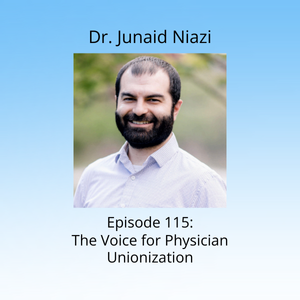
Ep 115: The voice for physician unionization with Dr. Junaid Niazi
Have you noticed that being a physician these days is like many voices screaming into the void?
What if we could gather together as one loud voice?
Is it time to start forming unions?
My guest Dr. Junaid Niazi is part of the largest physician unions that formed recently. He was initially hesitant about what unions would bring, but the idea that real change in physician work flows and physician wellness.
“They may have had some negative images or ideas of what a union is based on other unions and seeing those unions function, but again, a union is what the people make it out to be just like our democracy as a whole. So our democracy only works as well as the people who are running it are. ” - Dr. Junaid Niazi
Does the thought of unionization make you nervous? Maybe it’s time to dive deeper. Join me today with Dr. Junaid Niazi as we explore the benefits of physician unionization as a way forward to gain more respect, value and financial security for clinicians.
“What recourse is there when medicine's getting so corporatized, and decisions are being made from spreadsheets?”
-Dr. Junaid Niazi
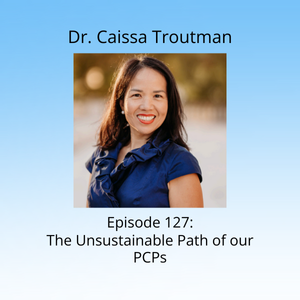
Boss Business of Surgery Series – Episode 127
The Unsustainable Path of Our PCPs
with Caissa Troutman, MD
In this episode of the Boss Business of Surgery Series, Dr. Amy Vertrees speaks with Dr. Caissa Troutman, primary care physician and healthcare leader, about the increasingly unsustainable realities facing primary care — and why the strain on PCPs is not a siloed problem, but one that affects the entire healthcare system.
Dr. Troutman shares insights into the daily pressures primary care physicians face, including overwhelming patient panels, administrative overload, shrinking visit times, and misaligned incentives that reward volume over care. Together, they explore how systemic dysfunction in primary care drives burnout, access issues, downstream specialist strain, and worsening patient outcomes.
This episode reframes primary care not as a bottleneck — but as the foundation of a functioning healthcare system that is being stretched beyond its limits.
In this episode, you’ll learn:
-
Why primary care has become increasingly unsustainable
-
How productivity metrics undermine quality care
-
Why PCP burnout affects the entire care continuum
-
How panel size and visit time pressures erode patient relationships
-
Why administrative burden disproportionately impacts primary care
-
How underinvestment in primary care drives access shortages
-
Why PCPs absorb system failures quietly
-
How moral distress develops when care feels compromised
-
Why referrals and specialist access are downstream consequences
-
How workforce attrition destabilizes communities
-
Why “efficiency fixes” miss the real problem
-
How payment models shape physician behavior
-
Why resilience messaging places blame in the wrong place
-
How primary care strain impacts patient safety
-
Why sustainability requires structural change
-
How supporting PCPs improves system-wide outcomes
-
Why primary care deserves visibility, advocacy, and investment
-
How redesigning care models protects both physicians and patients
Key themes:
-
Primary care is foundational, not expendable
-
Burnout is structural, not personal
-
Volume-based incentives drive dysfunction
-
PCP strain affects the entire system
-
Moral distress is a predictable outcome
-
Sustainability requires redesign, not endurance
-
Supporting PCPs supports patient care
-
The system depends on primary care
Resources & mentions:
-
Boss Business of Surgery Series: https://bosssurgery.com
-
Become the Boss MD
-
Resources on primary care sustainability and healthcare reform
This episode is essential listening for surgeons, specialists, administrators, and healthcare leaders who want to understand why primary care is faltering — and why ignoring it threatens the entire system. Dr. Troutman’s perspective is clear and urgent: when primary care becomes unsustainable, everything downstream suffers — and fixing it requires systemic commitment, not individual sacrifice.
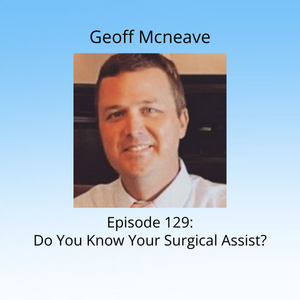
Boss Business of Surgery Series – Episode 129
Do You Know Your Surgical Assist?
with Geoff McNeave
In this episode of the Boss Business of Surgery Series, Dr. Amy Vertrees speaks with Geoff McNeave, surgical assistant and healthcare professional, about the often overlooked but critical role surgical assists play in patient safety, OR efficiency, and surgeon well-being.
Geoff offers insight into what surgeons may not fully see or understand about the surgical assist role — from training pathways and scope of practice to communication dynamics and trust in the operating room. Together, they explore how lack of familiarity with one’s surgical assist can create inefficiencies, tension, and risk, while strong surgeon-assist relationships improve outcomes for everyone involved.
This episode shines a light on team awareness, mutual respect, and the hidden systems that support successful surgery.
In this episode, you’ll learn:
-
What surgical assistants are trained to do — and what they are not
-
Why many surgeons don’t fully understand the assist role
-
How variability in training affects OR dynamics
-
Why trust between surgeon and assist matters
-
How communication gaps create inefficiency and frustration
-
Why surgical assists contribute directly to patient safety
-
How familiarity improves workflow and outcomes
-
Why role clarity reduces tension in the OR
-
How turnover and staffing shortages impact assist quality
-
Why surgeons benefit from knowing their team’s background
-
How mutual respect improves OR culture
-
Why assists often absorb system gaps quietly
-
How better collaboration reduces cognitive load for surgeons
-
Why teamwork is a safety issue, not just a cultural one
-
How small awareness shifts improve day-to-day practice
-
Why surgical success is rarely a solo effort
-
How acknowledging support roles strengthens leadership
-
Why understanding your team protects patients
Key themes:
-
Surgical care is team-based
-
Role clarity improves safety
-
Trust is built through understanding
-
Communication reduces friction
-
Assist variability affects outcomes
-
Respect strengthens OR culture
-
Awareness improves leadership
-
Patients benefit from strong teams
Resources & mentions:
-
Boss Business of Surgery Series: https://bosssurgery.com
-
Become the Boss MD
-
Resources on OR teamwork and surgical safety
This episode is essential listening for surgeons who want to improve OR efficiency, reduce frustration, and strengthen patient safety through better team awareness. Geoff McNeave’s perspective reinforces a simple but powerful truth: knowing your surgical assist isn’t optional — it’s a critical part of leading a safe, effective operating room.
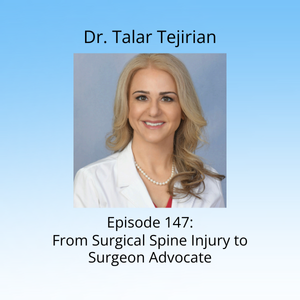
Boss Business of Surgery Series – Episode 147
From Surgical Spine Injury to Surgeon Advocate
with Talar Tejirian, MD
In this episode of the Boss Business of Surgery Series, Dr. Amy Vertrees speaks with Dr. Talar Tejirian, surgeon and physician advocate, about a life- and career-altering experience: sustaining a serious cervical spine injury — and what it took to navigate recovery, identity shifts, and advocacy on the other side.
Dr. Tejirian shares her personal journey through injury, rehabilitation, and the profound reckoning that follows when a surgeon becomes a patient. Together, they explore how physical injury intersects with professional identity, why physicians are often unprepared for vulnerability, and how lived experience can become a powerful catalyst for advocacy and systemic change.
This episode centers on resilience without romanticizing suffering, and on transforming adversity into purpose-driven leadership.
In this episode, you’ll learn:
-
What it’s like for a surgeon to experience a serious spine injury
-
How injury disrupts professional identity and confidence
-
Why physicians struggle with vulnerability and asking for help
-
How recovery reshapes priorities and perspective
-
Why medical culture often overlooks physician disability and injury
-
How becoming a patient changes how surgeons practice medicine
-
Why advocacy often grows from personal experience
-
How fear and uncertainty affect decision-making during recovery
-
Why return-to-work processes are rarely physician-centered
-
How injury exposes gaps in institutional support
-
Why healing involves both physical and psychological work
-
How meaning can emerge after career disruption
-
Why advocacy requires courage and visibility
-
How lived experience strengthens leadership voice
-
Why physicians deserve better systems of support
-
How setbacks can clarify purpose
-
Why resilience does not mean silence
-
How sharing your story helps others feel less alone
Key themes:
-
Injury reshapes identity
-
Vulnerability is not weakness
-
Physicians are not immune to disability
-
Recovery is multifaceted
-
Advocacy is often born from experience
-
Systems are not built for injured physicians
-
Purpose can emerge from disruption
-
Sharing stories creates change
Resources & mentions:
-
Boss Business of Surgery Series: https://bosssurgery.com
-
Become the Boss MD
-
Resources on physician advocacy, recovery, and leadership
This episode is essential listening for surgeons who have faced injury, illness, or unexpected disruption — or who want a deeper understanding of how medical culture responds when physicians themselves need care. Dr. Tejirian’s story offers honesty and hope: advocacy doesn’t begin after everything is resolved — it begins when experience is given a voice.
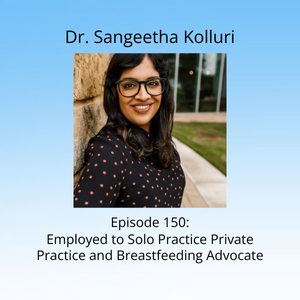
Boss Business of Surgery – Episode 150
Employed to Solo Private Practice and Breastfeeding Advocate
with Sangeetha Kolluri, MD
In this episode of Boss Business of Surgery, Dr. Amy Vertrees sits down with Dr. Sangeetha Kolluri to discuss her transition from employed physician to solo private practice owner — and how her passion for breastfeeding advocacy became part of her professional mission.
Dr. Kolluri shares the realities of leaving employment, the fears and logistics behind starting solo, and the clarity that comes from building a practice aligned with personal values. She also speaks candidly about motherhood in medicine, the importance of supporting breastfeeding physicians and patients, and how advocacy can naturally evolve into leadership.
This conversation is about autonomy, courage, and building a practice that reflects who you truly are.
In this episode, you’ll learn:
-
Why Dr. Kolluri chose to leave employed medicine
-
The mindset shifts required to open a solo practice
-
Early challenges in private practice ownership
-
How aligning values with business decisions changes everything
-
Why breastfeeding advocacy became central to her mission
-
The realities of motherhood while practicing medicine
-
How systems support physician autonomy
-
What surprised her most about practice ownership
-
The importance of community support when building solo
-
How advocacy and entrepreneurship can coexist
-
Financial and operational considerations when starting out
-
Why clarity around your “why” sustains momentum
-
The connection between professional freedom and personal fulfillment
-
Lessons learned from stepping into leadership
-
Advice for physicians considering private practice
Key themes:
-
Autonomy requires courage
-
Values-driven practice creates fulfillment
-
Advocacy strengthens leadership
-
Solo does not mean alone
-
Systems protect sustainability
-
Motherhood and medicine can coexist
-
Alignment fuels resilience
Resources & mentions:
-
Boss Business of Surgery: https://bosssurgery.com
-
Become the Boss MD
-
Private practice and physician leadership resources
This episode is a powerful reminder that building your own path in medicine is possible. Dr. Kolluri’s story illustrates that when physicians align their work with their values — whether through private practice ownership or advocacy — they create both professional sustainability and personal meaning.
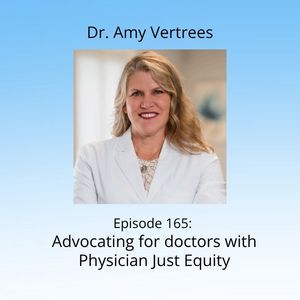
Boss Business of Surgery – Episode 165
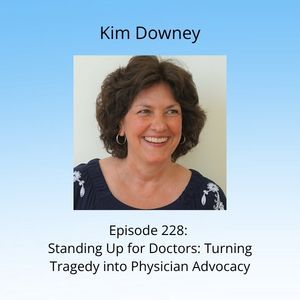
Boss Business of Surgery – Episode 228
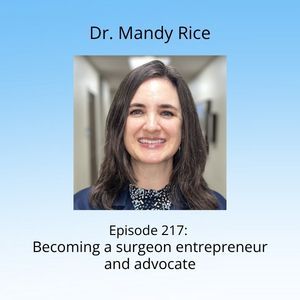
Boss Business of Surgery – Episode 217

Boss Business of Surgery – Episode 191

Meet Your Host
Amy Vertrees, MD is a board-certified general surgeon, certified coach, and the founder and host of the BOSS Business of Surgery Series podcast — a show dedicated to helping surgeons build confidence, clarity, and control in their careers by mastering the skills residency never taught them. After completing surgical training and serving in the military, Amy realized that clinical excellence alone wasn’t enough to navigate the complexities of contracts, practice dynamics, negotiation, and career growth. What started as her personal journey to learn “what’s next” transformed into a mission to empower fellow surgeons with the tools to thrive both professionally and personally. .
Learn More >