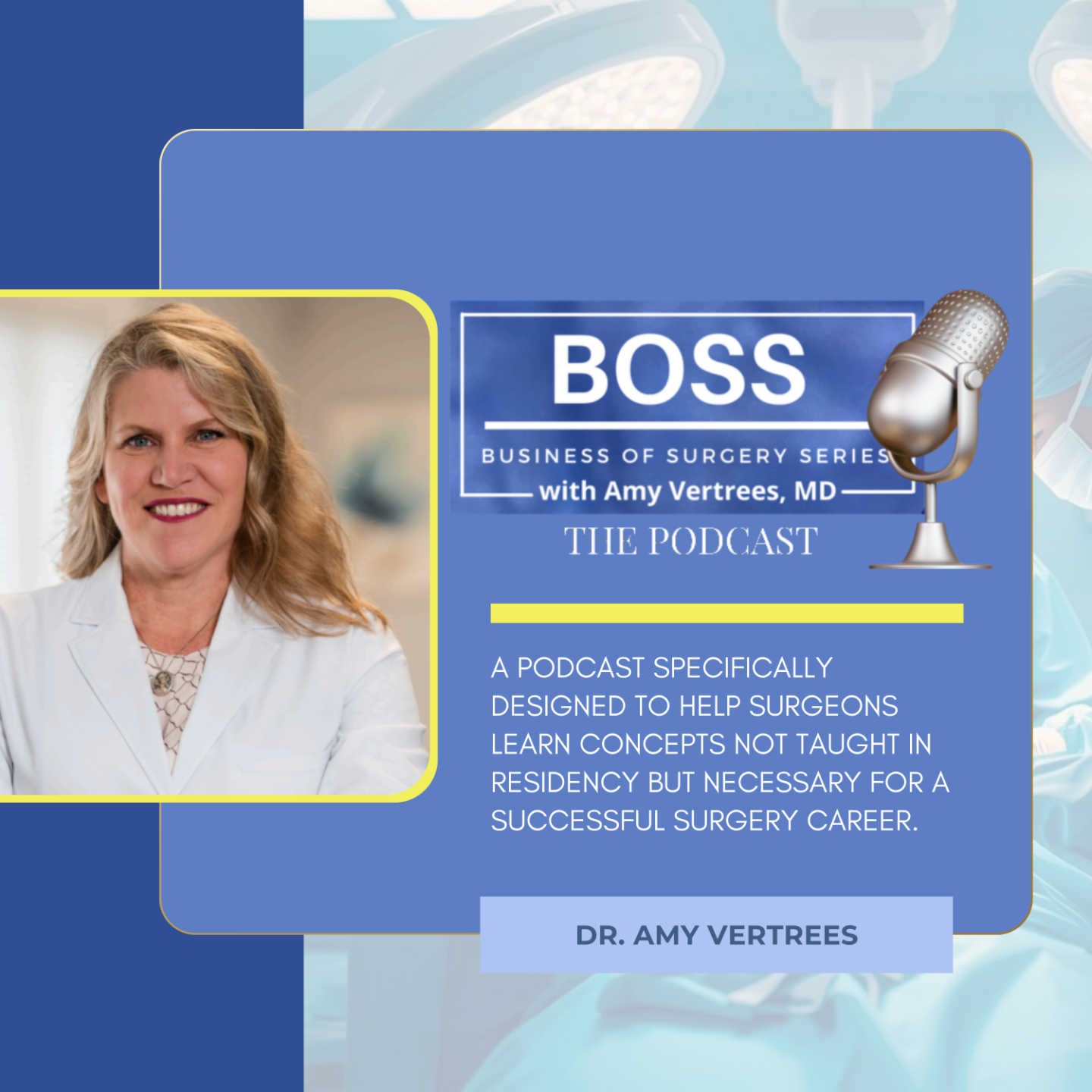
Welcome to the
The BOSS Business of Surgery Series Podcast
With Amy Vertrees, MD
When You Are Crispy and Burning Out Episodes

Episode 1: Growth Days with Dr. Amy Vertrees
Physicians need “Growth Days” Physicians are overwhelmed and burned out. We have an epidemic of “too busy.” Many of us think we could get so much more accomplished if we had more time. Why aren’t we taking the time? Doctors need to start taking “Growth Days.” These aren’t sick days, mental health days or vacation days. Growth days are days strategically taken during the month that are specifically meant for personal growth. www.BOSSsurgery.com

Episode 10: You don't have to dread call with Dr. Karen Leitner
Fellow coach Dr. Karen Leitner and I talk about how we don't have to dread call. You may not ever love it, but there are definitely strategies to decrease the fear and uncertainty.
What are the problems with call?
- We make it three times longer than it has to be: 24 hours of dread, 24 hours of misery, 24 hours of feeling regret afterward
- We feel like we are in impossible situations: I don’t know what to do, and I can’t fix all of their problems
-We tie our self-worth to the patient's outcome, so we ruminate on the chart and vitals because we are trying to find our value (because we don’t find it within us)
Strategies for success:
-Recognizing that treating patients with dignity, kindness, compassion, and brutal honesty may be the true success in patient care, rather than just survival of the patient.
-Working with the patient. Ask them the questions: What is your understanding of the situation? What do you want to get out of this? What are you willing to give up?
-Asking yourself if you consent to the procedure. Are you paying attention to the informed consent that you are asking the patient to sign? Would you sign it for yourself?
-Realizing you only get to live a choice one way, you will never know what happened if you chose a different path. Why wouldn’t you believe you are doing your best, and that you made the best choice?
-Remind yourself that you are not the one who is ill (take your own pulse)
-Plan to talk with someone ahead of time about your fears
-Hearing what is going on in your head, so you can redirect and talk to yourself kindly
-Own the story of your call so you can own the ending- it’s ok not to know the right answer right away, you can figure it out
-You don't have to own everything: get on the same page with your partners with effective handoffs and embracing systems-based practice.
You can find Dr. Leitner and her program "How to Feel Better" here (www.karenleitnermd.com) and her article at
www.kevinmd.com/blog/2021/07/physicians-stop-dreading-call.html
You can find more information about Dr. Vertrees and the BOSS Business of Surgery Series at www.BOSSsurgery.com

Episode 2: Why we became surgeons with Dr. Amy Vertrees
I had a theory that a reason some of us were not satisfied with work was that our reason for becoming surgeons didn't apply to us anymore. Many of you responded, and there were themes for why we became surgeons. Although not all reasons apply anymore, there are some truly inspiring reasons, and I wanted to share them with you. It inspired me again to remember the time when I was making the decision. I hope you all are inspired, too, as you head back to our original "why."

Episode 25: Preventing burnout by learning more about money with the MoneyfitMD Dr. Latifat Akintade
The latest BOSS Business of Surgery Series podcast features Dr. Latifat Akintade, the MoneyfitMD. She coaches women physicians about money so they can burnout less. We had a great talk about how our thoughts and fears about money can hold us back. She had some great insights including:
- Separate the money we make from our value as a human. Money is a thank you for the work that we do, but it is not the measure of who we are. Unless we do that, we will never feel like we have enough.
- Simplifying the language of money shows us that it doesn’t have to be hard. And we don’t have to learn everything about money right away, or even learn everything there is to know.
- Recognize when we are feeling fear or shame about money, and that these come from thoughts that are holding us back (like money is hard, money is bad, I am too busy, I am greedy if I think about money, I should have learned all this already).
- When physicians have money, we do good things with it.
- We already have the tools to succeed with money
- Slow down, rest, relax, don’t burnout learning about money
She shared her Financial Liberation Plan:
- Know you why- why do you want to practice medicine, why are you choosing this life. Explore the limited beliefs and past traumas to learn more about how you are approaching money.
- Identifying your own unfair advantage- We all have characteristics that will help us be successful. For example, as doctors we know how to study, learn, collaborate with others, asking questions and, figure things out. Turn that flashlight on to knowledge about money
- Look at the numbers- find your minimum viable expense. If you lost your job, how much would you need to get by? It’s often less than you think.
- Diversify your sources of income- and it doesn’t have to happen in one day
- Empower ourselves, find our communities and invest in ourselves. She noted that her networth increased as she increased investment in herself. I noticed that when I invested in myself, that was when my life started to change, too.

Episode 28: Health care design for health care equity and burnout prevention with Dr. Heena Santry
The latest BOSS podcast features Dr. Heena Santry, a double-boarded trauma and acute care surgeon and consultant talking about how health care design can help health care equity and prevent moral injury and burnout.
She had two guiding principles as a surgeon: creating a just culture in surgery and advancing health equity. She was excelling along the typical academic track when she realized that she had an opportunity to reach more than just an academic department. She became a consultant for a health care architectural design firm where she uses her experience and skills as a surgeon, her leadership skills, quality research, epidemiologic survey research and geographic information systems to create efficient, equitable spaces in a diverse set of hospitals. Her work allows hospitals to best organize themselves to achieve their population goals considering aspects like trends of aging in the population, kinds of diseases in the area, proximity to other hospitals, and strategies to achieve high quality equitable care.
She is especially passionate about the physicians’ lounge which can break down barriers in the workplace. The lounge has the potential to provide an organic chance to sit with peers in a place focused on wellness, natural light, food for fuel, and a variety of options for comfortable seating either alone or together.
As a mother and a surgeon, many women who did not have any mentors reached out to her for advice. She created an online space for surgeon mothers that allowed networking, relatable content, venting, isolation prevention that has been invaluable for thousands of female surgeons. This space provides opportunity for sponsorship, mentorship, coaching and sharing experiences that has led to real-life networking as well.

Episode 30: Decreasing burnout and stress with Dr. Robyn Tiger the StressfreeMD
The latest BOSS podcast features Dr. Robyn Tiger, a diagnostic radiologist and founder of StressFreeMD. She has been a leader in the field of evidence-based self-care tools and burnout thriver.
“I made my mess my message”
She began her wellness career when after 10 years in practice she had somatic symptoms that no one could figure out- migraines, headache, vertigo, tinnitus, couldn’t sleep, reflux, chest pain, and paresthesias. She would consistently workout and eat a vegan diet, but despite being physically healthy, she didn’t feel well. She spontaneously took a 5-week series on yoga meditation (initially rolling her eyes at the concept), but was surprised when she felt calm, clear, not even tired anymore.
She found the solution was bringing homeostasis back to her autonomic system. She learned how to take care of herself from the inside out. Over time, she transitioned from solely body-based work to mindset with coaching, because it is hard to work with our thoughts when our autonomic system is out of whack. She learned to be a doctor in a different way by balancing physiology and managing our mind.
The solution is not as inaccessible as it seems. She provides “stress-free snacks” to quickly feel better when something comes up. These are quick easy things to do all day long. You can find more information about her podcast, free videos and latest projects at https://www.stressfreemd.net/

Boss Business of Surgery Series – Episode 41
From Burnout to Determined: Reclaiming Identity, Purpose, and Direction
with Dr. Jimmy Turner
In this episode of the Boss Business of Surgery Series, Dr. Amy Vertrees speaks with Dr. Jimmy Turner, anesthesiologist, writer, and founder of The Physician Philosopher, about burnout as a breaking point — and as a catalyst for profound clarity and determination.
Dr. Turner shares his deeply personal story of moving through severe burnout, disillusionment with medicine, and the unraveling of a professional identity that had once defined him. Rather than framing burnout as something to simply “recover from,” this conversation explores how burnout can force honest reckoning — and how determination, values, and self-trust can emerge on the other side.
This episode offers honesty, validation, and hope for physicians who feel exhausted, trapped, or unsure how to keep going.
In this episode, you’ll learn:
-
How burnout often builds quietly before it becomes unavoidable
-
Why medical training normalizes emotional suppression and overwork
-
How identity becomes dangerously fused with role and productivity
-
Why “just pushing through” often makes burnout worse
-
How moral injury differs from ordinary stress or fatigue
-
Why many physicians don’t recognize burnout until they are depleted
-
The grief that comes with questioning a long-held professional identity
-
Why leaving or redefining medicine can feel both terrifying and relieving
-
How shame and silence keep physicians stuck
-
Why burnout is a systems problem — not a personal failure
-
How reflection and philosophy helped Dr. Turner make sense of his experience
-
Why worth must be separated from career status
-
How meaning can exist beyond traditional clinical roles
-
Why determination often replaces certainty
-
How rebuilding requires space, honesty, and support
-
Why helping other physicians became part of Dr. Turner’s healing
-
How redefining success restores agency
-
Why it’s possible to move forward without having everything figured out
Key themes:
-
Burnout is not weakness
-
Medicine trains endurance, not sustainability
-
Identity loss is real and painful
-
Determination can follow disillusionment
-
Stepping away can be an act of integrity
-
Systems create suffering — individuals absorb it
-
Meaning is not limited to clinical work
-
You are more than your title
Resources & mentions:
-
The Physician Philosopher: https://thephysicianphilosopher.com
-
Writing and coaching resources for burned-out physicians
-
Boss Business of Surgery Series: https://bosssurgery.com
-
Become the Boss MD
This episode is essential listening for physicians who feel exhausted, disillusioned, or quietly questioning whether they can continue practicing medicine as it currently exists. Dr. Turner’s story is a powerful reminder that burnout doesn’t have to be the end of the road — it can be the moment determination, honesty, and a new direction begin.

Boss Business of Surgery Series – Episode 62
Strategies for When You’re Crispy Around the Edges
with Amy Vertrees, MD
In this solo episode of the Boss Business of Surgery Series, Dr. Amy Vertrees addresses a state many surgeons recognize instantly but rarely name: being “crispy around the edges.” Not fully burned out — but noticeably frayed, depleted, and running on fumes.
Dr. Vertrees breaks down what this in-between state looks like in real life, why it’s so easy to dismiss or normalize, and why waiting until full burnout is neither necessary nor wise. This episode focuses on early intervention, practical recalibration, and small, realistic strategies that help surgeons regain steadiness before exhaustion hardens into collapse.
This is a compassionate, practical episode designed to help surgeons stabilize, reset, and protect their capacity in demanding seasons.
In this episode, you’ll learn:
-
What “crispy around the edges” actually feels like in day-to-day practice
-
How this state differs from full burnout — and why it’s often ignored
-
Why surgeons normalize depletion until it becomes dangerous
-
How irritability, numbness, and fatigue are early warning signs
-
Why rest alone doesn’t fix chronic misalignment
-
How small, targeted changes can prevent deeper burnout
-
Why adding more productivity tools usually backfires
-
How to assess what’s draining you versus what’s sustaining you
-
Why nervous system overload impacts judgment and patience
-
How to reduce friction instead of demanding more resilience
-
Why boundaries matter before you feel desperate
-
How to make space without blowing up your life or career
-
Why permission to slow down must be self-granted
-
How to interrupt the “push harder” reflex
-
Why clarity returns before motivation
-
How to choose recovery that actually restores capacity
-
Why being proactive is a form of professionalism
-
How addressing crispiness protects long-term sustainability
Key themes:
-
Burnout has early stages
-
Depletion is information
-
Waiting makes recovery harder
-
Small changes compound
-
Rest without alignment isn’t enough
-
Boundaries prevent crisis
-
Capacity deserves protection
-
You don’t have to be broken to make changes
Resources & mentions:
-
Boss Business of Surgery Series: https://bosssurgery.com
-
Become the Boss MD
-
Resources on physician well-being and sustainable practice
This episode is essential listening for surgeons who feel stretched thin, more reactive than usual, or quietly exhausted — but who don’t feel “burned out enough” to justify change. Dr. Vertrees’ message is both practical and reassuring: you don’t have to wait until everything falls apart to take yourself seriously — addressing crispiness early is how you stay in the game.

Boss Business of Surgery Series – Episode 91
Rebelling Against Burnout Culture: Choosing Sustainability in a System That Rewards Overwork
with Kristen Yates, MD
In this episode of the Boss Business of Surgery Series, Dr. Amy Vertrees speaks with Dr. Kristen Yates, surgeon and physician leader, about burnout culture — not as an individual failure, but as a deeply ingrained system that rewards self-sacrifice, silence, and endurance at all costs.
Dr. Yates challenges the unspoken rules of medicine that equate exhaustion with commitment and overwork with professionalism. Together, they explore what it means to rebel against burnout culture in practical, grounded ways — by questioning norms, setting boundaries, and choosing sustainability even when it feels uncomfortable or countercultural.
This episode is about refusing to accept burnout as inevitable — and reclaiming agency in a system that benefits from physician depletion.
In this episode, you’ll learn:
-
What “burnout culture” actually looks like in everyday medical practice
-
Why burnout is often normalized, minimized, or even celebrated
-
How physicians are trained to override basic human limits
-
Why resilience messaging can quietly shift responsibility onto individuals
-
How overwork becomes a badge of honor
-
Why questioning norms can feel risky — even when they’re harmful
-
How burnout culture perpetuates guilt and self-blame
-
Why small acts of resistance matter
-
How boundaries challenge dysfunctional systems
-
Why sustainability is not laziness or lack of dedication
-
How to recognize when culture — not capacity — is the problem
-
Why physicians often wait for permission that never comes
-
How choosing yourself disrupts unhealthy expectations
-
Why rebellion doesn’t have to be loud to be powerful
-
How clarity replaces compliance
-
Why opting out of burnout culture protects patient care
-
How collective change begins with individual decisions
-
Why you’re allowed to practice medicine differently
Key themes:
-
Burnout is systemic, not personal
-
Overwork is culturally reinforced
-
Sustainability is a professional value
-
Boundaries are acts of resistance
-
You are not weak for needing limits
-
Questioning norms is leadership
-
Small rebellions create change
-
Physicians deserve better systems
Resources & mentions:
-
Boss Business of Surgery Series: https://bosssurgery.com
-
Become the Boss MD
-
Physician leadership and burnout-prevention resources
This episode is essential listening for surgeons who feel exhausted by expectations they never agreed to, or who sense that burnout has been normalized as “just part of the job.” Dr. Yates’ message is clear and empowering: you don’t have to accept burnout culture to belong — choosing sustainability is not rebellion against medicine, it’s a stand for its future.

Boss Business of Surgery Series – Episode 97
When You’re Burned Out — But Asked to Smile More
with Megan Melo, MD
In this episode of the Boss Business of Surgery Series, Dr. Amy Vertrees speaks with Dr. Megan Melo, surgeon and physician leader, about a familiar but rarely named experience in medicine: being visibly exhausted, overwhelmed, or stretched thin — and being told, implicitly or explicitly, to smile more, soften your tone, or make others more comfortable.
Dr. Melo explores how emotional labor, gendered expectations, and burnout intersect in surgical culture, placing additional, invisible demands on physicians who are already operating at capacity. Together, they unpack why requests to be more pleasant or agreeable often surface precisely when someone is most depleted — and how these expectations quietly reinforce burnout, resentment, and self-silencing.
This episode reframes emotional performance not as professionalism, but as an added tax placed on already burned-out clinicians.
In this episode, you’ll learn:
-
What it really means when burned-out physicians are told to “smile more”
-
How emotional labor shows up in surgical and medical environments
-
Why tone-policing often targets women and underrepresented physicians
-
How burnout is compounded by expectations to manage others’ comfort
-
Why professionalism is frequently conflated with pleasantness
-
How emotional suppression worsens exhaustion and disconnection
-
Why feedback about demeanor often lacks context or accountability
-
How self-silencing becomes a survival strategy
-
Why resentment is a predictable outcome of emotional overextension
-
How to distinguish between constructive feedback and control
-
Why boundaries matter when emotional labor is expected
-
How to respond when requests for “niceness” feel misaligned
-
Why authenticity improves trust more than performance
-
How internal validation protects against external pressure
-
Why you’re not obligated to perform happiness while depleted
-
How naming emotional labor restores clarity
-
Why leadership doesn’t require emotional self-erasure
-
How choosing yourself disrupts unhealthy norms
Key themes:
-
Emotional labor is real work
-
Burnout is worsened by performance expectations
-
Professionalism is not emotional suppression
-
Tone-policing undermines trust
-
Boundaries protect dignity and energy
-
Authenticity strengthens leadership
-
You are not responsible for managing others’ comfort
-
Sustainability requires honesty
Resources & mentions:
-
Boss Business of Surgery Series: https://bosssurgery.com
-
Become the Boss MD
-
Resources on physician burnout, emotional labor, and leadership
This episode is essential listening for surgeons who feel exhausted yet pressured to appear upbeat, agreeable, or accommodating. Dr. Melo’s perspective offers validation and permission: you don’t owe cheerfulness when you’re depleted — you deserve systems and cultures that respond to burnout with support, not performance demands.

Episode 111: Burnout in Private Practice
Do you want to gain greater self-awareness and acquire practical tools to overcome burnout in your private practice? Look no further, because I have the solution you've been searching for. In this discussion, our guest, Sogol Pahlavan, will be sharing invaluable insights and strategies to help you achieve a renewed sense of well-being and combat burnout effectively. Get ready to unlock the secrets to achieving a healthier work-life balance and reignite your passion for your private practice.
My special guest is Sogol Pahlavan
Meet Dr. Sogol Pahlavan, a dynamic pediatrician and entrepreneur who knows firsthand the ups and downs of private practice. Growing up as a first-generation immigrant in Texas, Dr. Pahlavan was inspired by her family's entrepreneurial spirit. With a natural inclination for communication and a love for children, she found her calling in pediatrics. Together with her sister, she took the leap and established their own clinic, even though many doubted the profitability of serving the Medicaid community. However, Dr. Pahlavan's determination and passion led to a thriving practice in an underserved Hispanic community. Along her journey, she encountered burnout and realized that blaming external factors wouldn't solve the problem. Instead, she delved into self-reflection and discovered the importance of addressing the internal manager that constantly berates us with self-sabotaging thoughts. Dr. Pahlavan's story is a testament to the possibilities of private practice and the power of overcoming burnout with self-awareness and resilience.
If you are drawn to something, if your soul is calling for you to connect and do something that's completely outside the box that no one has ever done, don't listen to them. Follow your soul's calling, because if it is aligned with what you truly want, the universe will make it happen. - Sogol Pahlavan
In this episode, you will be able to:
-
Explore practical strategies to combat burnout in private practice.
-
Embrace unconventional career paths while following your passion.
-
Learn effective methods to build a profitable private practice.
-
Recognize burnout as a transformative and personal journey.
-
Master the importance of self-leadership in your business.

Episode 125: Healing the Healers with Dr. Nora Vasquez
Dr. Nora Vasquez, a triple certified coach on leadership and wellness, brings a unique perspective to the discussion on healthcare burnout. With a background in internal medicine and a decade of serving underserved communities, Dr. Vasquez's personal experience with burnout led her to pursue coaching as a means to heal the healers. She is passionate about addressing institutional change, advocating for resources and support within healthcare systems, and empowering both individuals and teams to navigate the challenges of burnout. Through her work with medical societies and hospitals, Dr. Vasquez is dedicated to creating impactful, sustainable change that benefits the well-being of healthcare professionals and the quality of patient care.
"Who heals the healers? I do. I have these tools. I can help heal." - Dr. Nora Vasquez
In this episode, you will be able to:
-
Discover how coaching can empower physicians to overcome burnout and thrive in their careers.
-
Explore the impact of implementing wellness programs in healthcare institutions for staff and patient care.
-
Learn effective strategies for creating work-life balance to enhance well-being for healthcare professionals.
-
Uncover actionable strategies for driving positive change within the healthcare system.
-
Explore the benefits of coaching for healthcare teams in improving job satisfaction and patient outcomes.
Create Work-Life Balance Strategies
In the pursuit of balance, Dr. Vasquez encourages professionals to get clear on personal desires instead of attempting to meet external expectations. She recognizes the variation in work-life balance needs according to life stages, endorsing the belief that balance is achievable even while navigating demanding careers and personal responsibilities. By promoting these strategies, Dr. Vasquez supports a more sustainable and fulfilling lifestyle for healthcare professionals.
The resources mentioned in this episode are:
-
Visit the website www.renewyourmindmd.com to request a free strategy session and discuss individual challenges or bringing a grand rounds to your institution. The coaching offers CME and are free, providing a win for everybody.
-
Join the free online community on the website www.renewyourmindmd.com to connect with others and access additional resources and support.
-
Explore the website www.renewyourmindmd.com to learn more about the coaching services offered, including life coaching, leadership coaching, and wellness coaching for healthcare professionals.
-
Reach out to Dr. Nora Vasquez through the website www.renewyourmindmd.com to inquire about bringing coaching programs to your institution, including retreats and ongoing support for staff.
-
Engage in a free strategy session with Dr. Nora Vasquez by visiting the website www.renewyourmindmd.com to discuss specific challenges and explore how coaching can provide hope and support for healthcare professionals.

Episode 142: Burnout Presents Differently in the High Achiever with Dr. Diana Londono
The latest BOSS podcast features Dr. Diana Londono, a urologist who has experienced burnout twice. We talked about burnout in the high achiever, and how these symptoms can look differently than it does in other people. Dr. Londono shares her personal experiences with burnout, highlighting the physical and emotional manifestations she encountered, such as weight loss, hair loss, insomnia, asthma, chest pain, and joint pain. She emphasizes the importance of recognizing burnout symptoms, which can vary from person to person, and seeking support through resources like coaching, therapy, or support groups.
Self-love, gratitude, and finding purpose are critical in combating burnout. Dr. Londonio discusses the Physician Coach Support Program she created, which offers free and confidential coaching sessions for physicians. We also talked about the Physician Support Line and Physician Anonymous.
The key takeaway is that burnout is a complex issue, especially in the high acheiver that requires a multifaceted approach, including self-care, mindset shifts, and seeking support from others.
Link to the episode in comments.
Chapters
Introduction and Background
The podcast host introduces Dr. Diana Londonio, a urologist who has experienced burnout twice. They discuss the rarity of female urologists, especially Latinas, and Dr. Londonio's work in creating education and support programs for physicians.
Recognizing Burnout Symptoms
Dr. Londonio shares her personal experiences with burnout, highlighting the physical and emotional symptoms she encountered, such as weight loss, hair loss, insomnia, asthma, chest pain, and joint pain. She emphasizes the importance of recognizing burnout symptoms, which can manifest differently in different individuals, and seeking support.
The Role of Self-Love and Gratitude
Dr. Londonio discusses the importance of self-love, gratitude, and finding purpose in combating burnout. She emphasizes the power of words and the need to speak to oneself with love and kindness. She also highlights the significance of prioritizing self-care activities like exercise, healthy eating, and sleep.
Seeking Support and Resources
The conversation explores various resources available for physicians struggling with burnout, including coaching, therapy, and support groups. Dr. Londonio discusses the Physician Coach Support Program she created, which offers free and confidential coaching sessions for physicians. Other resources mentioned include the Physician Support Line and Physician Anonymous.
Finding Purpose and Remembering Why
Dr. Londonio emphasizes the importance of remembering the purpose and reasons behind choosing a career in medicine. She suggests that reconnecting with the initial motivations and finding joy in serving others can help combat burnout and restore a sense of fulfillment.
Action Items
- Recognize and acknowledge burnout symptoms, which can manifest differently in different individuals, such as dread, cynicism, anger, loss of hope, or physical symptoms like weight loss, insomnia, or joint pain.
- Practice self-love and self-care activities like exercise, healthy eating, and prioritizing sleep.
- Seek support through resources like coaching, therapy, or support groups, such as the Physician Coach Support Program, Physician Support Line, or Physician Anonymous.
- Cultivate gratitude and find purpose in serving others, remembering the initial motivations for choosing a career in medicine.
- Learn to set boundaries and say 'no' when necessary to avoid overcommitment and overwhelm.
- Explore forgiveness, both for oneself and others, as a means of healing and letting go of emotional burdens.

Episode 143: Evidence That Coaching Decreases Burnout and Imposter Syndrome with Dr. Tyra Fainstad and Dr. Adrienne Mann
This episode discusses a program called Better Together Physician Coaching, created by Dr. Adrienne Mann and Dr. Tyra Feinstad. The program aims to address burnout, imposter syndrome, and other well-being issues faced by medical professionals through group coaching sessions, self-study modules, and one-on-one coaching opportunities. The program is offered to entire populations within institutions or departments, with participants able to join confidentially. The founders share their personal experiences with burnout and how coaching transformed their lives, leading them to create Better Together. They conducted studies, including a randomized controlled trial with over 1,000 residents, which demonstrated significant improvements in burnout, imposter syndrome, and self-compassion scores among participants. The program is now available to medical students, residents, faculty, staff, and advanced practice providers across various institutions. The article highlights the program's accessibility, with institutions paying a fee of $100 per eligible MD/DO/AP and $60 per eligible trainee for a year of access. The founders aim to partner with institutions to drive cultural change and prioritize well-being investments. They also discuss the program's flexibility, allowing participants to engage in various ways, and the sense of community it fosters despite being virtual. Future plans include continuing to partner with institutions, conducting further research, and expanding the program's offerings.
Chapters
Introduction to Better Together Physician Coaching
The article introduces Dr. Adrienne Mann and Dr. Tyra Feinstad, the founders of Better Together Physician Coaching, a program aimed at addressing burnout, imposter syndrome, and other well-being issues faced by medical professionals. The program offers group coaching sessions, self-study modules, and one-on-one coaching opportunities.
Personal Experiences and Motivation
Dr. Mann and Dr. Feinstad share their personal experiences with burnout and how coaching transformed their lives, leading them to create Better Together. They discuss the challenges they faced, such as feeling disconnected from their roles and struggling with approval addiction, and how coaching helped them regain a sense of self and balance.
Program Structure and Accessibility
The article explains that Better Together is offered to entire populations within institutions or departments, with participants able to join confidentially. The program is accessible, with institutions paying a fee of $100 per eligible MD/DO/AP and $60 per eligible trainee for a year of access. The founders aim to make coaching affordable and available to the masses.
Research and Impact
The article discusses the research conducted by the founders, including a randomized controlled trial with over 1,000 residents. The study demonstrated significant improvements in burnout, imposter syndrome, and self-compassion scores among participants. The founders also mention ongoing research and plans to continue investigating the program's impact on various populations.
Institutional Partnerships and Cultural Change
The founders emphasize the importance of partnering with institutions to drive cultural change and prioritize well-being investments. They aim to engage with stakeholders at various levels, such as CMOs and deans, to promote understanding of the program's necessity and impact.
Program Flexibility and Community
The article highlights the program's flexibility, allowing participants to engage in various ways, such as group coaching calls, written coaching, self-study modules, and one-on-one sessions. Despite being virtual, the program fosters a sense of community among participants, which the founders believe is crucial for its success.
Future Plans and Expansion
The founders discuss their future plans for Better Together, including continuing to partner with institutions, conducting further research, and expanding the program's offerings. They aim to leverage the wealth of data and insights gathered from participants to inform the well-being sphere and drive positive change in the medical field.
Action Items
1. Reach out to Better Together Physician Coaching to inquire about partnering with the program for your institution or medical group
2. Consider implementing the Better Together Physician Coaching program to address burnout, imposter syndrome, and well-being issues among medical professionals within your organization
3. Explore opportunities to prioritize well-being investments and drive cultural change by engaging with stakeholders at various levels, such as CMOs and deans, to promote understanding of the program's necessity and impact
4. Encourage medical professionals within your organization to participate in the Better Together Physician Coaching program, as it offers a flexible and confidential approach to addressing well-being challenges through group coaching, self-study modules, and one-on-one coaching opportunities

Episode 139: Fatigue is Killing Your Dream with Dr. Amy Vertrees
If you had a strategy that would make it more likely to achieve your dreams, would you look more into it?
Fatigue is killing our dreams.
If we are not taking breaks and recharging, it's difficult to tap into the creative energy we have. The appreciation for our job and for our life. We have common thought patterns and behaviors that contribute to overworking, like the fear of being perceived as lazy or not doing enough.
Prioritize self-care, create boundaries, and take growth days to prevent burnout are essential key strategies for helping us achieve our dreams. Without rest, we may fall into worsening depression (sometimes difficult to identify in the high achiever) and imposter syndrome. We must value our well-being and make time for rest and rejuvenation to sustain our careers and achieve our greatest aspirations.
In this interview, Dr. Christin Mullane discusses her new book 'Medical Stress and Trauma: A Mindfulness-Based Approach to Reclaiming Safety and Empowerment,' which addresses the psychological challenges faced by healthcare workers and patients in medical systems. Dr. Mullane, a psychologist with extensive experience in various healthcare settings across the United States, explains how the pandemic has exacerbated existing issues in healthcare systems, leading to increased trauma and stress. She introduces the Cartman-Drama triangle framework, which identifies three roles people can play in these systems: victim, rescuer, and perpetrator. Dr. Mullane discusses concepts like vicarious traumatization, compassion fatigue, and burnout, emphasizing the importance of setting healthy boundaries and developing self-compassion. The conversation covers the challenges of working in healthcare systems, particularly in the context of post-pandemic recovery, and highlights the need for better language and understanding around these issues. Dr. Mullane also shares information about her practice, Ginkgo Leaf Health, which offers support to healthcare workers, patients, and caregivers dealing with medical trauma and stress.
Chapters
00:00:55Introduction to Dr. Kristin Mullane and Her Background
Dr. Mullane introduces herself as a psychologist with extensive experience in medical systems, having worked in emergency rooms, palliative care, and cancer clinics across various healthcare settings in the United States, including inner city hospitals and rural outpatient clinics.
00:02:14Understanding Medical Stress and Trauma
Dr. Mullane explains the Cartman-Drama triangle framework, describing how healthcare workers can identify as victims, rescuers, or perpetrators in their roles. She discusses concepts like vicarious traumatization, compassion fatigue, and burnout, emphasizing the challenges faced by healthcare professionals.
00:07:00The Impact of the Pandemic on Healthcare Systems
The speakers discuss how the pandemic has changed perceptions of healthcare workers, from being seen as heroes to facing increased medical distrust. They explore how financial challenges and staffing shortages have compounded existing problems in healthcare systems.
00:29:00The Importance of Boundary Setting
Dr. Mullane outlines the five steps to effective boundary setting, emphasizing the importance of creating, communicating, and maintaining boundaries while also allowing for flexibility when necessary.
00:40:20Overview of Ginkgo Leaf Health Practice
Dr. Mullane describes her practice's focus on supporting healthcare workers, patients, and caregivers dealing with medical trauma. She discusses their offerings, including pro bono financial counseling, life and meditation coaching, and virtual consultations across most states.
Dr. Amy Vertrees, the host, introduces the episode focusing on the prolonged stress cycle, a topic relevant to many, especially female surgeons, given the various stressors in medicine and the world . She notes that this topic arose from discussions within the female boss surgeons group, emphasizing its importance and broad applicability . The group, which meets weekly and twice monthly on Sundays, covers topics not typically addressed in residency but crucial for career and mental health .
Dr. Vertrees shares her background as a general surgeon and certified coach, highlighting her experiences in military and civilian settings, as well as private practice, which led her to create the Boss Business and Surgery series . She details the program's structure, including three-month modules on dealing with difficult colleagues and managing the impact of complications . The discussion emphasizes the pervasive nature of stress, exacerbated by global events and the demands of being a surgeon .
The prolonged stress cycle often begins in training, with experiences that may have been hostile or malignant, impacting future stress responses . Dr. Vertrees references the book "What Happened to You?" by Bruce Perry and Oprah Winfrey, explaining how prolonged stress can dysregulate the nervous system, hindering rational thinking . She differentiates between regulated stress, which builds resilience, and dysregulated stress, which results from extreme, prolonged, and unpredictable situations .
Dr. Vertrees explains the stress cycle, involving a trigger, a stress response (fight, flight, freeze, or fawn), and a physiological reaction . Recognizing one's physiological stress response is crucial, as it serves as a red flag indicating excessive stress . She provides an example of a stressful surgical scenario, emphasizing that recognizing a stress response is a sign of awareness, not a personal failing . Finding a colleague in such situations can provide stability and prevent potentially harmful actions .
The discussion covers the importance of emotional regulation, especially for new attendings, and the impact of decision fatigue . Impaired coping mechanisms, such as doom scrolling or overeating, can worsen the stress cycle . Confidence is defined as the ability to manage any emotion, including fear and uncertainty, while still acting effectively . Practical techniques to interrupt the stress cycle include deep breathing exercises, focusing on the next best step, and box breathing .
Dr.Vertrees stresses that emotional and physiological regulation is crucial for surgeons, who are leaders of their teams and responsible for their patients . She advises on communicating with families during stressful events, emphasizing the importance of reassuring them that their loved one is okay . The value of having a second set of skilled eyes, such as residents, is highlighted, as they can prevent potentially devastating mistakes .
Strategies to manage the stress cycle include awareness and tracking, physiological regulation, emotional processing, cognitive reframing, and setting boundaries . Purpose and value alignment, along with gratitude, are also important . Dr. Vertings recommends finding a challenge network, a group of supportive individuals who can be relied upon during difficult times . She concludes by promoting the Boss Female Surgeons Group Coaching Program and other resources available at bosssurgery.com .
Chapter
Introduction to Prolonged Stress Cycle
Dr. AmyVertrees introduces the episode's focus on the prolonged stress cycle, a topic of significant relevance, particularly for female surgeons, given the multitude of stressors present in both medicine and the broader world. She highlights that this subject emerged from discussions within the female boss surgeons group, underscoring its importance and widespread applicability.
The Female Boss Surgeons Group
Dr. V describes the group of female surgeons who meet weekly, Wednesdays at 6 p.m. Central, and twice a month on Sundays, to discuss topics often overlooked in residency but essential for career advancement and mental well-being.
Dr. Vertings' Background and the Boss Business and Surgery Series
Dr. V shares her background as a general surgeon and certified coach, emphasizing her experiences in military and civilian settings, as well as in private practice, which inspired her to create the Boss Business and Surgery series. She notes that the business was reinvigorated in 2020 to address new challenges faced by surgeons.
Program Structure: Difficult Colleagues and Complications
Dr. V details the program's structure, which includes three-month modules dedicated to addressing difficult colleagues and managing the impact of complications. She emphasizes that the program teaches strategies to improve relationships and positively influence workplace dynamics.
Pervasive Nature of Stress
The discussion emphasizes the pervasive nature of stress, which is exacerbated by global events and the inherent demands of being a surgeon. Dr. V mentions theories suggesting that the high level of stress in the world may be intentional, designed to keep people off balance and disengaged.
Stress Cycle in Training and Early Career
The prolonged stress cycle often begins during training, with experiences that may have been hostile or malignant, significantly impacting future stress responses. Dr. V reflects on her own training, initially downplaying its hostility but later recognizing its challenging aspects.
"What Happened to You?" and Dysregulated Nervous System
Dr. V references the book "What Happened to You?" by Bruce Perry and Oprah Winfrey, explaining how prolonged stress can dysregulate the nervous system, hindering rational thinking. She explains that stress can overwhelm the primitive brain, preventing signals from reaching the smart part of the brain.
Regulated vs. Dysregulated Stress
Dr. V differentiates between regulated stress, which builds tolerance and resilience, and dysregulated stress, which results from extreme, prolonged, and unpredictable situations. She notes that predictable, moderate, and controllable stress can lead to productive stress responses.
The Stress Cycle: Trigger, Response, and Physiological Reaction
Dr. V explains the stress cycle, which involves a trigger, a stress response (fight, flight, freeze, or fawn), and a physiological reaction. She emphasizes that recognizing these responses is crucial for managing stress effectively.
Recognizing Physiological Stress Response
Recognizing one's physiological stress response is crucial, as it serves as a red flag indicating excessive stress. Dr. V provides examples such as increased heart rate, muscle tension, and poor sleep.
Surgical Scenario and Stress Response
Dr. V provides an example of a stressful surgical scenario, emphasizing that recognizing a stress response is a sign of awareness, not a personal failing. She notes that in high-stress situations, the primitive brain can take over, hindering clear thinking.
Finding a Colleague for Stability
Finding a colleague in stressful situations can provide stability and prevent potentially harmful actions. Dr. V likens this to grabbing onto a stable object during a tornado.
Emotional Regulation and Decision Fatigue
The discussion covers the importance of emotional regulation, especially for new attendings, and the impact of decision fatigue. Dr. Vertings notes that making numerous decisions can impair one's ability to make further decisions effectively.
Impaired Coping Mechanisms
Impaired coping mechanisms, such as doom scrolling or overeating, can worsen the stress cycle. Dr. V explains that these behaviors are often attempts to avoid negative feelings but ultimately lead to increased vulnerability.
Confidence as Emotional Regulation
Confidence is defined as the ability to manage any emotion, including fear and uncertainty, while still acting effectively. Dr. V emphasizes that courage is acting despite feeling fear.
Techniques to Interrupt the Stress Cycle
Practical techniques to interrupt the stress cycle include deep breathing exercises, focusing on the next best step, and box breathing. Dr. V mentions Dr. Robin Tiger's advice on using deep breathing for both surgeons and patients.
Importance of Emotional and Physiological Regulation
Dr. V stresses that emotional and physiological regulation is crucial for surgeons, who are leaders of their teams and responsible for their patients. She notes that a calm leader can help the team remain calm and effective.
Communicating with Families During Stressful Events
Dr. V advises on communicating with families during stressful events, emphasizing the importance of reassuring them that their loved one is okay. She suggests leading with the assurance that the patient is fine before explaining the details.
Value of a Second Set of Skilled Eyes
The value of having a second set of skilled eyes, such as residents, is highlighted, as they can prevent potentially devastating mistakes. Dr. Vertings shares a personal experience where a resident prevented her from making a significant error.
Strategies to Manage the Stress Cycle
Strategies to manage the stress cycle include awareness and tracking, physiological regulation, emotional processing, cognitive reframing, and setting
Dr. Amy Vertrees, the host, introduces the episode focusing on the prolonged stress cycle, a topic relevant to many, especially female surgeons, given the various stressors in medicine and the world . She notes that this topic arose from discussions within the female boss surgeons group, emphasizing its importance and broad applicability . The group, which meets weekly and twice monthly on Sundays, covers topics not typically addressed in residency but crucial for career and mental health .
Dr. Vertrees shares her background as a general surgeon and certified coach, highlighting her experiences in military and civilian settings, as well as private practice, which led her to create the Boss Business and Surgery series . She details the program's structure, including three-month modules on dealing with difficult colleagues and managing the impact of complications . The discussion emphasizes the pervasive nature of stress, exacerbated by global events and the demands of being a surgeon .
The prolonged stress cycle often begins in training, with experiences that may have been hostile or malignant, impacting future stress responses . Dr. Vertrees references the book "What Happened to You?" by Bruce Perry and Oprah Winfrey, explaining how prolonged stress can dysregulate the nervous system, hindering rational thinking . She differentiates between regulated stress, which builds resilience, and dysregulated stress, which results from extreme, prolonged, and unpredictable situations .
Dr. Vertrees explains the stress cycle, involving a trigger, a stress response (fight, flight, freeze, or fawn), and a physiological reaction . Recognizing one's physiological stress response is crucial, as it serves as a red flag indicating excessive stress . She provides an example of a stressful surgical scenario, emphasizing that recognizing a stress response is a sign of awareness, not a personal failing . Finding a colleague in such situations can provide stability and prevent potentially harmful actions .
The discussion covers the importance of emotional regulation, especially for new attendings, and the impact of decision fatigue . Impaired coping mechanisms, such as doom scrolling or overeating, can worsen the stress cycle . Confidence is defined as the ability to manage any emotion, including fear and uncertainty, while still acting effectively . Practical techniques to interrupt the stress cycle include deep breathing exercises, focusing on the next best step, and box breathing .
Dr.Vertrees stresses that emotional and physiological regulation is crucial for surgeons, who are leaders of their teams and responsible for their patients . She advises on communicating with families during stressful events, emphasizing the importance of reassuring them that their loved one is okay . The value of having a second set of skilled eyes, such as residents, is highlighted, as they can prevent potentially devastating mistakes .
Strategies to manage the stress cycle include awareness and tracking, physiological regulation, emotional processing, cognitive reframing, and setting boundaries . Purpose and value alignment, along with gratitude, are also important . Dr. Vertings recommends finding a challenge network, a group of supportive individuals who can be relied upon during difficult times . She concludes by promoting the Boss Female Surgeons Group Coaching Program and other resources available at bosssurgery.com .
Chapter
Introduction to Prolonged Stress Cycle
Dr. AmyVertrees introduces the episode's focus on the prolonged stress cycle, a topic of significant relevance, particularly for female surgeons, given the multitude of stressors present in both medicine and the broader world. She highlights that this subject emerged from discussions within the female boss surgeons group, underscoring its importance and widespread applicability.
The Female Boss Surgeons Group
Dr. V describes the group of female surgeons who meet weekly, Wednesdays at 6 p.m. Central, and twice a month on Sundays, to discuss topics often overlooked in residency but essential for career advancement and mental well-being.
Dr. Vertings' Background and the Boss Business and Surgery Series
Dr. V shares her background as a general surgeon and certified coach, emphasizing her experiences in military and civilian settings, as well as in private practice, which inspired her to create the Boss Business and Surgery series. She notes that the business was reinvigorated in 2020 to address new challenges faced by surgeons.
Program Structure: Difficult Colleagues and Complications
Dr. V details the program's structure, which includes three-month modules dedicated to addressing difficult colleagues and managing the impact of complications. She emphasizes that the program teaches strategies to improve relationships and positively influence workplace dynamics.
Pervasive Nature of Stress
The discussion emphasizes the pervasive nature of stress, which is exacerbated by global events and the inherent demands of being a surgeon. Dr. V mentions theories suggesting that the high level of stress in the world may be intentional, designed to keep people off balance and disengaged.
Stress Cycle in Training and Early Career
The prolonged stress cycle often begins during training, with experiences that may have been hostile or malignant, significantly impacting future stress responses. Dr. V reflects on her own training, initially downplaying its hostility but later recognizing its challenging aspects.
"What Happened to You?" and Dysregulated Nervous System
Dr. V references the book "What Happened to You?" by Bruce Perry and Oprah Winfrey, explaining how prolonged stress can dysregulate the nervous system, hindering rational thinking. She explains that stress can overwhelm the primitive brain, preventing signals from reaching the smart part of the brain.
Regulated vs. Dysregulated Stress
Dr. V differentiates between regulated stress, which builds tolerance and resilience, and dysregulated stress, which results from extreme, prolonged, and unpredictable situations. She notes that predictable, moderate, and controllable stress can lead to productive stress responses.
The Stress Cycle: Trigger, Response, and Physiological Reaction
Dr. V explains the stress cycle, which involves a trigger, a stress response (fight, flight, freeze, or fawn), and a physiological reaction. She emphasizes that recognizing these responses is crucial for managing stress effectively.
Recognizing Physiological Stress Response
Recognizing one's physiological stress response is crucial, as it serves as a red flag indicating excessive stress. Dr. V provides examples such as increased heart rate, muscle tension, and poor sleep.
Surgical Scenario and Stress Response
Dr. V provides an example of a stressful surgical scenario, emphasizing that recognizing a stress response is a sign of awareness, not a personal failing. She notes that in high-stress situations, the primitive brain can take over, hindering clear thinking.
Finding a Colleague for Stability
Finding a colleague in stressful situations can provide stability and prevent potentially harmful actions. Dr. V likens this to grabbing onto a stable object during a tornado.
Emotional Regulation and Decision Fatigue
The discussion covers the importance of emotional regulation, especially for new attendings, and the impact of decision fatigue. Dr. Vertings notes that making numerous decisions can impair one's ability to make further decisions effectively.
Impaired Coping Mechanisms
Impaired coping mechanisms, such as doom scrolling or overeating, can worsen the stress cycle. Dr. V explains that these behaviors are often attempts to avoid negative feelings but ultimately lead to increased vulnerability.
Confidence as Emotional Regulation
Confidence is defined as the ability to manage any emotion, including fear and uncertainty, while still acting effectively. Dr. V emphasizes that courage is acting despite feeling fear.
Techniques to Interrupt the Stress Cycle
Practical techniques to interrupt the stress cycle include deep breathing exercises, focusing on the next best step, and box breathing. Dr. V mentions Dr. Robin Tiger's advice on using deep breathing for both surgeons and patients.
Importance of Emotional and Physiological Regulation
Dr. V stresses that emotional and physiological regulation is crucial for surgeons, who are leaders of their teams and responsible for their patients. She notes that a calm leader can help the team remain calm and effective.
Communicating with Families During Stressful Events
Dr. V advises on communicating with families during stressful events, emphasizing the importance of reassuring them that their loved one is okay. She suggests leading with the assurance that the patient is fine before explaining the details.
Value of a Second Set of Skilled Eyes
The value of having a second set of skilled eyes, such as residents, is highlighted, as they can prevent potentially devastating mistakes. Dr. Vertings shares a personal experience where a resident prevented her from making a significant error.
Strategies to Manage the Stress Cycle
Strategies to manage the stress cycle include awareness and tracking, physiological regulation, emotional processing, cognitive reframing, and setting
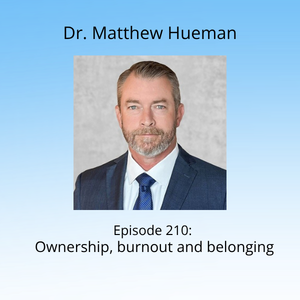
What if the peak of your career isn’t when you’re most celebrated—but when you no longer need to be?
In this powerful and deeply reflective episode of the BOSS Business of Surgery Series, Dr. Amy Vertrees sits down with surgical oncologist and former military surgeon Dr. Matthew Hueman to explore belonging, burnout, identity, and the quiet work of finding peace in a demanding profession.
Dr. Hueman shares his journey from growing up in a military family and training at West Point, to six military deployments where he discovered the true cost—and power—of belonging. He reflects on the flattening of hierarchy during his final deployment in Somalia and how that experience reshaped his understanding of purpose, leadership, and authenticity.
After transitioning to civilian healthcare, Dr. Hueman found himself burned out—not from working hard, but from doing work that felt increasingly disconnected from meaning. That realization ultimately led him to leave a large healthcare system and focus his practice on breast cancer care, where he now prioritizes presence, relationships, and helping patients find peace amid uncertainty.
Together, Drs. Vertrees and Hueman challenge long-held surgical norms around endurance, ownership, prestige, and external validation. They discuss why breast surgery is often undervalued, how surgeons delay happiness waiting for the “next milestone,” and what it really means to build a career that feels aligned—without waiting for permission.
This episode is an invitation to stop postponing peace—and to begin finding it now.
What You’ll Learn in This Episode
-
Why burnout is often about meaningless work, not workload
-
The hidden cost of belonging—and why it matters in medicine
-
How military experiences can reshape leadership and purpose
-
Why breast surgery offers profound professional fulfillment
-
How surgeons tie self-worth to endurance and external validation
-
What it means to reach the “peak” of your career
-
How to help patients—and ourselves—find peace in uncertainty
Memorable Quotes
-
“The peak of your career isn’t when you’re most celebrated. It’s when you don’t need to be celebrated at all.”
-
“The hardest work feels weightless when it’s aligned with purpose.”
-
“Burnout isn’t about working too hard—it’s about meaningless hard work.”
-
“You shouldn’t postpone peace. You should do it today.”
Chapters / Timestamps
-
00:00 – Dr. Hueman’s background and early life
-
02:31 – West Point and the meaning of belonging
-
03:31 – Military deployments and evolving purpose
-
05:35 – Transition to civilian healthcare and burnout
-
08:16 – Comparing military and civilian medical missions
-
10:36 – Rethinking burnout in medicine
-
14:42 – Choosing breast cancer care
-
26:26 – Bias against breast surgery
-
37:10 – Redefining success and fulfillment
-
39:56 – Building a values-driven private practice
-
42:51 – Helping patients live with uncertainty
-
47:36 – Gratitude and emotional capacity
About the Guest
Dr. Matthew Hueman is a surgical oncologist with a focus on breast cancer care and a former U.S. Army surgeon with six deployments. After leaving a large healthcare organization, he built a private practice centered on presence, autonomy, and helping patients find peace in uncertainty. His work explores purpose, belonging, and meaning in medicine.
About the Host
Dr. Amy Vertrees is a general and breast surgeon, host of the BOSS Business of Surgery Series, and founder of Become the BOSS MD, a coaching program for surgeons focused on mindset, communication, and professional fulfillment.

Meet Your Host
Amy Vertrees, MD is a board-certified general surgeon, certified coach, and the founder and host of the BOSS Business of Surgery Series podcast — a show dedicated to helping surgeons build confidence, clarity, and control in their careers by mastering the skills residency never taught them. After completing surgical training and serving in the military, Amy realized that clinical excellence alone wasn’t enough to navigate the complexities of contracts, practice dynamics, negotiation, and career growth. What started as her personal journey to learn “what’s next” transformed into a mission to empower fellow surgeons with the tools to thrive both professionally and personally. .
Learn More >