Welcome to the
The BOSS Business of Surgery Series Podcast
With Amy Vertrees, MD
Private Practice

Boss Business of Surgery Series – Episode 42
When You’re the Only One: Visibility, Bias, and Finding Your Voice in Surgery
with Dr. Tea Nguyen
In this episode of the Boss Business of Surgery Series, Dr. Amy Vertrees speaks with Dr. Tea Nguyen, surgeon and physician leader, about the unique challenges that arise when you are the only one — the only woman, the only person of color, or the only surgeon who doesn’t fit the dominant culture of a department or institution.
Dr. Nguyen shares her experiences navigating visibility, bias, and unspoken expectations in surgical training and practice. Together, they explore how being “different” often leads physicians to overperform, self-silence, or question themselves — and how reclaiming your voice is both a personal and professional act of leadership.
This conversation offers validation and practical insight for surgeons who feel watched, scrutinized, or isolated, and who want to show up with clarity rather than self-erasure.
In this episode, you’ll learn:
-
What it’s like to practice surgery when you are the “only one” in the room
-
How visibility can feel both empowering and exhausting
-
Why underrepresentation often leads to overfunctioning
-
How implicit bias shapes expectations and evaluations
-
Why silence becomes a survival strategy — and its long-term cost
-
How code-switching and self-monitoring drain emotional energy
-
Why excellence does not shield physicians from bias
-
How self-doubt can be reinforced by systemic dynamics
-
Why speaking up often feels riskier for underrepresented physicians
-
How microaggressions accumulate over time
-
Why representation matters — not just symbolically, but practically
-
How to decide when to speak, when to wait, and when to walk away
-
Why internal validation is essential when external feedback is inconsistent
-
How to separate your worth from others’ discomfort
-
Why boundaries are especially important when visibility is high
-
How mentorship and sponsorship differ — and why both matter
-
Why you don’t owe assimilation at the cost of authenticity
-
How reclaiming your voice restores energy and confidence
Key themes:
-
Visibility without support creates strain
-
Bias thrives in silence and ambiguity
-
Overfunctioning is a common response to marginalization
-
Self-trust is essential when feedback is unreliable
-
You are not imagining what you’re experiencing
-
Leadership includes choosing yourself
-
Authenticity is not unprofessional
-
You belong without shrinking
Resources & mentions:
-
Boss Business of Surgery Series: https://bosssurgery.com
-
Become the Boss MD
-
Coaching and leadership development resources for surgeons
This episode is essential listening for surgeons who feel isolated, hyper-visible, or unsure whether their experiences are “real” or valid. Dr. Nguyen’s story is a powerful reminder that you don’t need to disappear to survive — your voice, perspective, and presence matter exactly as they are.

Boss Business of Surgery Series – Episode 47
When the Rules Are Unclear: Trusting Yourself, Navigating Ambiguity, and Leading Without a Map
with Dr. Jenna Caporaso
In this episode of the Boss Business of Surgery Series, Dr. Amy Vertrees speaks with Dr. Jenna Caporaso, surgeon and physician leader, about what it feels like to practice in environments where expectations are vague, feedback is inconsistent, and the “rules” seem to change depending on who you are.
This conversation explores how ambiguity in medicine — unclear expectations, shifting goalposts, and unwritten norms — quietly erodes confidence and keeps physicians stuck in overthinking, people-pleasing, and self-doubt. Rather than offering quick fixes, this episode focuses on rebuilding internal trust when external clarity is missing.
At its core, this is a conversation about learning to lead yourself when the system doesn’t provide a roadmap.
In this episode, you’ll learn:
-
Why unclear expectations are more destabilizing than direct conflict
-
How ambiguity fuels overfunctioning, self-monitoring, and burnout
-
Why physicians default to assuming they are the problem
-
How inconsistent feedback undermines confidence over time
-
Why “just work harder” rarely resolves systemic ambiguity
-
How perfectionism becomes a coping strategy in unclear systems
-
Why seeking approval is exhausting — and unsustainable
-
How to distinguish between facts, interpretations, and assumptions
-
Why trusting yourself becomes critical when guidance is unreliable
-
How to make decisions without complete information
-
Why clarity often has to be created, not discovered
-
How internal alignment reduces reactivity to external noise
-
Why leadership includes tolerating uncertainty
-
How to stop outsourcing self-trust to authority figures
-
Why ambiguity feels personal — but usually isn’t
-
How values serve as anchors when rules are unclear
-
Why waiting for permission can stall growth indefinitely
-
How choosing yourself restores momentum and confidence
Key themes:
-
Ambiguity erodes confidence faster than criticism
-
Overthinking is a rational response to unclear systems
-
Self-trust is essential when guidance is inconsistent
-
You don’t need perfect information to lead
-
Clarity begins internally
-
Confidence grows through decision-making, not certainty
-
You are allowed to define success when the system doesn’t
-
Leadership starts before authority
Resources & mentions:
-
Boss Business of Surgery Series: https://bosssurgery.com
-
Become the Boss MD
-
Coaching and leadership resources for physicians
This episode is essential listening for surgeons who feel unsettled by mixed messages, unclear expectations, or a constant sense of needing to “figure it out” alone. Dr. Jenna Caporaso’s story — and Dr. Vertrees’ guidance — offer a steady reminder: when the rules are unclear, your values and self-trust can become the map.

Boss Business of Surgery Series – Episode 48
Staying Human in High-Stakes Medicine: Burnout, Boundaries, and Choosing Yourself
with Dr. Cheruba Prabakar
In this episode of the Boss Business of Surgery Series, Dr. Amy Vertrees speaks with Dr. Cheruba Prabakar, surgeon and physician leader, about what it takes to remain human, grounded, and self-trusting in a profession that often rewards self-neglect.
Dr. Prabakar shares her experiences navigating surgical training and practice while confronting the emotional toll of high expectations, unrelenting responsibility, and the quiet pressure to keep going no matter the cost. Together, Amy and Cheruba explore how burnout develops not from weakness, but from prolonged misalignment, suppressed needs, and unexamined beliefs about what a “good doctor” should sacrifice.
This episode centers on boundaries, self-compassion, and the courage to choose yourself before crisis forces the choice.
In this episode, you’ll learn:
-
How burnout develops gradually — often long before it’s recognized
-
Why high-achieving physicians are especially vulnerable to self-abandonment
-
How medical culture normalizes exhaustion and emotional suppression
-
Why “pushing through” delays healing rather than preventing it
-
How guilt shows up when physicians begin setting boundaries
-
Why rest can feel unsafe in achievement-driven environments
-
How identity becomes fused with responsibility and reliability
-
Why saying no often feels harder than saying yes
-
How resentment signals crossed boundaries
-
Why self-compassion improves judgment and patient care
-
How listening to your internal signals restores clarity
-
Why you don’t need to be at a breaking point to make changes
-
How slowing down can actually increase effectiveness
-
Why choosing yourself is an act of professionalism, not selfishness
-
How sustainable practice requires ongoing recalibration
-
Why boundaries protect both physicians and patients
-
How redefining success creates space for longevity
Key themes:
-
Burnout is a signal, not a failure
-
Boundaries are learned skills
-
Self-compassion supports performance
-
Exhaustion distorts perspective
-
You are allowed to change before crisis
-
Sustainability requires intention
-
Caring deeply doesn’t require self-sacrifice
-
Choosing yourself protects your future patients
Resources & mentions:
-
Boss Business of Surgery Series: https://bosssurgery.com
-
Become the Boss MD
-
Coaching and burnout-recovery resources for physicians
This episode is essential listening for surgeons who feel chronically tired, emotionally stretched, or quietly disconnected from themselves at work. Dr. Prabakar’s story reinforces a powerful truth: you don’t have to give everything away to be an excellent surgeon — staying human is part of the job.

Boss Business of Surgery Series – Episode 155
When You Outgrow the System: Identity, Courage, and Choosing a New Path
with Dr. Una
In this episode of the Boss Business of Surgery Series, Dr. Amy Vertrees speaks with Dr. Una, physician, entrepreneur, and advocate for professional autonomy, about what happens when the system you trained for no longer fits who you are — or who you’re becoming.
Dr. Una shares her journey of questioning traditional medical pathways, confronting internal and external resistance, and ultimately choosing a career aligned with her values, energy, and vision for impact. This conversation explores the emotional complexity of outgrowing medicine as it is traditionally practiced — including fear, grief, relief, and freedom — and what it takes to trust yourself through that transition.
This episode is about identity, courage, and giving yourself permission to evolve, even when the path forward isn’t clearly marked.
In this episode, you’ll learn:
-
How physicians recognize they’ve outgrown traditional systems
-
Why success on paper doesn’t guarantee alignment in real life
-
How internal conflict often precedes external change
-
Why questioning the system can trigger guilt and self-doubt
-
How fear of judgment keeps physicians stuck longer than necessary
-
Why burnout is often a mismatch — not a lack of resilience
-
How entrepreneurial thinking opens new possibilities for physicians
-
Why letting go of an old identity can feel like grief
-
How clarity emerges after action, not before
-
Why permission must be self-granted — not externally approved
-
How redefining impact restores motivation and joy
-
Why autonomy is a legitimate professional value
-
How to navigate criticism from colleagues and institutions
-
Why values alignment matters more than titles
-
How community and mentorship support non-traditional paths
-
Why sustainable careers require flexibility and reinvention
-
How courage grows through repeated self-trust
-
Why choosing yourself protects long-term well-being
Key themes:
-
Outgrowing systems is not failure
-
Identity is allowed to evolve
-
Courage often comes after discomfort
-
Permission must be internal
-
Burnout can signal misalignment
-
Autonomy fuels sustainability
-
Letting go creates space for impact
-
There is no single “right” way to practice medicine
Resources & mentions:
-
Boss Business of Surgery Series: https://bosssurgery.com
-
Become the Boss MD
-
Physician entrepreneurship and leadership resources
This episode is essential listening for surgeons and physicians who feel constrained by systems that no longer align with their values or vision. Dr. Una’s story is a powerful reminder that you are allowed to change, allowed to want something different, and allowed to build a career that fits the life you want to live.
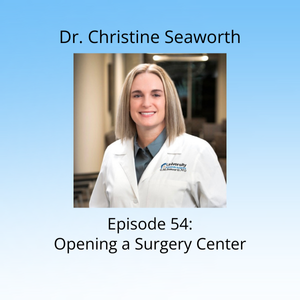
Boss Business of Surgery Series – Episode 54
Building a Surgery Center: Autonomy, Ownership, and Reclaiming Control
with Dr. Christine Seaworth
In this episode of the Boss Business of Surgery Series, Dr. Amy Vertrees speaks with Dr. Christine Seaworth, surgeon and physician leader, about the realities of building and operating a surgery center — and why ownership can be a powerful antidote to frustration, inefficiency, and loss of control in traditional healthcare systems.
Dr. Seaworth shares her experience moving from hospital-based practice to developing a surgery center, highlighting both the opportunities and the challenges that come with physician ownership. Together, they explore how autonomy, systems thinking, and intentional leadership can restore joy, efficiency, and alignment in surgical practice.
This episode offers a grounded look at what it really takes to build something of your own — and why more surgeons are choosing this path.
In this episode, you’ll learn:
-
Why many surgeons feel constrained by hospital-based systems
-
How ownership changes decision-making and accountability
-
What motivates surgeons to explore surgery center models
-
The difference between practicing medicine and running a business
-
Why inefficiency is often a systems problem, not a people problem
-
How surgeon leadership improves workflow and patient experience
-
The financial and operational realities of surgery center ownership
-
Why autonomy restores engagement and satisfaction
-
How quality, safety, and efficiency can coexist
-
Why physicians must understand the business side of care
-
How ownership shifts power dynamics with hospitals and vendors
-
Why transparency improves trust and outcomes
-
How burnout is often linked to lack of control
-
The role of collaboration in successful surgery centers
-
Why not every surgeon needs to own — but many benefit from understanding ownership
-
How long-term thinking protects sustainability
-
Why building something aligned with your values matters
-
How ownership allows surgeons to practice on their own terms
Key themes:
-
Autonomy fuels engagement
-
Ownership creates responsibility — and freedom
-
Systems matter more than individual effort
-
Efficiency supports quality care
-
Burnout often stems from misalignment
-
Physicians are capable leaders and builders
-
Control over environment improves outcomes
-
Sustainability requires intentional design
Resources & mentions:
-
Boss Business of Surgery Series: https://bosssurgery.com
-
Become the Boss MD
-
Resources on surgery center development and physician leadership
This episode is essential listening for surgeons who feel boxed in by hospital systems, curious about ownership, or interested in building practice models that support both excellent care and professional fulfillment. Dr. Seaworth’s perspective reinforces a powerful truth: when surgeons have control over their environment, everyone — patients, teams, and physicians — benefits.
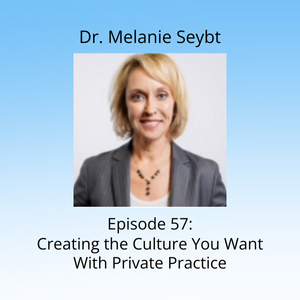
Boss Business of Surgery Series – Episode 57
Choosing Yourself Without Burning It All Down: Boundaries, Clarity, and Sustainable Change
with Dr. Melanie Seybt
In this episode of the Boss Business of Surgery Series, Dr. Amy Vertrees speaks with Dr. Melanie Seybt, surgeon and physician leader, about what it looks like to make meaningful change without blowing up your career, reputation, or relationships.
Dr. Seybt shares her experience navigating dissatisfaction, burnout signals, and the pressure to either “endure” or “escape.” Together, they explore a more nuanced third option: intentional change built on clarity, boundaries, and self-trust. This conversation reframes career shifts not as dramatic exits, but as thoughtful recalibrations that protect both professional integrity and personal well-being.
This episode is especially relevant for surgeons who sense something needs to change — but don’t want to torch everything they’ve worked so hard to build.
In this episode, you’ll learn:
-
Why many physicians believe the only options are endurance or escape
-
How burnout often begins as quiet misalignment rather than crisis
-
Why ignoring early signals makes change harder later
-
How clarity creates momentum without chaos
-
Why boundaries feel threatening before they feel supportive
-
How guilt shows up when physicians prioritize themselves
-
Why incremental change is often more sustainable than dramatic exits
-
How values-based decisions reduce regret
-
Why self-trust is built through small, consistent choices
-
How to evaluate what actually needs to change — and what doesn’t
-
Why rest improves judgment rather than delaying progress
-
How to tolerate others’ disappointment without self-betrayal
-
Why sustainable careers evolve over time
-
How identity flexibility prevents burnout
-
Why choosing yourself does not require rejecting your past
-
How clarity allows you to move forward without burning bridges
-
Why “less drastic” does not mean less meaningful
-
How alignment restores energy and perspective
Key themes:
-
Change doesn’t have to be extreme to be effective
-
Boundaries protect more than they cost
-
Burnout often signals misalignment
-
Self-trust grows through action
-
You are allowed to evolve without erasing your past
-
Sustainable careers are built intentionally
-
Guilt often accompanies growth
-
Clarity reduces fear
Resources & mentions:
-
Boss Business of Surgery Series: https://bosssurgery.com
-
Become the Boss MD
-
Coaching and career-alignment resources for physicians
This episode is essential listening for surgeons who know something needs to change but feel frozen by fear of making the “wrong” move. Dr. Seybt’s perspective offers reassurance and permission: you can choose yourself thoughtfully, steadily, and without destroying what you’ve built.

Boss Business of Surgery Series – Episode 98
Effective Physician Marketing: Clarity, Messaging, and Ethical Growth
with Natalie Delamater
In this episode of the Boss Business of Surgery Series, Dr. Amy Vertrees speaks with Natalie Delamater, healthcare marketing expert, about what effective physician marketing actually looks like — and why so many doctors feel uncomfortable, overwhelmed, or misaligned when trying to promote their work.
Natalie breaks down common misconceptions about marketing in medicine, including the belief that marketing must feel salesy, inauthentic, or self-promotional. Together, they explore how ethical, values-based marketing can support patient access, practice sustainability, and physician autonomy — without compromising integrity.
This episode reframes marketing as clear communication, not persuasion — and as a skill physicians can learn without betraying their professional identity.
In this episode, you’ll learn:
-
Why many physicians resist marketing — and where that discomfort comes from
-
How marketing differs from advertising and self-promotion
-
Why clarity matters more than volume or tactics
-
How ethical marketing improves patient access to care
-
Why many physician marketing efforts fail due to unclear messaging
-
How values-based marketing builds trust
-
Why marketing is a communication skill, not a personality trait
-
How fear of judgment keeps physicians invisible
-
Why consistency matters more than perfection
-
How to talk about your work without overselling
-
Why authenticity outperforms hype
-
How marketing supports practice sustainability
-
Why marketing is especially important for independent physicians
-
How to align marketing with professional ethics
-
Why marketing discomfort often signals a skills gap — not a character flaw
-
How to choose marketing strategies that fit your capacity
-
Why good marketing reduces burnout rather than creating it
-
How clarity restores confidence and agency
Key themes:
-
Marketing is communication, not manipulation
-
Ethics and visibility can coexist
-
Clarity builds trust
-
Physicians deserve to be understood
-
Fear keeps good work hidden
-
Sustainability requires visibility
-
Marketing can be learned
-
Integrity matters more than tactics
Resources & mentions:
-
Boss Business of Surgery Series: https://bosssurgery.com
-
Physician marketing and practice-growth resources
-
Become the Boss MD
This episode is essential listening for surgeons and physicians who want to grow their practices, share their expertise, or increase visibility — but feel conflicted about how to do so authentically. Natalie Delamater’s perspective offers reassurance and clarity: effective physician marketing isn’t about being louder — it’s about being clear, ethical, and aligned with your values.

Boss Business of Surgery Series – Episode 111
Burning Out in Private Practice: When Autonomy Isn’t Enough
with Sogol Pahlavan, MD
In this episode of the Boss Business of Surgery Series, Dr. Amy Vertrees speaks with Dr. Sogol Pahlavan, surgeon and physician leader, about a reality that often surprises physicians: burnout can still happen in private practice — even when autonomy, flexibility, and ownership are present.
Dr. Pahlavan shares candid insights into the pressures unique to private practice, including financial responsibility, staffing challenges, administrative burden, and the emotional weight of being the final decision-maker. Together, they explore why private practice is often idealized as a burnout cure — and why, without the right structures and supports, it can simply shift the sources of strain rather than eliminate them.
This episode offers an honest look at what private practice actually requires to be sustainable.
In this episode, you’ll learn:
-
Why private practice is not inherently burnout-proof
-
How financial responsibility creates constant cognitive load
-
Why staffing challenges disproportionately affect owners
-
How administrative burden follows physicians into independence
-
Why autonomy without boundaries can increase overwork
-
How identity and responsibility blur in ownership roles
-
Why private practice burnout often goes unspoken
-
How pressure to “make it work” delays help-seeking
-
Why comparison to employed roles creates confusion
-
How invisible labor accumulates in ownership
-
Why rest alone doesn’t fix structural overload
-
How clarity about capacity changes decision-making
-
Why delegation is harder than it sounds
-
How values-based practice design reduces burnout risk
-
Why sustainability must be built intentionally
-
How community and support protect owners
-
Why success and exhaustion often coexist
-
How redefining “enough” restores balance
Key themes:
-
Autonomy doesn’t eliminate pressure
-
Ownership creates invisible labor
-
Burnout can exist alongside success
-
Sustainability requires structure
-
Boundaries matter more in private practice
-
Support is essential for owners
-
Rest without redesign isn’t enough
-
You’re not failing — the load is real
Resources & mentions:
-
Boss Business of Surgery Series: https://bosssurgery.com
-
Become the Boss MD
-
Resources on private practice sustainability and physician leadership
This episode is essential listening for surgeons in — or considering — private practice who feel exhausted, overwhelmed, or confused by the disconnect between autonomy and well-being. Dr. Pahlavan’s perspective offers validation and clarity: private practice can be deeply rewarding, but sustainability doesn’t happen by default — it must be designed, supported, and protected.

Boss Business of Surgery Series – Episode 110
Thriving in a Cash-Based Practice
with Cheruba Prabakar, MD
In this episode of the Boss Business of Surgery Series, Dr. Amy Vertrees speaks with Dr. Cheruba Prabakar, surgeon and physician entrepreneur, about what it truly takes to thrive — not just survive — in a cash-based medical practice.
Dr. Prabakar shares her experience stepping outside traditional insurance-driven models and building a practice centered on alignment, patient care, and sustainability. Together, they explore the practical, emotional, and mindset shifts required to move into cash-based care, as well as the common fears and misconceptions that keep physicians stuck in systems that no longer serve them.
This episode offers clarity for surgeons curious about alternative practice models — and reassurance that thriving outside insurance is possible with intention and structure.
In this episode, you’ll learn:
-
Why many physicians feel drawn to cash-based practice models
-
How insurance-based systems contribute to burnout and misalignment
-
What mindset shifts are required to move away from traditional models
-
Why value-based care feels different in a cash setting
-
How pricing fears keep physicians stuck
-
Why clarity around your ideal patient matters
-
How cash-based practices can improve patient relationships
-
Why boundaries are easier — and more necessary — in alternative models
-
How to navigate uncertainty during transitions
-
Why autonomy doesn’t eliminate responsibility, but changes it
-
How patient education supports sustainability
-
Why trust replaces volume as a success metric
-
How cash-based models reduce administrative burden
-
Why ethical care and financial viability can coexist
-
How to define success outside RVUs and throughput
-
Why self-trust matters when building differently
-
How alignment restores energy and joy
-
Why thriving requires intention, not just courage
Key themes:
-
Insurance-based care is not the only option
-
Cash-based practice prioritizes alignment
-
Autonomy changes — it doesn’t disappear
-
Clarity reduces fear
-
Patient relationships deepen outside volume pressure
-
Sustainability must be designed
-
Thriving is possible outside traditional systems
-
You’re allowed to practice differently
Resources & mentions:
-
Boss Business of Surgery Series: https://bosssurgery.com
-
Become the Boss MD
-
Resources on alternative practice models and physician entrepreneurship
This episode is essential listening for surgeons who feel constrained by insurance-based systems and curious about what practicing medicine on their own terms might look like. Dr. Prabakar’s perspective is grounded and empowering: thriving in a cash-based practice isn’t about abandoning medicine — it’s about reclaiming alignment, autonomy, and sustainability.
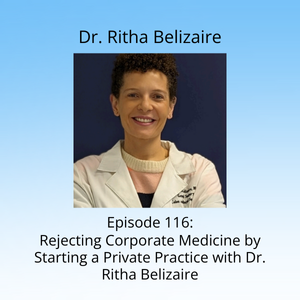
Boss Business of Surgery Series – Episode 116
Rejecting Corporate Medicine by Starting a Private Practice
with Ritha Belizaire, MD
In this episode of the Boss Business of Surgery Series, Dr. Amy Vertrees speaks with Dr. Ritha Belizaire, surgeon and private practice owner, about what it really means to reject corporate medicine — not in theory, but in practice.
Dr. Belizaire shares her journey of stepping away from corporatized healthcare models and building a private practice aligned with her values, clinical standards, and vision for patient care. Together, they explore why corporate medicine often leaves physicians feeling constrained, disconnected, and burned out — and how private practice can offer an alternative that restores autonomy, meaning, and professional integrity.
This episode is an honest look at what physicians gain — and what they must take responsibility for — when they choose independence.
In this episode, you’ll learn:
-
Why corporate medicine often leads to misalignment and burnout
-
How productivity pressure erodes clinical autonomy
-
What motivated Dr. Belizaire to pursue private practice
-
Why rejecting corporate medicine is both empowering and demanding
-
How ownership shifts responsibility — and restores agency
-
Why private practice requires clarity, courage, and commitment
-
How values-driven decision-making shapes practice design
-
Why independence doesn’t eliminate stress, but changes its source
-
How financial and operational realities impact sustainability
-
Why patient relationships deepen outside corporate constraints
-
How physicians can reclaim control without sacrificing care quality
-
Why private practice is a form of professional self-advocacy
-
How stepping away challenges internalized expectations
-
Why success looks different outside corporate systems
-
How autonomy supports long-term fulfillment
-
Why alignment matters more than approval
-
How intentional practice design protects against burnout
-
Why rejecting corporate medicine is ultimately about choosing integrity
Key themes:
-
Corporate medicine shapes behavior and burnout
-
Autonomy restores professional dignity
-
Ownership requires responsibility and clarity
-
Independence allows alignment
-
Values matter in practice design
-
Burnout is often structural
-
Private practice is not a shortcut — it’s a commitment
-
Choosing yourself is an act of leadership
Resources & mentions:
-
Boss Business of Surgery Series: https://bosssurgery.com
-
Become the Boss MD
-
Resources on private practice ownership and physician leadership
This episode is essential listening for surgeons who feel constrained by corporate systems or quietly wonder whether another way of practicing medicine exists. Dr. Belizaire’s story offers realism and reassurance: rejecting corporate medicine isn’t about rebellion — it’s about reclaiming agency, alignment, and the right to practice medicine on your own terms.
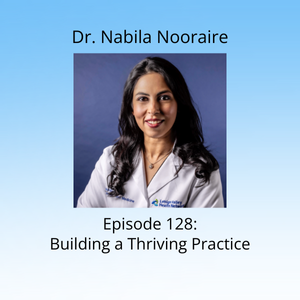
Boss Business of Surgery Series – Episode 128
Building a Thriving Practice
with Nabila Nooraire, MD
In this episode of the Boss Business of Surgery Series, Dr. Amy Vertrees speaks with Dr. Nabila Nooraire, surgeon and physician entrepreneur, about what it actually takes to build a thriving medical practice — one that supports excellent patient care and physician well-being.
Dr. Nooraire shares insights from her experience designing a practice grounded in clarity, intention, and sustainability. Together, they explore why “thriving” looks different from simply surviving, how thoughtful practice design shapes daily experience, and why long-term success requires more than clinical skill alone.
This episode focuses on intentional growth, aligned decision-making, and redefining success beyond volume and productivity.
In this episode, you’ll learn:
-
What distinguishes a thriving practice from a merely functional one
-
Why clarity of vision matters before growth
-
How misalignment leads to chronic stress and dissatisfaction
-
Why thriving requires intentional practice design
-
How values influence staffing, scheduling, and patient experience
-
Why saying no is often necessary for sustainability
-
How boundaries protect both physicians and patients
-
Why growth without structure increases burnout risk
-
How leadership shapes practice culture
-
Why thriving practices evolve over time
-
How to make decisions that support longevity
-
Why metrics alone don’t define success
-
How autonomy supports creativity and fulfillment
-
Why physician well-being is a business consideration
-
How aligned practices improve patient relationships
-
Why thriving requires ongoing reflection and adjustment
-
How self-trust supports confident leadership
-
Why success should feel steady — not frantic
Key themes:
-
Thriving is intentional, not accidental
-
Alignment supports sustainability
-
Growth must be values-driven
-
Boundaries protect capacity
-
Leadership shapes culture
-
Success is more than productivity
-
Practices evolve across seasons
-
Thriving includes the physician
Resources & mentions:
-
Boss Business of Surgery Series: https://bosssurgery.com
-
Become the Boss MD
-
Resources on physician leadership and practice sustainability
This episode is essential listening for surgeons who want to build practices that support both excellent care and personal longevity. Dr. Nooraire’s perspective reinforces a powerful truth: a thriving practice isn’t built by accident — it’s created through clarity, intention, and alignment over time.
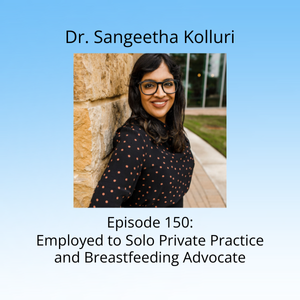
Boss Business of Surgery Series – Episode 150
Employed to Solo Private Practice and Breastfeeding Advocate
with Sangeetha Kolluri, MD
In this episode of the Boss Business of Surgery Series, Dr. Amy Vertrees speaks with Dr. Sangeetha Kolluri, surgeon, solo private practice owner, and breastfeeding advocate, about the layered realities of transitioning from employed medicine to solo practice — while also advocating for physician parents and lactating surgeons.
Dr. Kolluri shares her journey of leaving employed practice, building a solo private practice aligned with her values, and navigating the often invisible challenges faced by breastfeeding physicians. Together, they explore how structural gaps in medicine disproportionately impact physician parents, why advocacy is often born from necessity, and how autonomy can create space for both professional fulfillment and family needs.
This episode highlights practice ownership, advocacy, and designing a career that supports real life — not just productivity.
In this episode, you’ll learn:
-
Why Dr. Kolluri chose to move from employed medicine to solo practice
-
How employment structures often fail physician parents
-
Why breastfeeding advocacy is still necessary in modern medicine
-
How lack of accommodation impacts physician well-being and retention
-
What it takes to build a solo private practice from scratch
-
Why autonomy matters when navigating parenthood and medicine
-
How advocacy often emerges from lived experience
-
Why policies lag behind real physician needs
-
How private practice can offer flexibility not found in employed roles
-
Why invisible labor disproportionately affects physician parents
-
How culture influences what physicians feel allowed to ask for
-
Why self-advocacy is a leadership skill
-
How values-based decisions shape practice design
-
Why sustainability must include life outside work
-
How ownership shifts both burden and freedom
-
Why advocating for yourself opens doors for others
-
How alignment restores energy and purpose
-
Why physicians deserve systems that support their humanity
Key themes:
-
Employment structures aren’t neutral
-
Advocacy is often born from necessity
-
Ownership creates flexibility and responsibility
-
Physician parents face unique, under-acknowledged challenges
-
Sustainability must include family and bodily needs
-
Private practice can be an act of self-advocacy
-
Designing differently benefits future physicians
-
You’re allowed to build a career that fits your life
Resources & mentions:
-
Boss Business of Surgery Series: https://bosssurgery.com
-
Become the Boss MD
-
Resources on physician advocacy, private practice ownership, and sustainability
This episode is essential listening for surgeons considering private practice, navigating parenthood, or quietly struggling with unmet needs in traditional medical environments. Dr. Kolluri’s story is both validating and empowering: you don’t have to contort your life to fit medicine — you’re allowed to build a practice, and a career, that supports the whole of who you are.
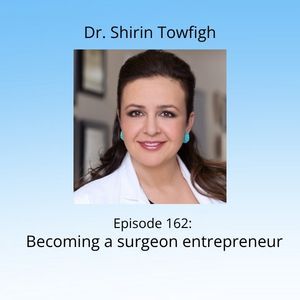
Boss Business of Surgery Series – Episode 162
The latest BOSS podcast features Dr. Shirin Towfigh a hernia specialist in private practice, owner of a hernia center in Beverly Hills and innovator in the field of surgery.
She mentioned that innovation for her was born out of frustration. She never set out to be in private practice, she thought she would be a leader in academic medicine. She found significant benefits of being her own boss and the freedom to pursue her passions:
"I don't think I'll leave this job. I love my employer, who is me, and she doesn't discriminate based on gender. I don't have a pay discrepancy based on my chromosome. And she's really great at allowing me to do what I like to do and not bombard me with fluff."
Dr. Towfigh emphasized the importance of understanding the business side of medicine, including billing and revenue cycles. She also talks about her innovations in hernia care, including gender-based hernia mesh designs and her efforts to improve research in women's hernia care. She created an online patient education platform and leads international hernia collaborations.
--
Dr. Shirin Towfigh is a Board Certified General Surgeon and owner of her own private practice at the Beverly Hills Hernia Center. Her practice is exclusively dedicated to hernias and their complications. Dr. Towfigh went to medical school at UC San Diego and finished her surgical residency at UCLA. She is internationally known for her tailored approach to treatment of hernias, with the goal of reducing chronic pain and related complication, much of which is outlined in her book, The SAGES Manual of Groin Pain. Her research includes innovations to promote the hernia field. She was awarded an honorary certificate in Abdominal Wall Surgery granted by the European Board of Surgery. As an advocate for patient perspectives in hernia care, she started the free patient discussion forum herniatalk.com and hosts the weekly podcast, HerniaTalk LIVE, which showcases topics and fellow physicians to discuss hernia related topics. She is CEO of her tech company, Hexagon Health, Inc., whose mission is to promote gender based advances in hernia care through innovation and research. She holds 9 patents for gender based inguinal hernia mesh designs. She also sponsors the annual Female Factors in Hernia research award at the American Hernia Society.
Instagram: https://www.instagram.com/herniadoc
Twitter/X: https://x.com/herniadoc
Facebook: https://www.facebook.com/Dr.Towfigh
LinkedIn: https://www.linkedin.com/in/shirintowfigh/
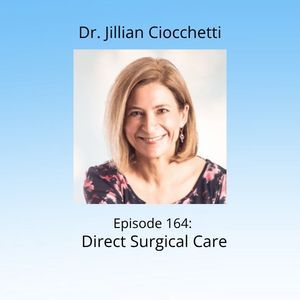
Boss Business of Surgery Series – Episode 164
Direct Surgical Care with Dr. Jillian Cicchetti
In this episode of the Boss Business of Surgery Series, Dr. Amy Vertrees speaks with Dr. Jillian Cicchetti, general surgeon and founder of North Pointe Surgery and Aesthetics, about direct surgical care and what becomes possible when surgeons step outside the traditional insurance-driven model.
Dr. Cicchetti shares her path from employed surgery to burnout, contract nonrenewal, grief, identity loss, locums work, and ultimately a more flexible, transparent model of surgical practice. Her story is not just about building a different business model. It is about reclaiming autonomy, rediscovering herself, and creating a career that allows her to serve patients without the constant interference of insurance middlemen.
This episode explores the logistics, philosophy, and potential of direct surgical care, including transparent cash pricing, employer partnerships, self-funded insurance models, and why cost transparency may be one of the keys to repairing healthcare.
In this episode, you’ll learn:
- What direct surgical care is and how it differs from direct primary care
- Why a surgeon might choose to practice outside the traditional insurance model
- How contract nonrenewal and career disruption became a turning point
- Why employed surgery can create “golden handcuffs” that limit autonomy
- How time away from a traditional job helped Dr. Cicchetti reconnect with herself
- Why physicians are trained as employees, not as CEOs of their own careers
- How contract review can help residents protect themselves early
- Why surgeons need to understand how big the professional world actually is
- How locums work created space for recovery, reflection, and new opportunities
- What self-funded insurance means for employers and employees
- How direct surgical care can lower costs for employers and patients
- Why transparent surgical pricing matters
- How insurance billing obscures the true cost of care
- Why physicians are often blamed for bills they do not control
- How middlemen profit from opacity in the healthcare system
- Why direct care models may support more philanthropic and mission-driven work
- How reducing clinical time can create space to build something new
- Why freedom often requires courage and financial restructuring
Key themes:
- Direct surgical care and cost transparency
- Physician autonomy
- Leaving employed medicine
- Career identity and grief
- Reinvention after burnout
- Self-funded employer health plans
- Transparent pricing
- Surgery without insurance middlemen
- Freedom as a career goal
- Lifting others as you rise
Direct surgical care concepts discussed:
- Cash-pay surgical pricing
- Direct-to-consumer surgical care
- Employer-based partnerships
- Self-funded insurance plans
- Catastrophic coverage paired with direct care
- Direct primary care plus direct surgical care
- Lower-cost outpatient surgery options
- Price transparency for common operations
- Reducing administrative burden from insurance billing
- Creating access for patients who fall outside traditional payer systems
Resources mentioned:
- North Pointe Surgery and Aesthetics
- Surgery Denver: https://surgerydenver.com
- Smith Medical Direct Surgical Care
- Surgery Center of Oklahoma
- Cleveland Clinic Professional Development Conference
- International surgical mission work in Uganda
- Boss Business of Surgery Series: https://bossurgery.com
- Become the Boss MD Facebook group
- BOSS email list and giveaways
This episode is a powerful look at what can happen when a surgeon stops accepting the limits of the current system and starts asking what else is possible. Dr. Cicchetti’s message is both practical and liberating: there are more ways to practice surgery than most of us were taught, and transparency, courage, and autonomy may be part of the path forward for both surgeons and patients.

Boss Business of Surgery Series – Episode 185
Leaving Insurance Behind: How Dr. Meryl Kahn Built a Direct Care Gynecology Practice
In this episode of the Boss Business of Surgery Series, Dr. Amy Vertrees speaks with Dr. Meryl Kahn, board-certified OB-GYN, certified menopause practitioner, and founder of SheMD Integrative Gynecology and Wellness, about building a direct care gynecology practice outside the traditional insurance model.
Dr. Kahn shares how frustration with one-size-fits-all medicine, limited visit times, insurance delays, and inadequate menopause care led her to create a practice that works better for both her and her patients. Her model allows for longer visits, better follow-up, more individualized care, and freedom from the constant administrative burden of insurance billing.
This episode is a practical and encouraging look at what it takes to leave insurance behind, build a lean micropractice, and offer care on your own terms.
In this episode, you’ll learn:
- Why Dr. Kahn moved away from traditional OB-GYN and stopped practicing obstetrics
- How menopause and perimenopause care became a major focus of her practice
- Why many physicians feel a shift several years after residency as their interests evolve
- How insurance-based medicine limits time, flexibility, and individualized care
- Why longer visits are essential for hormone care, menopause care, and whole-person gynecology
- How direct care helps patients build a stronger relationship with their physician
- Why many patients do not understand what direct care is at first
- How patient education is part of building a cash-pay or membership-based practice
- Why physicians must get comfortable talking about money and value
- How patients decide what is worth paying for
- Why doctors should not decide in advance what patients can or cannot afford
- How med spas have shaped expectations around cash-pay hormone care
- Why traditional insurance models often do not support good menopause care
- What a micropractice looks like in real life
- How Dr. Kahn handles phones, billing, visits, and patient communication without a large staff
- Why some care works well as fee-for-service and other care fits better in a membership model
- How membership supports follow-up, accountability, and better outcomes
- Why marketing is necessary when patients are not finding you through insurance directories
- What physicians should consider before starting a direct care model
Key themes:
- Direct care gynecology
- Menopause and perimenopause care
- Insurance-free medical practice
- Physician autonomy
- Micropractice operations
- Membership-based care
- Patient education and transparency
- Marketing as patient service
- Value-based physician communication
- Building a practice that fits your life and values
Direct care concepts discussed:
- Cash-pay gynecology visits
- Membership-based hormone and weight-loss care
- Fee-for-service procedures
- Direct patient communication
- Transparent pricing
- Longer visits
- Lean micropractice structure
- Reduced administrative burden
- Patient education around insurance vs. direct care
- Building referral relationships outside insurance networks
Practical advice for physicians considering direct care:
- Be comfortable with uncertainty
- Expect that profitability may take time
- Keep expenses as lean as possible
- Consider part-time work, moonlighting, or another income source while building
- Talk to other direct care physicians
- Research your model carefully, but do not let fear stop you
- Understand that marketing is part of the work
- Learn to communicate value clearly
- Remember that direct care can help physicians and patients
Resources mentioned:
- SheMD Integrative Gynecology and Wellness
- Website: https://shemdny.com
- Facebook: SheMDNY
- Instagram: @sheMD_ny
- The Menopause Society
- Bioidentical hormone replacement therapy training
- Direct primary care and direct care physician networks
- Boss Business of Surgery Series: https://bossurgery.com
This episode is a valuable resource for physicians who are frustrated with insurance-based practice and wondering whether there is another way. Dr. Kahn’s story is clear and encouraging: direct care is not without uncertainty, but it can create more time, more autonomy, better patient relationships, and a practice that finally reflects the kind of medicine you want to provide.
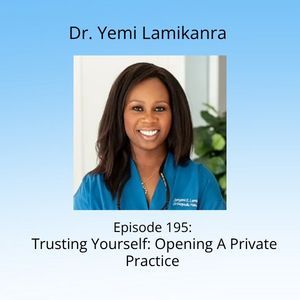
Boss Business of Surgery Series – Episode 195
What happens when a “good job” no longer feels good enough?
In this episode of the BOSS Business of Surgery Series Podcast, Dr. Amy Vertrees sits down with Dr. Yemi Lamikanra, orthopedic hand surgeon and founder of Cura Hand Surgery and Orthopedics in Atlanta, to discuss her bold decision to leave a large multi-specialty group and start her own solo practice.
Dr. Lamikanra opens up about the pivotal moments that led her to seek change, including the pressures of balancing motherhood with her surgical career. She shares the strategies, resources, and mindset shifts that helped her build a practice that fits her life—and why trusting yourself is often the hardest, but most important, step.
You’ll learn:
-
How motherhood reshaped her priorities and pushed her toward autonomy
-
Why “10X is easier than 2X” when making major life changes
-
Lessons from setbacks that became invaluable in leadership, coding, and patient acquisition
-
How to evaluate consultants and ensure a return on investment
-
The power of community, self-education, and intentional decision-making in private practice
Dr. Lamikanra’s journey is an inspiring reminder that your purpose is always bigger than your fear—and that redefining success is not only possible, but necessary.
Resources & Links:
-
Connect with Dr. Yemi Lamikandra:
-
Website: atlantahandsurgeon.com
-
Instagram: @atlhandsurgeon
-
LinkedIn: Opeyemi Lamikanra, MD
-
🎧 Listen now and be inspired to design a career—and life—that works for you.
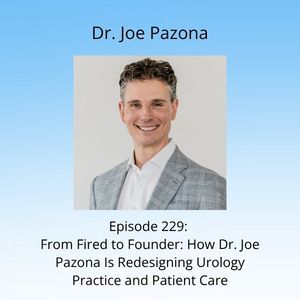
Boss Business of Surgery Series – Episode 229
What happens when the job you moved your family for turns out to be the wrong fit?
In this episode, Dr. Amy Vertrees sits down with urologist and entrepreneur Dr. Joe Pazona, founder and CEO of VirtuCare, to discuss the unexpected path from being fired to building a new model of healthcare delivery.
After experiencing broken promises, loss of autonomy, and ethical conflicts inside traditional employment models, Dr. Pazona realized something many physicians quietly suspect:
👉 The problem isn’t always the doctor.
👉 Sometimes the system itself is broken.
This powerful conversation explores how physicians can reclaim leadership, redesign their careers, and create healthcare systems that work for both doctors and patients.
🔥 In This Episode, You’ll Learn:
- Why great surgeons often struggle as employees
- The hidden cause of physician burnout (and why it’s not workload)
- How being fired became the turning point of a career
- The mindset shift required to move into entrepreneurship
- Why saying no is essential for career alignment
- How rural healthcare innovation is reshaping specialty practice
- What it means to truly work at the top of your license
💡 Key Takeaway
When physicians stop trying to fit into broken systems, they can begin building better ones.
👤 About the Guest
Dr. Joe Pazona is a urologist and CEO of VirtuCare, a healthcare company focused on supporting physicians while expanding specialty access in underserved communities through innovative team-based care models. Find him on LinkedIn here.
🎧 About the Podcast
The BOSS Business of Surgery Podcast, hosted by Dr. Amy Vertrees, teaches the lessons surgeons were never taught in residency — including leadership, negotiation, career design, communication, and professional fulfillment.
⭐ If You Enjoyed This Episode
Follow the show, leave a review, and share with a colleague who’s questioning what comes next in their surgical career.
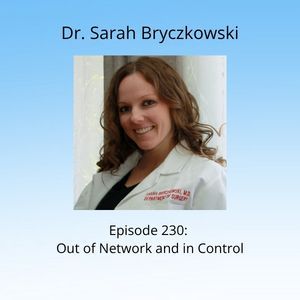
Boss Business of Surgery Series – Episode 230
What happens when a surgeon decides she's done being underpaid and undervalued — and refuses to sell her practice to private equity? She goes out of network. That's exactly what Dr. Sarah Bryczkowski did, and in this episode she walks us through every step of how she made it work.
Dr. Bryczkowski is a robotic general surgeon in Somerset County, New Jersey and a partner at Somerset Surgical Specialists. After making partner in a private practice and realizing she was barely covering overhead as an in-network surgeon, she convinced her partners to take the leap out of network. Since September of last year, they've been operating entirely out-of-network — and they've never looked back.
This episode breaks down a model that most physicians have heard about but don't fully understand. Sarah demystifies the billing process, explains what the No Surprises Act actually means for surgeons and patients, and talks honestly about the financial risks, the leap of faith, and what it finally feels like to get paid what you're worth.
What You'll Learn in This Episode
- What "out of network" actually means — and why insurance companies don't want you to understand it
- How the No Surprises Act changed the game (for better and for worse)
- What balanced billing really is — and how it's used to scare patients away from out-of-network doctors
- How Independent Dispute Resolution (IDR) works and why surgeons are winning
- The billing workflow: from consult to arbitration (and why you won't see money for 3–6 months)
- How Dr. Bryczkowski convinced her skeptical partners to make the switch
- The partnership track reality — why making partner isn't always what you expect
- What the first year in an out-of-network practice actually looks like financially
- The metrics to watch so you're not flying blind on income
- Who this model is and isn't right for
- How to find a billing company and legal team you can trust
Key Quotes
"I'm doing quality surgery. I wanted to find a way to get paid what I'm worth for what I do — and the employed model didn't fit."
"Balanced billing is a term insurance companies use to scare people away."
"Even if I wasn't making money, I wouldn't want to be told what to do. It's worth it."
"I don't have people problems, I have checklist problems."
"You're sucking wind now, but as long as you've got the metrics, you know you're gonna be okay."
"It's a journey of faith and challenge and courage — but it's so worth it."
Resources Mentioned
- Somerset Surgical Specialists — somersetsurgical.com
- The No Surprises Act (2021)
- Independent Dispute Resolution (IDR) process
- Online directories for in-network/out-of-network physician lookup
About Dr. Sarah Bryczkowski
Dr. Sarah Bryczkowski is a robotic general surgeon and partner at Somerset Surgical Specialists in Somerset County, New Jersey. She trained at Hackensack University Medical Center, where she was first exposed to the out-of-network practice model. After several years in both employed and in-network private practice settings, she led her practice group to transition out of network — without selling to private equity. She specializes in complex robotic surgery including component separations, hiatal hernia repairs, and fundoplications.

Meet Your Host
Amy Vertrees, MD is a board-certified general surgeon, certified coach, and the founder and host of the BOSS Business of Surgery Series podcast — a show dedicated to helping surgeons build confidence, clarity, and control in their careers by mastering the skills residency never taught them. After completing surgical training and serving in the military, Amy realized that clinical excellence alone wasn’t enough to navigate the complexities of contracts, practice dynamics, negotiation, and career growth. What started as her personal journey to learn “what’s next” transformed into a mission to empower fellow surgeons with the tools to thrive both professionally and personally. .
Learn More >