Welcome to the
The BOSS Business of Surgery Series Podcast
With Amy Vertrees, MD
Dealing With Difficult People
Episode 3: The Difficult Partner Webinar Replay
The Difficult Partner was a webinar recently offered, and this is the replay. If you have a difficult partner, this episode is for you. www.BOSSsurgery.com

Episode 8: Admin is not the enemy with Dr. Margo Shoup
Dr. Shoup will help us see that the administrators are leaders who learn to elevate others, not be the shining star themselves. They consider how to make the system work for everyone.
This episode is for you if you are in the following positions:
- You are not sure how to get what you want from your administration
- You want to know specific steps to achieve success for your project, getting a new partner, etc.
- You wonder the role of email- are you doing it wrong?
- You want to learn how to leverage the 4 powers in an organization
- You are interested in being an administrator, and want to know how to go about it.
- You wonder if you should you get an MBA
Find more information at https://www.bosssurgery.com/
Boss Business of Surgery Series – Episode 32
Everything Is a Negotiation: Difficult Conversations, Emotional Triggers, and Leading Yourself First
This episode is a replay of the “Navigating an Important Meeting” webinar, where Dr. Amy Vertrees dives into one of the most essential—but least taught—skills in medicine: how to navigate difficult conversations without losing your composure, your credibility, or yourself.
Using a real operating room conflict involving gender bias, tension, and perceived disrespect, Dr. Vertrees walks listeners through what actually determines the outcome of high-stakes meetings. Spoiler: it’s not who’s “right.” It’s how well you understand your internal dialogue, emotional triggers, and negotiating position before you ever speak.
This episode expands the idea that everything is a negotiation—with colleagues, leadership, systems, and most importantly, with yourself.
In this episode, you’ll learn:
-
Why the first negotiation is always internal
-
How righteous indignation quietly puts you into a victim role
-
Why anger is a secondary emotion—and what it’s usually protecting
-
How past micro-traumas from training shape present-day reactions
-
Why email feels safer than in-person conversations—and when that backfires
-
How fear of “losing composure” prevents surgeons from advocating for themselves
-
The difference between guilt (“something happened”) and shame (“something is wrong with me”)
-
Why shame thrives in silence and dissolves when examined
-
How unexamined thoughts create emotional spirals that feel like facts
-
Why everyone in a conflict has their own version of reality—and why that matters
-
How certainty (“I am absolutely right”) blocks curiosity and progress
-
Why meetings feel so high-stakes for surgeons—and how to lower the stakes intentionally
-
How to define success in a meeting in ways you can fully control
-
Why listening and curiosity immediately shift power dynamics
-
Practical techniques to regulate your nervous system during conflict
-
Why “no” is often the beginning of a negotiation—not the end
-
How asking “What would it take to get to yes?” reveals hidden constraints
-
Why being future-focused changes how you show up today
-
How integrity restores agency—even when outcomes don’t change
-
Why confidence comes from practice, not personality
Key themes:
-
Internal leadership precedes external advocacy
-
Emotional safety determines meeting outcomes
-
Anger is information—not instruction
-
Curiosity diffuses power struggles
-
You don’t need to “win” to be effective
-
Negotiation is a skill—not a trait
Program highlighted:
At the end of the episode, Dr. Vertrees shares details about her Everything Is a Negotiation group coaching program—a three-month experience designed to help surgeons advocate effectively, navigate conflict without burnout, and build durable confidence.
Boss Business of Surgery Series – Episode 59
Feeling Safe at Work: Five Strategies to Reclaim Trust, Power, and Emotional Stability
This episode is a replay of the “Feeling Safe at Work” webinar, where Dr. Amy Vertrees breaks down one of the most fundamental—but often overlooked—needs for surgeons: the ability to feel safe in your work environment, regardless of circumstances.
Rather than focusing on external fixes or hoping others will change, this episode reframes safety as an internal skill—one rooted in self-trust, emotional awareness, boundaries, and intentional leadership of your own thoughts and reactions.
Dr. Vertrees outlines five common traps that keep surgeons feeling unsafe at work and offers practical, mindset-based strategies to step out of them and regain agency.
In this episode, you’ll learn:
-
What surgeons actually mean when they say they want to “feel safe at work”
-
Why safety is less about control and more about self-trust
-
How loss of trust in yourself fuels dread, resentment, and burnout
-
Why feeling unsafe often shows up as:
-
Dread going to work
-
Feeling disrespected or unappreciated
-
Frustration, irritability, and powerlessness
-
Emotional exhaustion and disengagement
-
The five traps that undermine safety at work:
-
Mind reading
-
How filling in the blanks about others’ intentions creates unnecessary conflict
-
Why separating facts from stories immediately lowers emotional charge
-
-
Not managing negative emotions
-
Why emotions are feedback—not instructions
-
How anger often masks powerlessness
-
Why fear leads to avoidance, not safety
-
How naming emotions restores clarity and choice
-
-
Falling into victim or villain roles
-
Why righteous indignation is often disguised victimhood
-
How blaming others for how you feel gives away your power
-
How shifting into curiosity, observation, or leadership restores agency
-
-
Trying to change other people
-
Why “they should…” is a red flag thought
-
How trying to fix others puts them on the defensive
-
The difference between changing people and influencing them
-
How curiosity and emotional regulation create cooperation
-
-
Failing to create boundaries
-
Why boundaries protect you from others—and from yourself
-
The five steps to an effective boundary:
-
Define the boundary
-
Communicate it
-
Define a consequence
-
Follow through
-
Allow exceptions only when you like your reasons
-
-
How violating your own boundaries erodes self-trust
-
Why unsustainable schedules are created before clinic ever starts
-
Additional insights from the live discussion:
-
How decision fatigue worsens emotional reactivity late in the day
-
Why resisting reality (“I should still be able to do this”) increases suffering
-
How unsustainable clinic and OR schedules are driven by unexamined beliefs
-
Why you can’t out-think an unsustainable system—you have to question the beliefs that built it
-
How safety grows when you trust yourself to handle discomfort, mistakes, and emotions
Key themes:
-
Safety is an internal skill, not an external condition
-
Trusting yourself is the foundation of confidence and resilience
-
Emotions are information—not problems
-
Boundaries are acts of self-leadership
-
You don’t need a perfect environment to feel safe
-
Self-trust creates emotional freedom—even in hard systems
Resources & programs mentioned:
-
Boss Business of Surgery Series: https://bosssurgery.com
-
Boss Continuity Program (monthly or annual coaching)
-
Stop Hating Clinic
-
One-on-one coaching with Dr. Vertrees
This episode is essential listening for surgeons who feel chronically tense, reactive, or exhausted at work and want to reclaim a sense of stability without waiting for the system to change. Dr. Vertrees’ message is clear and empowering: feeling safe at work begins with trusting yourself—and that skill can be learned.

Boss Business of Surgery Series – Episode 160
I was warned not to talk about this. And another friend told me that not talking was the problem.
In the last 4 years I have learned a lot about dealing with difficult situations and our thoughts.
I hope that my opinions will help you understand yourself and your neighbor, because just like power corrupts, powerlessness is a dangerous and destructive force.
The decision from votes does not have to be a dark day, this could be a day where circumstances have led to a call to action. We have free will in our mind, that is where our power is, and we can choose where to direct it. Emotions are the fuel that move in the direction you choose.
So pick a direction, and fuel it with the emotion you choose.

Boss Business of Surgery Series – Episode 167
In this conversation, Dr. Jen Johansson shared her journey from being a dentist to pursuing a more holistic approach to life and work. Dr. Johansson discussed her experiences with seasonal depression, feeling misaligned in her dental career, and eventually finding a new path through digital marketing and coaching. The discussion focused on how to have difficult conversations about controversial topics while maintaining empathy and understanding. Dr. Johansson explained her approach using the 'map of consciousness' framework developed by Dr. David Hawkins, which categorizes human emotions and states of being. The conversation also covered how to navigate discussions with people holding different worldviews, particularly in the context of religious beliefs and social issues. Dr. Johansson emphasized the importance of checking one's own energy before engaging in difficult conversations and the value of approaching these discussions with curiosity rather than defensiveness.
Chapters
00:00:02 Introduction and Background of Dr. Jen Johansson
Dr. Johansson introduced herself, sharing her background growing up in upstate New York, experiencing seasonal depression, and eventually becoming a dentist. She discussed her journey through dental school, feeling like an imposter, and facing personal challenges like gut health issues and infertility.
00:05:08 Transition from Dentistry to New Path
Dr. Johansson described her transition from clinical dentistry to digital marketing, initially helping other dentists with online marketing before burning out. She eventually reduced her clinical hours to 12 hours a week and began developing her new business in 2023.
00:15:35 The Map of Consciousness Framework
Dr. Johansson explained Dr. David Hawkins' map of consciousness, detailing the scale from shame and fear at the bottom to love, joy, and enlightenment at the top. She discussed how this framework helps understand people's worldviews and reactions.
00:18:44 Approaching Difficult Conversations
Dr. Johansson shared her approach to having difficult conversations, emphasizing the importance of checking one's own energy first, asking permission before discussing sensitive topics, and maintaining a mindset of curiosity and empathy.
00:48:30 Ground Heal Thrive Coaching Program
Dr. Johansson introduced her coaching program called Grounded Now, explaining its two branches: burnout recovery and business coaching. She described the framework of 'Ground Heal Thrive' focusing on internal safety, pattern recognition, and living life on one's own terms.
Action Items
00:49:09 Dr. Johansson mentioned implementing a 90-day coaching program with two branches: burnout recovery and business coaching 00:51:25 Dr. Johansson suggested offering one-off one-hour sessions as an alternative to the 90-day program 00:18:44 Dr. Johansson emphasized the importance of checking one's own energy before engaging in difficult conversations 00:15:35 Dr. Johansson recommended using the map of consciousness framework to understand different worldviews

Episode Highlights
✅ Introduction to Lion Taming (00:00:00)
-
Dr. Amy Vertrees introduces the “Lion Taming” master class on power and negotiation.
-
Highlights her coaching program for women surgeons, helping them handle difficult colleagues, power dynamics, and negotiations.
-
Defines BOSS as a suite of coaching and courses teaching crucial career skills often missing from surgical training.
✅ Who (or What) is the Lion? (00:02:08)
-
“Lions” = Anyone who can harm your career, reputation, or confidence—senior colleagues, competitors, even patients.
-
The most dangerous lions are sometimes the most powerless or wounded.
-
Lion taming means:
-
Finding your own power
-
Managing those with power over you
-
Acting despite fear
-
Leading without formal authority
-
✅ Stress Responses in Conflict (00:05:52)
-
Workplace conflicts trigger strong emotions like anger, fear, shame, or sadness.
-
These emotions often stem from being dismissed, interrupted, or undermined.
-
Four stress responses: Fight, Flight, Freeze, Fawn.
-
Lion taming often involves recognizing and managing the “fight” response.
-
Lesson from Androcles & the Lion: understanding and soothing the “lion’s pain” can transform conflict into cooperation.
✅ New Approaches to Negotiation (00:12:15)
-
Avoid using:
-
The “Hammer” (intimidation)
-
The “Armor” (withholding vulnerability)
-
-
Instead, aim for:
-
Honesty
-
Genuine curiosity
-
Emotional intelligence
-
-
Insights from Kasia Urbaniak’s “Woman’s Guide to Power Unbound”:
-
Dominance: Knowing and using your power
-
Submission: Knowing what you want and influencing others to give it to you
-
✅ Self-Discovery & Managing Lions (00:16:35)
-
Crucial steps for effective negotiation:
-
Know your strengths and weaknesses
-
Understand what you truly want
-
Believe in your capacity to achieve it
-
-
Reduce the lion’s perceived threat by envisioning the best version of them.
-
Negotiation isn’t purely logical—it’s driven by emotion and the sense of safety.
✅ Three Steps to Tame a Lion (00:25:20)
-
Anchor: Create safety and stability within yourself.
-
Align: Shift attention outward to engage strategically.
-
Ask: Make a clear, powerful request.
-
Recognize where your attention is:
-
Inward focus = Submission
-
Outward focus = Dominance
-
✅ Power is Not a Threat—It’s a Tool (00:35:55)
-
Power exists to influence, not intimidate.
-
Dr. Vertrees encourages listeners to use their power for positive change.
-
Power Negotiations course topics include:
-
Identifying your needs
-
Reading others’ needs
-
Practical negotiation techniques
-
Surviving high-stakes conversations
-
-
The “CEO Self-Concept”: Think of yourself as your own business, making choices aligned with your mission and values.
✅ Coaching Program Details (00:41:33)
-
Weekly live sessions
-
Private podcast + Facebook group
-
Email support
-
Discounted 1:1 coaching calls
-
Dr. Vertrees encourages potential clients to discuss fit before joining.
Action Items
📝 Visit bosssurgery.com to:
-
Learn more about coaching
-
Join the group program
-
Access resources for negotiating and managing challenging dynamics
Quote of the Episode
“True confidence is the willingness to feel any negative emotion—and act anyway.”
— Dr. Amy Vertrees
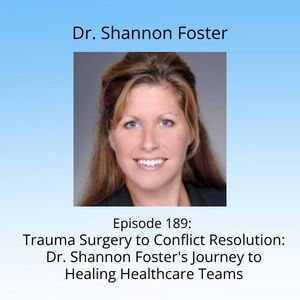
Episode Highlights
Career Evolution and Motivation
-
Dr. Foster shares her journey from growing up in a working-class family in Ohio to becoming a trauma surgeon.
-
Discusses how experiences in diverse healthcare settings—from academic to rural—revealed widespread communication issues.
-
COVID-19 became a catalyst for shifting toward consulting, helping physicians navigate workplace conflicts.
Identifying Workplace Problems and Seeking Help
-
Common issues include HR conflicts, legal concerns, or interpersonal problems affecting clinical performance.
-
Dr. Foster’s process involves deeply exploring the context, policies, and communications surrounding a conflict.
-
Listeners can connect with her:
-
🌐 smffacilitation.com
-
Understanding Institutional Policies and Employee Rights
-
Importance of knowing:
-
Employment contracts
-
Policy manuals
-
Bylaws and HR reporting protocols
-
-
Transparency in areas like workload distribution and salary is key to preventing misunderstandings.
Communication and Healthy Relationships
-
Communication is crucial for maintaining healthy workplace dynamics.
-
Misalignments in team vision often escalate into conflict.
-
Encourages proactive relationship-building to foster respect and mutual support.
Elevating Issues and Defining Bullying and Harassment
-
How to recognize when issues should go to HR or legal:
-
Bullying = misuse of authority to undermine others
-
Harassment = violation of personal autonomy (includes sexual harassment and interference with patient care)
-
-
Positive conflict can drive growth; negative conflict damages morale and productivity.
Strategies for Individuals and Departments
-
Leadership skills and talent management are vital for a healthy team culture.
-
Encourages leaders to:
-
Improve meeting structures
-
Ensure all voices are heard
-
Align team visions to reduce conflict
-
Business Information and Goal
-
Dr. Foster offers a 30-minute free consultation for individuals or organizations seeking help with workplace conflict.
-
Her mission: support surgeons’ well-being and retention in the workforce, ultimately improving patient care.
✅ Action Items
-
Reach out to Dr. Foster:
-
Website: smffacilitation.com
-
Email: [email protected]
-
-
Take advantage of the free 30-minute consultation if facing workplace challenges.
-
Review your institutional policies and communication strategies to prevent conflict escalation.

Dr. Amy Vertrees presented a comprehensive discussion on 'Swimming with Sharks 2.0', exploring the metaphor of surgery and surgical environments as shark-infested waters. She explained how surgeons are often perceived as sharks, and how this perception has been perpetuated in medical culture. Dr. Vertrees, a general surgeon in private practice, author of 'Become the Boss MD', and certified coach, drew from a 1974 article about swimming with sharks to create modern lessons for navigating surgical environments. She emphasized the importance of understanding both sharks and human nature, discussing how people respond to stress through fight, flight, flee, or fawn responses. The presentation covered strategies for protecting oneself in challenging environments, managing negative emotions, and developing self-compassion. Dr. Vertrees also introduced her year-long Boss Surgeons program, which helps surgeons develop professional and personal growth strategies.
Chapters
00:00:02Introduction to Swimming with Sharks 2.0
Dr. Amy Vertrees introduces the concept of 'Swimming with Sharks 2.0', explaining how surgery is metaphorically like swimming with sharks, where surgeons are perceived as sharks in a dangerous environment.
00:02:11Understanding Sharks and Human Nature
Dr. Vertrees draws parallels between sharks and human behavior, explaining how both respond to environmental triggers and have the capacity for both harm and cooperation.
00:05:08Managing Stress Responses and Emotions
Discussion of the motivational triad and different stress responses (fight, flight, flee, or fawn), emphasizing the importance of understanding personal stress reactions in surgical environments.
00:08:16Strategies for Swimming with Sharks
Dr. Vertrees presents various strategies for navigating challenging professional environments, including anticipatory retaliation and managing coordinated attacks.
00:47:28The Boss Surgeons Program Overview
Introduction to the year-long Boss Surgeons program, covering five categories including difficult colleague management, complications handling, power negotiating, clinic efficiency, and personal development.
Action Items
00:56:28Dr. Vertrees will upload the presentation to a landing page and send out the replay link by email 00:49:21Participants in the Boss MD program should prepare their goodbye letter to their 2024 self 00:52:59Interested participants can sign up for the Boss Surgeons program at bosssurgery.com with a $1,000 discount 00:50:17Dr. Vertrees will implement more flexible meeting times based on poll results in the Facebook group 00:59:23Participants should contact Dr. Vertrees at [email protected] or through Facebook for program questions
Meet Your Host
Amy Vertrees, MD is a board-certified general surgeon, certified coach, and the founder and host of the BOSS Business of Surgery Series podcast — a show dedicated to helping surgeons build confidence, clarity, and control in their careers by mastering the skills residency never taught them. After completing surgical training and serving in the military, Amy realized that clinical excellence alone wasn’t enough to navigate the complexities of contracts, practice dynamics, negotiation, and career growth. What started as her personal journey to learn “what’s next” transformed into a mission to empower fellow surgeons with the tools to thrive both professionally and personally. .
Learn More >